G5, G.V, G.5 or G-5 may refer to:
Zenith Electronics, LLC is an American research and development company that develops ATSC and digital rights management technologies. It is owned by the South Korean company LG Electronics. Zenith was previously an American brand of consumer electronics, a manufacturer of radio and television receivers and other consumer electronics, and was headquartered in Glenview, Illinois. After a series of layoffs, the consolidated headquarters moved to Lincolnshire, Illinois. For many years, their famous slogan was "The quality goes in before the name goes on". LG Electronics acquired a controlling share of Zenith in 1995; Zenith became a wholly owned subsidiary in 1999. Zenith was the inventor of subscription television and the modern remote control, and the first to develop High-definition television (HDTV) in North America.

The Motorola Razr was a series of mobile phones by Motorola, part of the 4LTR line. The V3 was the first phone released in the series and was introduced in July 2004 and released in the market in the third quarter of 2004. The V3 model was followed soon thereafter by the much improved V3i with a collaboration with Apple Inc. for iTunes to be built-in.
Motorola Mobility LLC, marketed as simply Motorola, is a consumer electronics and telecommunications company owned by Chinese technology firm Lenovo. The company primarily manufactures smartphones and other mobile devices running the Android operating system developed by Google.
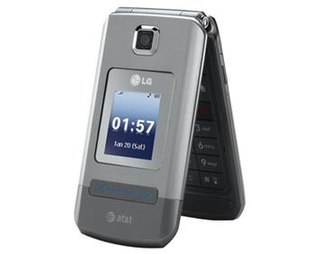
The LG CU575, also known as the Trax, is a GSM/UMTS mobile phone carried by AT&T Mobility. It is designed to run on AT&T's UMTS frequencies of 850 and 1900 MHz. The phone features a slim design similar to the Motorola RAZR series, and also features external music controls and a microSD memory card slot supporting cards up to 4 GB. The phone is a replacement for the LG CU500.
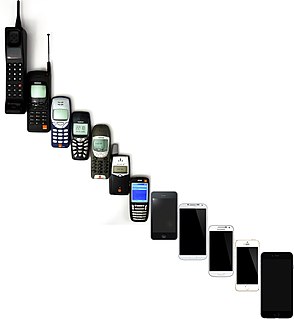
This is a comparison of the various internal components and features of many smartphones.
The form factor of a mobile phone is its size, shape, and style, as well as the layout and position of its major components.
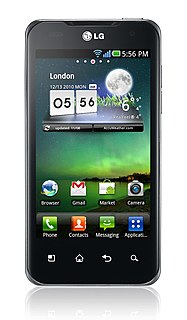
The LG Optimus 2X is a smartphone designed and manufactured by LG Electronics. The Optimus 2X is the world's first smartphone with a dual-core processor and third phone in the LG Optimus-Android series. LG debuted the Optimus 2X on December 16, 2010 and the device first became available to consumers in South Korea in January 2011. It was also launched in Singapore on March 3, 2011. The Optimus 2X runs the Android 2.3 software version since the upgrade in November 2011, but the latest offering is Android 4.0. The phone holds the record for the longest update holdout, taking 16 months to receive a firmware update from Android 2.2 to 2.3.

The LG Optimus Pad is a tablet computer developed by LG Electronics for its own line-up and for specific mobile carriers in selected countries. Mobile carries include NTT DoCoMo and T-Mobile which unlike its domestic rival, Samsung offering the same tablet model for specific carriers, LG does not alter the specs of those they release to these carriers and the only alteration is on the addition of the mobile carriers logo on it. The LG Optimus Pad was first released in South Korea in April 2011 and then in the US in March 2011 which is also known as the T-Mobile G-Slate. It is LG's first device running Android 3.0 ("Honeycomb") and appeared at the Mobile World Congress in February 2011.
The Motorola Triumph is an Android powered smartphone available in the United States exclusively through Virgin Mobile USA. The device is similar to Huawei's U9000 Ideos X6 model sold internationally. The Triumph is the first Motorola-branded device sold by Virgin Mobile USA. Sprint Nextel and Motorola announced the Triumph at a joint press event held in New York City on June 9, 2011.
Motorola Mobility v. Apple Inc. was one of a series of lawsuits between technology companies Motorola Mobility and Apple Inc.. In the year before Apple and Samsung began suing each other on most continents, and while Apple and High Tech Computer Corp. (HTC) were already embroiled in a patent fight, Motorola Mobility and Apple started a period of intense patent litigation. The Motorola-Apple patent imbroglio commenced with claims and cross-claims between the companies for patent infringement, and encompassed multiple venues in multiple countries as each party sought friendly forums for litigating its respective claims; the fight also included administrative law rulings as well as United States International Trade Commission (ITC) and European Commission involvement. In April 2012, the controversy centered on whether a FRAND license to a components manufacturer carries over to an equipment manufacturer incorporating the component into equipment, an issue not addressed in the Supreme Court's default analysis using the exhaustion doctrine in Quanta v. LG Electronics. In June 2012, appellate judge Richard Posner dismissed the U.S. case with prejudice and the parties appealed the decision a month later.

The LG G Pad 8.3 is an 8.3-inch (21 cm) Android-based tablet computer produced and marketed by LG Electronics. It belongs to the LG G series, and was announced on 4 September 2013 and launched in November 2013. Unlike its predecessor which had an 8.9-inch (23 cm) screen, the G Pad 8.3 has a smaller 8.3-inch (21 cm) screen.

Wear OS is a version of Google's Android operating system designed for smartwatches and other wearables. By pairing with mobile phones running Android version 4.4 or newer, or iOS version 9.3 or newer with limited support from Google's pairing application, Wear OS integrates Google Assistant technology and mobile notifications into a smartwatch form factor.

A front-facing camera is a common feature of cameras, mobile phones, smartphones, and tablets. While stand-alone cameras face forward, away from the operator, tablets, smartphones and similar mobile devices typically have a camera facing the operator to allow taking a self-portrait photograph or video while looking at the display of the device, usually showing a live preview of the image. These are called front-facing cameras and are important for videotelephony and the taking of selfies.
This page is based on this
Wikipedia article Text is available under the
CC BY-SA 4.0 license; additional terms may apply.
Images, videos and audio are available under their respective licenses.
