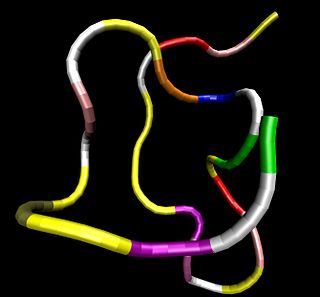
Atrial natriuretic peptide (ANP) or atrial natriuretic factor (ANF) is a natriuretic peptide hormone secreted from the cardiac atria that in humans is encoded by the NPPA gene. Natriuretic peptides are a family of hormone/paracrine factors that are structurally related. The main function of ANP is causing a reduction in expanded extracellular fluid (ECF) volume by increasing renal sodium excretion. ANP is synthesized and secreted by cardiac muscle cells in the walls of the atria in the heart. These cells contain volume receptors which respond to increased stretching of the atrial wall due to increased atrial blood volume.
Natriuresis is the process of sodium excretion in the urine through the action of the kidneys. It is promoted by ventricular and atrial natriuretic peptides as well as calcitonin, and inhibited by chemicals such as aldosterone. Natriuresis lowers the concentration of sodium in the blood and also tends to lower blood volume because osmotic forces drag water out of the body's blood circulation and into the urine along with the sodium. Many diuretic drugs take advantage of this mechanism to treat medical conditions like hypernatremia and hypertension, which involve excess blood volume.
B type or Type B may refer to:
An atrial natriuretic peptide receptor is a receptor for atrial natriuretic peptide.

A natriuretic peptide is a hormone molecule that plays a crucial role in the regulation of the cardiovascular system. These hormones were first discovered in the 1980s and were found to have very strong diuretic, natriuretic, and vasodilatory effects. There are three main types of natriuretic peptides: atrial natriuretic peptide (ANP), brain natriuretic peptide (BNP), and C-type natriuretic peptide (CNP). Two minor hormones include Urodilatin (URO) which is processed in the kidney and encoded by the same gene as ANP, and Dendroaspis NP (DNP) that was discovered through isolation of the venom from the green mamba snake. Since they are activated during heart failure, they are important for the protection of the heart and its tissues.

Urodilatin (URO) is a hormone that causes natriuresis by increasing renal blood flow. It is secreted in response to increased mean arterial pressure and increased blood volume from the cells of the distal tubule and collecting duct. It is important in oliguric patients as it lowers serum creatinine and increases urine output.

Natriuretic peptide precursor C, also known as NPPC, is a protein that in humans is encoded by the NPPC gene. The precursor NPPC protein is cleaved to the 22 amino acid peptide C-type natriuretic peptide (CNP).

Natriuretic peptide receptor A/guanylate cyclase A , also known as NPR1, is an atrial natriuretic peptide receptor. In humans it is encoded by the NPR1 gene.

Natriuretic peptide receptor B/guanylate cyclase B , also known as NPR2, is an atrial natriuretic peptide receptor. In humans it is encoded by the NPR2 gene.

Natriuretic peptide receptor C/guanylate cyclase C , also known as NPR3, is an atrial natriuretic peptide receptor. In humans it is encoded by the NPR3 gene.
The N-terminal prohormone of brain natriuretic peptide is a prohormone with a 76 amino acid N-terminal inactive protein that is cleaved from the molecule to release brain natriuretic peptide 32.
Cenderitide is a natriuretic peptide developed by the Mayo Clinic as a potential treatment for heart failure. Cenderitide is created by the fusion of the 15 amino acid C-terminus of dendroaspis natriuretic peptide (DNP) with the full C-type natriuretic peptide (CNP) structure both peptide which are endogenous to humans. This peptide chimera is a dual activator of the natriuretic peptide receptors NPR-A and NPR-B and therefore exhibits the natriuretic and diuretic properties of DNP, as well as the antiproliferative and antifibrotic properties of CNP.
Brain natriuretic peptide 32 (BNP), also known as B-type natriuretic peptide, is a hormone secreted by cardiomyocytes in the heart ventricles in response to stretching caused by increased ventricular blood volume. Along with NT-proBNP, BNP is one of two natriuretic peptides.
This page is based on this
Wikipedia article Text is available under the
CC BY-SA 4.0 license; additional terms may apply.
Images, videos and audio are available under their respective licenses.
