Related Research Articles
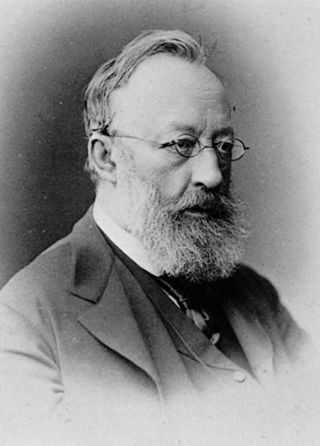
Gottfried Keller was a Swiss poet and writer of German literature. Best known for his novel Green Henry and his cycle of novellas called Seldwyla Folks, he became one of the most popular narrators of literary realism in the late 19th century.

Emine Sevgi Özdamar is a writer, director, and actress of Turkish origin who resides in Germany and has resided there for many years. Özdamar's art is distinctive in that it is influenced by her life experiences, which straddle the countries of Germany and Turkey throughout times of turmoil in both. One of her most notable accomplishments is winning the 1991 Ingeborg Bachmann Prize.

Ricarda Huch was a pioneering German intellectual. Trained as a historian, and the author of many works of European history, she also wrote novels, poems, and a play. Asteroid 879 Ricarda is named in her honour.

Ireen Sheer is a German-English singer. She had her first major hit in 1970 with Hey Pleasure Man. She had a top five hit on the German singles chart with "Goodbye Mama" in 1973. She went on to finish fourth at the Eurovision Song Contest 1974 representing Luxembourg, sixth at the Eurovision Song Contest 1978 representing Germany, and thirteenth at the Eurovision Song Contest 1985 representing Luxembourg again.
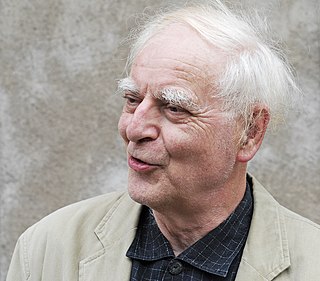
Adolf Muschg is a Swiss writer and professor of literature. Muschg was a member of the Gruppe Olten.

Hugo Loetscher was a Swiss writer and essayist.
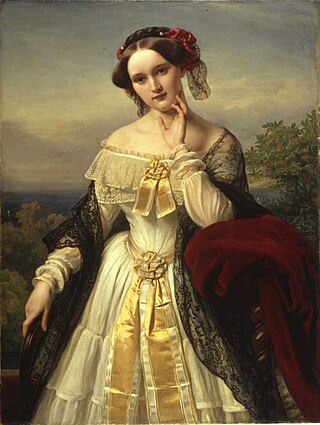
Agnes Mathilde Wesendonck was a German poet and author. The words of five of her verses were the basis of Richard Wagner's Wesendonck Lieder; the composer was infatuated with her, and his wife Minna blamed Mathilde for the break-up of their marriage.

Verena Loewensberg was a Swiss painter and graphic designer.

Lisa Wenger was a Swiss painter and writer of children's books. During the 1930s she was one of the best known and most widely read authors in the country.
Hanna Johansen was a Swiss writer.
Karla Alexandra Höcker was a German writer and musician.
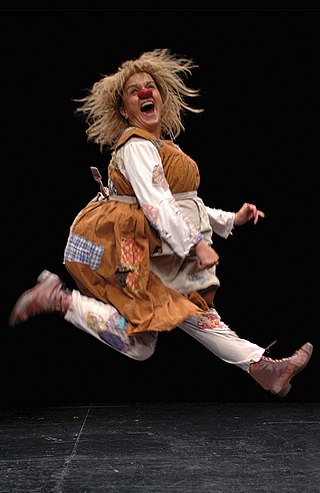
Gardi Hutter is a Swiss Clown-comedian, author, actress and Cabaret artist and a clown of the classical rule.

Marianne Ehrmann was one of the first women novelists, publicists and journalists in the German-speaking countries.

Lydia Welti Escher, was a Swiss patron of the arts. Lydia Escher was one of the richest women in Switzerland in the 19th century, a patron of the arts who most notably established the Gottfried Keller Foundation.

Monique Schwitter is a Swiss writer and actress.
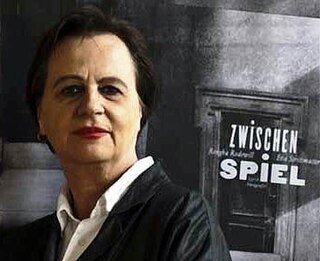
Rengha Rodewill is a German photographer, author, painter, graphic designer and dancer.

Larissa Keat is a Swiss-American actress, director and performer.
Elisa Johanna Lucie Schlott is a German actress. Her younger half-sisters are the actresses Emilia Pieske and Helena Pieske.
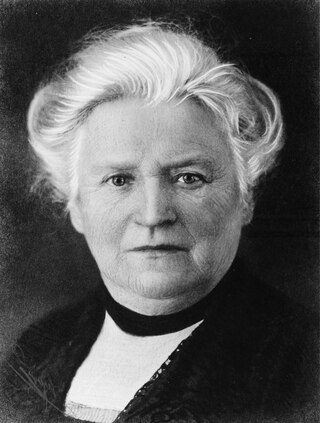
Verena Conzett was a Swiss magazine publisher, labor activist, and women's rights activist. She became the first president of the Swiss Women Workers' Union in 1890. Her own experience as a child factory worker led to her lifelong advocacy for insurance protection and shorter working hours. Following the death of her husband in 1897, Conzett took over his print shop, narrowly escaping bankruptcy. A decade later, she acquired a Linotype typesetting machine and expanded the business into the Conzett & Huber publishing house. In 1908, Conzett launched the illustrated magazine In freien Stunden, and established herself as a successful entrepreneur. Subscriptions to the magazine included accident insurance, which had not yet been mandated by law in Switzerland. Her autobiography, Erstrebtes und Erlebtes, was first published in 1929. Now in its third edition, it has been called "the longest and most literate" of the autobiographies of late 19th-century working-class women written in German. Verena-Conzett-Strasse in Zürich is named after her.

Katharina "Katja" Paryla was a German actress, stage director and theatre director. She was known especially for her work on stage, including at the Deutsches Theater Berlin where she often played leading roles with her partner Alexander Lang directing, including the title roles of Goethe's Iphigenie auf Tauris and Medea by Euripides, and Alice in Strindberg's Totentanz.
References
- ↑ Verena Keller at IMDb
- ↑ Mike La Marr (Moderation), Peter Bollag (Redaktion): Verena Keller: Als Schweizerin freiwillig in der DDR In: Radio SRF 1 , 27. September 2015.
- ↑ Helmuth Zipperlen: Verena Keller zwischen der DRR und Solothurn. In: az Solothurner Zeitung , 28. Februar 2013.
- ↑ Al’Leu: Ideale der frühen Jahre. In: WORT , Nr. 38, August 2013, S. 53–55.
- ↑ Al’Leu: Rekonstruktion des Vaterbildes. In: WORT Nr. 44, S. 47–48.
- ↑ "L. A. Ruft".
