
Free will is the notional capacity or ability to choose between different possible courses of action unimpeded.
A belief is a subjective attitude that a proposition is true or a state of affairs is the case. A subjective attitude is a mental state of having some stance, take, or opinion about something. In epistemology, philosophers use the term "belief" to refer to attitudes about the world which can be either true or false. To believe something is to take it to be true; for instance, to believe that snow is white is comparable to accepting the truth of the proposition "snow is white". However, holding a belief does not require active introspection. For example, few individuals carefully consider whether or not the sun will rise tomorrow, simply assuming that it will. Moreover, beliefs need not be occurrent, but can instead be dispositional.
Voluntaryism is used to describe the philosophy of Auberon Herbert, and later that of the authors and supporters of The Voluntaryist magazine, which supports a voluntary-funded state, meaning a lack of coercion and force in matters such as taxation.
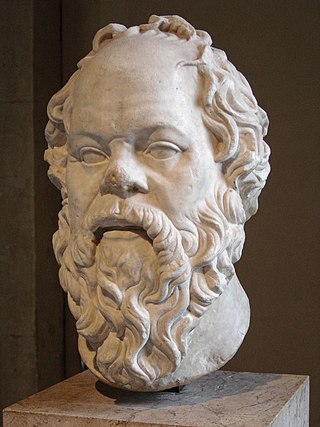
Intellectualism is the mental perspective that emphasizes the use, development, and exercise of the intellect, and is identified with the life of the mind of the intellectual. In the field of philosophy, the term intellectualism indicates one of two ways of critically thinking about the character of the world: (i) rationalism, which is knowledge derived solely from reason; and (ii) empiricism, which is knowledge derived solely from sense experience. Each intellectual approach attempts to eliminate fallacies that ignore, mistake, or distort evidence about "what ought to be" instead of "what is" the character of the world.
Voluntarism is "any metaphysical or psychological system that assigns to the will a more predominant role than that attributed to the intellect", or equivalently "the doctrine that will is the basic factor, both in the universe and in human conduct". Voluntarism has appeared at various points throughout the history of philosophy, seeing application in the areas of metaphysics, psychology, political philosophy and theology.
The New Thought movement is a new religious movement that coalesced in the United States in the early 19th century. New Thought was seen by its adherents as succeeding "ancient thought", accumulated wisdom and philosophy from a variety of origins, such as Ancient Greek, Roman, Egyptian, Chinese, Taoist, Hindu, and Buddhist cultures and their related belief systems, primarily regarding the interaction among thought, belief, consciousness in the human mind, and the effects of these within and beyond the human mind. Though no direct line of transmission is traceable, many adherents to New Thought in the 19th and 20th centuries claimed to be direct descendants of those systems.

A Rough History of Disbelief, known in the United States as Atheism: A Brief History of Disbelief, is a 2004 television documentary series written and presented by Jonathan Miller for the BBC and tracing the history of atheism. It was first shown on BBC Four and was repeated on BBC Two. It was first shown in the U.S. on PBS in 2007.
This glossary of philosophy is a list of definitions of terms and concepts relevant to philosophy and related disciplines, including logic, ethics, and theology.

Curt John Ducasse was a French-born American philosopher who taught at the University of Washington and Brown University.
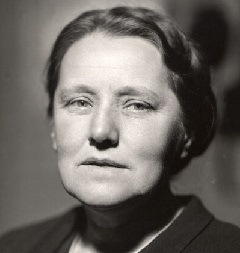
Lizzie Susan Stebbing was a British philosopher. She belonged to the 1930s generation of analytic philosophy, and was a founder in 1933 of the journal Analysis. Stebbing was the first woman to hold a philosophy chair in the United Kingdom, as well as the first female President of Humanists UK.
"The Will to Believe" is a lecture by William James, first published in 1896, which defends, in certain cases, the adoption of a belief without prior evidence of its truth. In particular, James is concerned in this lecture about defending the rationality of religious faith even lacking sufficient evidence of religious truth. James states in his introduction: "I have brought with me tonight ... an essay in justification of faith, a defense of our right to adopt a believing attitude in religious matters, in spite of the fact that our merely logical intellect may not have been coerced. 'The Will to Believe,' accordingly, is the title of my paper."
Dualism most commonly refers to:
Epistemology or theory of knowledge is the branch of philosophy concerned with the nature and scope (limitations) of knowledge. It addresses the questions "What is knowledge?", "How is knowledge acquired?", "What do people know?", "How do we know what we know?", and "Why do we know what we know?". Much of the debate in this field has focused on analyzing the nature of knowledge and how it relates to similar notions such as truth, belief, and justification. It also deals with the means of production of knowledge, as well as skepticism about different knowledge claims.
"Palace of the Babies" is a poem from Wallace Stevens's first book of poetry, Harmonium. It was first published in 1916 and is therefore in the public domain.
The following is a list of terms specific to anarchists. Anarchism is a political and social movement which advocates voluntary association in opposition to authoritarianism and hierarchy.
Structuralism in psychology is a theory of consciousness developed by Edward Bradford Titchener. This theory was challenged in the 20th century.
Doxastic voluntarism is a philosophical view that people elect their own beliefs; that is, that subjects have a certain amount of control over what they believe, such that a subject may choose whether or not to believe a certain thing. This philosophical view is derived from a branch of logic known as doxastic logic; however, as opposed to other philosophical views on belief, doxastic voluntarism claims each human agent as the author of their own beliefs. Doxastic voluntarism falls under the branch of philosophy known as ethics of belief.
Political voluntarism may refer to

