
Otto Heinrich Warburg was a German physiologist, medical doctor, and Nobel laureate. He served as an officer in the elite Uhlan during the First World War, and was awarded the Iron Cross for bravery. He was the sole recipient of the Nobel Prize in Physiology or Medicine in 1931. In total, he was nominated for the award 47 times over the course of his career.
Otto Warburg may refer to:

Warburg is a town in eastern North Rhine-Westphalia, central Germany on the river Diemel near the three-state point shared by Hessen, Lower Saxony and North Rhine-Westphalia. It is in Höxter district and Detmold region. Warburg is the midpoint in the Warburger Börde. Since March 2012 the city is allowed to call itself 'Hanseatic City of Warburg'.

The Warburg Institute is a research institution associated with the University of London in central London, England. A member of the School of Advanced Study, its focus is the study of cultural history and the role of images in culture – cross-disciplinary and global. It is concerned with the histories of art and science, and their relationship with superstition, magic, and popular beliefs.

Warburg Pincus LLC is a global private equity firm, headquartered in New York City, with offices in the United States, Europe, Brazil, China, Southeast Asia and India. Warburg has been a private equity investor since 1966. As of April 2024 the firm had over $90 billion in assets under management and invests in a range of sectors including retail, industrial manufacturing, energy, financial services, health care, technology, media, and real estate. Warburg Pincus is a growth investor. Warburg Pincus has raised 21 private equity funds which have invested over $100 billion in over 1,000 companies in 40 countries.

The Jewish Museum is an art museum and repository of cultural artifacts, housed at 1109 Fifth Avenue, in the former Felix M. Warburg House, along the Museum Mile on the Upper East Side of Manhattan, New York City. The first Jewish museum in the United States, as well as the oldest existing Jewish museum in the world, it contains the largest collection of art and Jewish culture excluding Israeli museums, more than 30,000 objects. While its collection was established in 1904 at the Jewish Theological Seminary of America, the museum did not open to the public until 1947 when Felix Warburg's widow sold the property to the Seminary. It focuses both on artifacts of Jewish history and on modern and contemporary art. The museum's collection exhibition, Scenes from the Collection, is supplemented by multiple temporary exhibitions each year.
In oncology, the Warburg effect is the observation that most cancer use aerobic glycolysis for energy generation rather than the mechanisms used by non-cancerous cells. This observation was first published by Otto Heinrich Warburg, who was awarded the 1931 Nobel Prize in Physiology for his "discovery of the nature and mode of action of the respiratory enzyme". The existence of the Warburg effect has fuelled popular misconceptions that cancer can be treated by dietary reductions in sugar and carbohydrate.

Picatrix is the Latin name used today for a 400-page book of magic and astrology originally written in Arabic under the title Ghāyat al-Ḥakīm, or Ghayat al-hakim wa-ahaqq al-natijatayn bi-altaqdim which most scholars assume was originally written in the middle of the 11th century, though an argument for composition in the first half of the 10th century has been made. The Arabic title translates as The Aim of the Sage or The Goal of The Wise. The Arabic work was translated into Spanish and then into Latin during the 13th century, at which time it got the Latin title Picatrix. The book's title Picatrix is also sometimes used to refer to the book's author.

Aby Moritz Warburg was a German art historian and cultural theorist who founded the Kulturwissenschaftliche Bibliothek Warburg, a private library, which was later moved to the Warburg Institute, London. At the heart of his research was the legacy of the classical world, and the transmission of classical representation, in the most varied areas of Western culture through to the Renaissance.
Warburg is a city in Germany.
The Warburg family is a prominent German and American banking family of German Jewish and originally Venetian Jewish descent, noted for their varied accomplishments in biochemistry, botany, political activism, economics, investment banking, law, physics, classical music, art history, pharmacology, physiology, finance, private equity and philanthropy.

Walker–Warburg syndrome (WWS), also called Warburg syndrome, Chemke syndrome, HARD syndrome, Pagon syndrome, cerebroocular dysgenesis (COD) or cerebroocular dysplasia-muscular dystrophy syndrome (COD-MD), is a rare form of autosomal recessive congenital muscular dystrophy. It is associated with brain and eye abnormalities. This condition has a worldwide distribution. Walker-Warburg syndrome is estimated to affect 1 in 60,500 newborns worldwide.
S. G. Warburg & Co. was a London-based investment bank. It was listed on the London Stock Exchange and was once a constituent of the FTSE 100 Index. The firm was acquired by the Swiss Bank Corporation in 1995 and ultimately became a part of UBS.
The Warburg hypothesis, sometimes known as the Warburg theory of cancer, postulates that the driver of tumorigenesis is an insufficient cellular respiration caused by insult to mitochondria. The term Warburg effect in oncology describes the observation that cancer cells, and many cells grown in vitro, exhibit glucose fermentation even when enough oxygen is present to properly respire. In other words, instead of fully respiring in the presence of adequate oxygen, cancer cells ferment. The Warburg hypothesis was that the Warburg effect was the root cause of cancer. The current popular opinion is that cancer cells ferment glucose while keeping up the same level of respiration that was present before the process of carcinogenesis, and thus the Warburg effect would be defined as the observation that cancer cells exhibit glycolysis with lactate production and mitochondrial respiration even in the presence of oxygen.

Airtel Digital TV is an Indian subscription based satellite television provider owned by Bharti Telemedia Limited, a wholly-owned subsidiary of Bharti Airtel. It launched DTH satellite television service in India on 9 October 2008.
Carl Warburg, also known as Charles Warburg, was a physician and scientist. He was the inventor of 'Warburg's Tincture', a medicine well known in the 19th century for treating fevers, including malaria.
The Felix M. Warburg House is a mansion at 1109 Fifth Avenue, on the Upper East Side of Manhattan in New York City. The house was built from 1907 to 1908 for the German-American Jewish financier Felix M. Warburg and his family. After Warburg's death in 1937, his widow sold the mansion to a real estate developer. When plans to replace the mansion with luxury apartments fell through, ownership of the house reverted to the Warburgs, who then donated it in 1944 to the Jewish Theological Seminary of America. In 1947, the Seminary opened the Jewish Museum of New York in the mansion. The house was named a New York City designated landmark in 1981 and was added to the National Register of Historic Places in 1982.
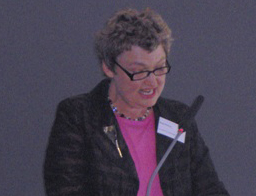
Margit Warburg is a Danish sociologist of religion. Since 2004, she has been professor of Sociology of Religion in the Department of Cross-Cultural and Regional Studies at the University of Copenhagen. She was an associate professor at the same university from 1979 to 2004.
Warburg is a surname. Notable people with the surname include:
