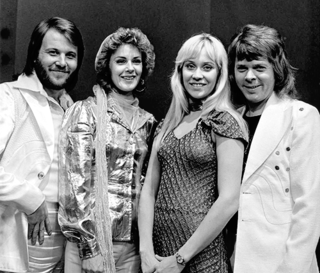
ABBA is a Swedish pop supergroup formed in Stockholm in 1972 by Agnetha Fältskog, Björn Ulvaeus, Benny Andersson, and Anni-Frid Lyngstad. The group's name is an acronym of the first letters of their first names. They became one of the most commercially successful acts in the history of popular music, topping the charts worldwide from 1974 to 1983. ABBA won the Eurovision Song Contest 1974, giving Sweden its first triumph in the contest. They are the most successful group to have taken part in the competition.

The Partridge Family is an American musical sitcom starring Shirley Jones and featuring David Cassidy. Jones plays a widowed mother, and Cassidy plays the oldest of her five children, in a family who embarks on a music career. It ran from September 25, 1970, until March 23, 1974, on the ABC network as part of a Friday-night lineup, and had subsequent runs in syndication. The family was loosely based on the real-life musical family the Cowsills, a popular band in the late 1960s and early 1970s.

Brotherhood of Man are a British pop group who achieved success in the 1970s. They won the 1976 Eurovision Song Contest with "Save Your Kisses for Me".

Gloria Richetta Jones is an American singer and songwriter from Los Angeles, California, who first found success in the UK, being recognized there as "The Queen of Northern Soul". She recorded the 1965 hit song "Tainted Love", and has worked in multiple genres as a Motown songwriter and recording artist, a prolific backup singer, and as a performer in musicals such as Hair. In the 1970s, she was a keyboardist and vocalist in Marc Bolan's glam rock band T. Rex. She and Bolan were also in a committed romantic relationship and have a son together.
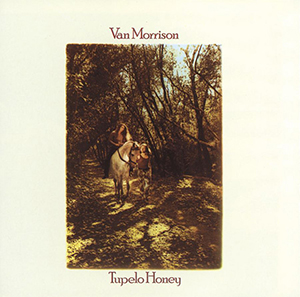
Tupelo Honey is the fifth studio album by Northern Irish singer-songwriter Van Morrison. It was released in October 1971 by Warner Bros. Records. Morrison had written all of the songs on the album in Woodstock, New York, before his move to Marin County, California, except for "You're My Woman", which he wrote during the recording sessions. Recording began at the beginning of the second quarter of 1971 at the Wally Heider Studios, San Francisco. Morrison moved to the Columbia Studios in May 1971 to complete the album.

David Thomas Mason is an English-American singer-songwriter and guitarist from Worcester, who first found fame with the rock band Traffic. Over the course of his career, Mason has played and recorded with many notable pop and rock musicians, including Paul McCartney, George Harrison, the Rolling Stones, Jimi Hendrix, Eric Clapton, Michael Jackson, David Crosby, Graham Nash, Steve Winwood, Fleetwood Mac, Delaney & Bonnie, Leon Russell and Cass Elliot. One of Mason's best known songs is "Feelin' Alright", recorded by Traffic in 1968 and later by many other performers, including Joe Cocker, whose version of the song was a hit in 1969. For Traffic, he also wrote "Hole in My Shoe", a psychedelic pop song that became a hit in its own right. "We Just Disagree", Mason's 1977 solo US hit, written by Jim Krueger, has become a staple of US classic hits and adult contemporary radio playlists.
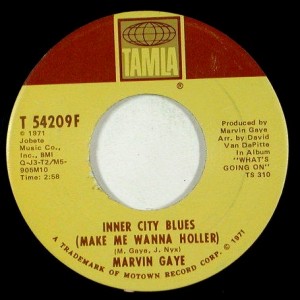
"Inner City Blues ", often shortened to "Inner City Blues", is a song by Marvin Gaye, released as the third and final single from and the climactic song of his 1971 landmark album, What's Going On. Written by Gaye and James Nyx Jr., the song depicts the ghettos and bleak economic situations of inner-city America, and the emotional effects these have on inhabitants.
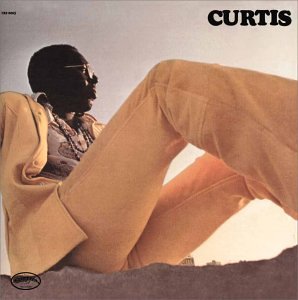
Curtis is the debut album by American soul musician Curtis Mayfield, released in September 1970. Produced by Mayfield, it was released on his own label Curtom Records. The musical styles of Curtis moved further away from the pop-soul sounds of Mayfield's previous group The Impressions and featured more of a funk and psychedelic-influenced sound. The album's subject matter incorporates political and social concerns of the time.
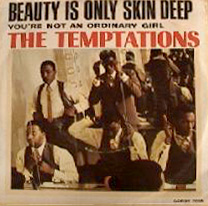
"Beauty Is Only Skin Deep" is a 1964 song, written by Norman Whitfield and Edward Holland, Jr., and produced by Whitfield. Norman Whitfield recorded the song's instrumental track. Two years later, Whitfield got together with Eddie Holland to have lyrics written for the song.
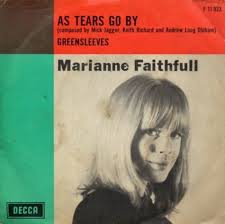
"As Tears Go By" is a song written by Mick Jagger, Keith Richards, and Rolling Stones' manager Andrew Loog Oldham. Marianne Faithfull recorded and released it as a single in the United Kingdom in 1964. Her song peaked at number nine on both the UK and Irish singles charts. Later, the Rolling Stones recorded their own version, which was included on the American album December's Children . London Records released it as a single, which reached number six in the Billboard Hot 100 singles chart.

"How Can You Mend a Broken Heart" is a song released by the Bee Gees in 1971. It was written by Barry and Robin Gibb and was the first single on the group's 1971 album Trafalgar. It was their first US No. 1 single and also reached No. 1 in Cashbox magazine for two weeks.
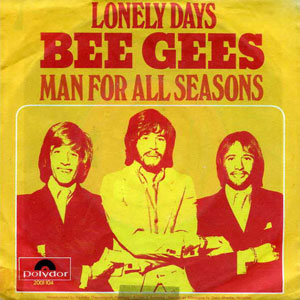
"Lonely Days" is a ballad written and performed by the Bee Gees. It appeared on their album 2 Years On, and was released as a single, becoming their first Top Five hit in the US, peaking at number three in the Billboard Hot 100 and reaching number one in the Cashbox and Record World charts.

The Return of the Magnificent Seven is the second collaborative album between Motown label-mates The Supremes and Four Tops, released in 1971. The production only featured two covers compared to their first album together, The Magnificent 7, that included more than eight. Although the three albums the Supremes recorded with the Four Tops did not match the commercial success of the Supremes/Temptations duet albums, what they did have instead were original tunes, soulful lead vocals by Jean Terrell and Levi Stubbs and high production values in terms of arrangements and orchestration.

"Locomotive Breath" is a song by the British progressive rock band Jethro Tull from their 1971 album, Aqualung.

We Go Together is the first studio album by American country music artists George Jones and Tammy Wynette. This album was released on October 18, 1971 on the Epic Records label. This is Jones' first album with Epic and his then wife Tammy Wynette. This is also Jones' first album with producer Billy Sherrill

George Jones with Love is an album by American country music artist George Jones, released in 1971 on the Musicor Records label.
"Save the Children" is a 1971 song written by Al Cleveland, Renaldo Benson and Marvin Gaye and issued on Marvin's 1971 album, What's Going On. While not issued as a single in the United States, the song was issued as a single by the Tamla-Motown label in the United Kingdom where it peaked at No.41 on the charts in December 1971, whereas the other major US single releases initially failed to chart in Europe.
"Together " is a song, now considered a standard, with music by Jule Styne and lyrics by Stephen Sondheim, written for the musical play Gypsy in 1959. It was introduced by Ethel Merman, Jack Klugman, and Sandra Church.
"Something to Brag About" is a song written by Bobby Braddock that was recorded as a duet between American country artists Charlie Louvin and Melba Montgomery. It was also issued as a single in 1970.

"We Can Make it Together" is a song written by Alan Osmond, Merrill Osmond, and Wayne Osmond and performed by Steve and Eydie featuring The Osmonds.
