
Aage Niels Bohr was a Danish nuclear physicist who shared the Nobel Prize in Physics in 1975 with Ben Mottelson and James Rainwater "for the discovery of the connection between collective motion and particle motion in atomic nuclei and the development of the theory of the structure of the atomic nucleus based on this connection". Starting from Rainwater's concept of an irregular-shaped liquid drop model of the nucleus, Bohr and Mottelson developed a detailed theory that was in close agreement with experiments.

Tsung-Dao Lee is a Chinese-American physicist, known for his work on parity violation, the Lee–Yang theorem, particle physics, relativistic heavy ion (RHIC) physics, nontopological solitons and soliton stars. He was a University Professor Emeritus at Columbia University, where he taught from 1953 until his retirement in 2012.

Sir William Lawrence Bragg, was an Australian-born British physicist and X-ray crystallographer, discoverer (1912) of Bragg's law of X-ray diffraction, which is basic for the determination of crystal structure. He was joint recipient of the Nobel Prize in Physics in 1915, "For their services in the analysis of crystal structure by means of X-rays"; an important step in the development of X-ray crystallography.

The Royal Institution of Great Britain is an organisation for scientific education and research, based in the City of Westminster. It was founded in 1799 by the leading British scientists of the age, including Henry Cavendish and its first president, George Finch. Its foundational principles were diffusing the knowledge of, and facilitating the general introduction of, useful mechanical inventions and improvements, as well as enhancing the application of science to the common purposes of life.
The year 1912 in science and technology involved some significant events, listed below.
The year 1913 in science and technology involved some significant events, listed below.
The year 1915 involved numerous significant events in science and technology, some of which are listed below.
The year 1919 in science and technology involved some significant events, listed below.

Sir William Henry Bragg was an English physicist, chemist, mathematician, and active sportsman who uniquely shared a Nobel Prize with his son Lawrence Bragg – the 1915 Nobel Prize in Physics: "for their services in the analysis of crystal structure by means of X-rays". The mineral Braggite is named after him and his son. He was knighted in 1920.
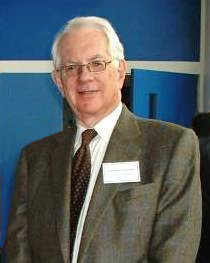
Sheldon Lee Glashow is a Nobel Prize-winning American theoretical physicist. He is the Metcalf Professor of Mathematics and Physics at Boston University and Eugene Higgins Professor of Physics, Emeritus, at Harvard University, and is a member of the Board of Sponsors for the Bulletin of the Atomic Scientists.
The year 1862 in science and technology involved some significant events, listed below.
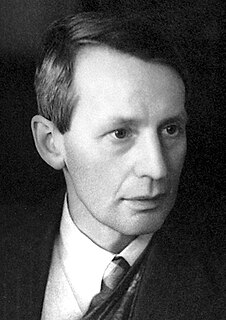
Sir George Paget Thomson, FRS was a British physicist and Nobel laureate in physics recognized for his discovery of the wave properties of the electron by electron diffraction.
Bragg is an English surname of Norman origin, the Welsh equivalent of this surname is Frost or Ffrost deriving from Ymffrostgar and may refer to:

Gonville & Caius College is a constituent college of the University of Cambridge in Cambridge, England. Originally founded in 1348, it is the fourth-oldest of the thirty-one colleges at the University of Cambridge and one of the wealthiest. The college has been attended by many students who have gone on to significant accomplishment, including fifteen Nobel Prize winners, the second-most of any Oxbridge college.

The Royal Institution of Australia (RiAus) is a national scientific not-for-profit organisation with a mission to "bring science to people and people to science". It opened in October 2009.
Merton is a surname of English origin. Notable people with the surname include:
Stephen Lawrence Bragg (1923–2014) was a British engineer who was Vice Chancellor of Brunel University from 1971-81. He was the son of Lawrence Bragg and grandson of William Henry Bragg.
This page is based on this
Wikipedia article Text is available under the
CC BY-SA 4.0 license; additional terms may apply.
Images, videos and audio are available under their respective licenses.
