
Safari is a web browser developed by Apple. It is built into several of Apple's operating systems, including macOS, iOS, iPadOS and visionOS, and uses Apple's open-source browser engine WebKit, which was derived from KHTML.

MSN is a web portal and related collection of Internet services and apps for Windows and mobile devices, provided by Microsoft and launched on August 24, 1995, alongside the release of Windows 95.
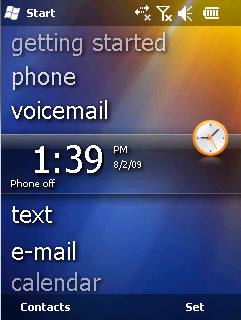
Windows Mobile is a discontinued mobile operating system developed by Microsoft for smartphones and personal digital assistants (PDA). Designed to be the portable equivalent of the Windows desktop OS in the emerging mobile/portable area, the operating system is built on top of Windows CE and was originally released as Pocket PC 2000.

Windows 3.x means either of, or all of the following versions of Microsoft Windows:
A mobile operating system is an operating system used for smartphones, tablets, smartwatches, smartglasses, or other non-laptop personal mobile computing devices. While computers such as typical/mobile laptops are "mobile", the operating systems used on them are usually not considered mobile, as they were originally designed for desktop computers that historically did not have or need specific mobile features. This "fine line" distinguishing mobile and other forms has become blurred in recent years, due to the fact that newer devices have become smaller and more mobile, unlike the hardware of the past. Key notabilities blurring this line are the introduction of tablet computers, light laptops, and the hybridization of the two in 2-in-1 PCs.
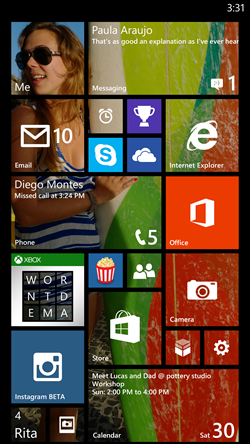
Windows Phone (WP) is a discontinued mobile operating system developed by Microsoft Mobile for smartphones as the replacement successor to Windows Mobile and Zune. Windows Phone featured a new user interface derived from the Metro design language. Unlike Windows Mobile, it was primarily aimed at the consumer market rather than the enterprise market.

MSN Messenger, later rebranded as Windows Live Messenger, was a cross-platform instant-messaging client developed by Microsoft. It connected to the now-discontinued Microsoft Messenger service and, in later versions, was compatible with Yahoo! Messenger and Facebook Messenger. The service was discontinued in 2013 and was replaced by Skype.

Windows Marketplace for Mobile was a service by Microsoft for its Windows Mobile platform that allowed users to browse and download applications that had been developed by third parties. The service was available for use directly on Windows Mobile 6.x devices and on personal computers. It was announced at the 2009 Mobile World Congress, and began operation on 6 October 2009, featuring an initial 246 applications. Initially it was available only for Windows Mobile 6.5, and was made available to older 6.x versions a few weeks later. On February 15, 2010, Microsoft announced its next generation mobile platform named Windows Phone; there is a separate app store, Windows Phone Store, for it; WM6.x apps are not compatible with WP7.

MixRadio was an online music streaming service owned by Line Corporation. The service was first introduced by Nokia in 2011 as Nokia Music for Windows Phone, serving as a successor to Nokia's previous Nokia Music Store/Comes with Music/Ovi Music Store initiatives, which was based on the LoudEye/OD2 platform. After its acquisition of Nokia's mobile phone business, the service was briefly maintained by Microsoft Mobile Oy before it was sold to Japanese internet company Line Corporation in 2015. Following the acquisition, MixRadio expanded to Android and iOS in May 2015.

The Nokia Lumia 800, which was codenamed 'Sea Ray', is a smartphone that was launched by Nokia on October 26, 2011, at the Nokia World 2011 event. Initially, it operated on Snapdragon S2 processor and Windows Phone 7.5 "Mango" and was the first device manufactured by Nokia to run on the Windows Phone operating system. This marked a significant shift for the company from using Symbian for their smartphones. Upon its original release in November 2011 in Europe, it was Nokia's flagship product and was hence a crucial product for their mobile phone business.

Microsoft Lumia is a discontinued line of mobile devices that was originally designed and marketed by Nokia and later by Microsoft Mobile. Introduced in November 2011, the line was the result of a long-term partnership between Nokia and Microsoft—as such, Lumia smartphones run on Microsoft software, the Windows Phone operating system; and later the newer Windows 10 Mobile. The Lumia name is derived from the partitive plural form of the Finnish word lumi, meaning "snow".
Windows UI Library is a user interface API that is part of the Windows Runtime programming model that forms the backbone of Universal Windows Platform apps for the Windows 8, Windows 8.1, Windows 10 and Windows Phone 8.1 operating systems. It enables declaring user interfaces using Extensible Application Markup Language (XAML) technology.
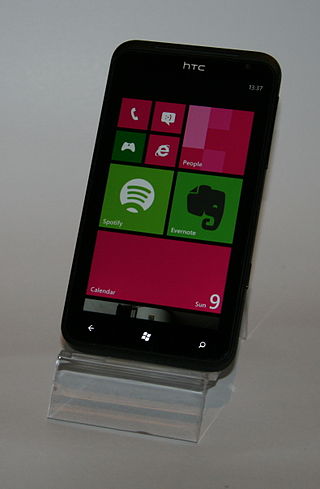
Windows Phone 7 is the first release of the Windows Phone mobile client operating system, released worldwide on October 21, 2010, and in the United States on November 8, 2010. It runs on the Windows CE 6.0 kernel.

Universal Windows Platform (UWP) apps are applications that can be used across all compatible Microsoft Windows devices. They are primarily purchased and downloaded via the Microsoft Store, Microsoft's digital application storefront.
Windows 8.x refers to the following versions of Microsoft Windows operating systems:

Cortana was a virtual assistant developed by Microsoft that used the Bing search engine to perform tasks such as setting reminders and answering questions for users.

Action Center is a notification center included with Windows Phone 8.1, Windows 10 and Windows 10 Mobile. It was introduced with Windows Phone 8.1 in July 2014, and was introduced to the desktop with the launch of Windows 10 on July 29, 2015.

Phone Link, previously Your Phone, is a syncing software developed by Microsoft to connect Windows PCs to Android and iOS mobile devices to view notifications, make phone calls, use mobile apps amongst others, via the PC. It is a native component of Windows 10 and Windows 11, where it is a UWP app and consists of a driver that communicates with the Link to Windows app on the mobile device. Phone Link makes use of Wi-Fi, Bluetooth for voice calls, or mobile data.
Windows Embedded 8.x refers to the following versions of Windows Embedded operating systems:
