Anime is hand-drawn and computer-generated animation originating from Japan. Outside Japan and in English, anime refers specifically to animation produced in Japan. However, in Japan and in Japanese, anime describes all animated works, regardless of style or origin. Animation produced outside Japan with similar style to Japanese animation is commonly referred to as anime-influenced animation.
Midori is the Japanese word for "green" and may refer to:

Azumanga Daioh is a Japanese yonkoma comedy manga series written and illustrated by Kiyohiko Azuma. It was serialized from February 1999 to May 2002 in the monthly magazine Dengeki Daioh by MediaWorks; three additional chapters were published in Shogakukan's Monthly Shōnen Sunday in May 2009 to celebrate the manga's tenth anniversary. The manga was first released in English by ADV Manga, and later re-issued by Yen Press.
Harem is a genre of light novels, manga, anime, hentai, and video games originating in Japan in the 1970s but exploding late 1980s and 1990s with dating simulator games and focused on polygynous or polyandrous relationships, where a protagonist is surrounded by three or more androphilic/gynephilic suitors, love interests and/or sexual partners. Harem works are frequently comedies that rely on self-insertion protagonists allowing the audience to project themselves unto, and on having relatable and interesting ensemble cast of characters. A story featuring a heterosexual male or homosexual female protagonist paired with an all-female/yuri harem series is informally referred to as a female harem or seraglios, while a heterosexual female or gay male protagonist paired with an all-male/yaoi harem series is informally referred to as a male harem, reverse harem, or gyaku hāremu. Although originating in Japan, the genre later inspired variants in Western media.
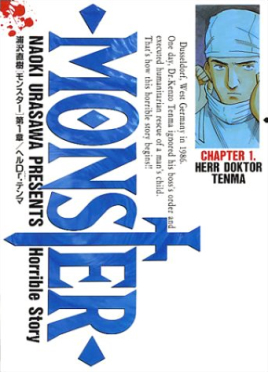
Monster is a Japanese manga series written and illustrated by Naoki Urasawa. It was published by Shogakukan in their seinen manga magazine Big Comic Original between December 1994 and December 2001, with its chapters collected in 18 tankōbon volumes. The story revolves around Kenzo Tenma, a Japanese surgeon living in Düsseldorf, Germany whose life enters turmoil after getting himself involved with Johan Liebert, one of his former patients, who is revealed to be a dangerous serial killer.
Yuki, Yūki or Yuuki may refer to:

Mirmo de Pon! is a manga series written by Hiromu Shinozuka and serialized in Ciao magazine from July 2001 through December 2005. It was also published in twelve collected volumes by Shogakukan. The manga series was awarded in the 2003 Kodansha Manga Award and in the 2004 Shogakukan Manga Award for children's manga. The series was licensed for an English language release in North America by Viz Media. Four months later, the show aired in Japan for the first time. Chuang Yi released the manga in English in Singapore.
Akatsuki (暁) may refer to:
The following is a glossary of terms that are specific to anime and manga. Anime includes animated series, films and videos, while manga includes graphic novels, drawings and related artwork.

Afro Samurai is a Japanese seinendōjinshi manga series written and illustrated by manga artist Takashi Okazaki. It was originally serialized irregularly in the avant-garde dōjinshi manga magazine Nou Nou Hau from November 1998 to September 2002. Inspired by Okazaki's love of soul and hip hop music and American media, it follows the life of Afro Samurai who witnessed his father, Rokutaro killed by a male gunslinger named Justice while he was a child. As an adult, Afro sets off to kill Justice and avenge his father.

Gintama is a Japanese manga series written and illustrated by Hideaki Sorachi. It was serialized in Shueisha's shōnen manga magazine Weekly Shōnen Jump from December 2003 to September 2018, later in Jump Giga from December 2018 to February 2019, and finished on the Gintama app, where it ran from May to June 2019. Its chapters were collected in 77 tankōbon volumes. Set in Edo, which has been conquered by aliens named Amanto, the plot follows life from the point of view of samurai Gintoki Sakata, who works as a freelancer alongside his friends Shinpachi Shimura and Kagura to pay the monthly rent. Sorachi added the science fiction setting to develop characters to his liking after his editor suggested doing a historical series.
Shizuku means "droplet". It may refer to:

Fan service, fanservice or service cut, is material in a work of fiction or in a fictional series that is intentionally added to please the audience, often sexual in nature, such as nudity. The term originated in Japanese in the anime and manga fandom, but has been used in other languages and media. It is about "servicing" the fan – giving the fans "exactly what they want". Fan service can also refer to other stories that contain visual elements.
Nausicaä of the Valley of the Wind may refer to
Demon Slayer may refer to:
This page is based on this
Wikipedia article Text is available under the
CC BY-SA 4.0 license; additional terms may apply.
Images, videos and audio are available under their respective licenses.
