
The General Secretary of the Central Committee of the Communist Party of the Soviet Union was an office of the Communist Party of the Soviet Union (CPSU) that by the late 1920s had evolved into the most powerful of the Central Committee's various secretaries. With a few exceptions, from 1929 until the union's dissolution the holder of the office was the de facto leader of the Soviet Union, because the post controlled both the CPSU and the Soviet government. Joseph Stalin elevated the office to overall command of the Communist Party and by extension the whole Soviet Union. Nikita Khrushchev renamed the post First Secretary in 1953; the change was reverted in 1966.
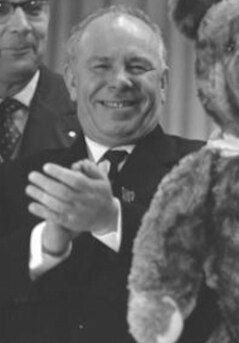
Nikolai Viktorovich Podgorny was a Soviet statesman who served as the Chairman of the Presidium of the Supreme Soviet, the head of state of the Soviet Union, from 1965 to 1977.

Alexei Nikolayevich Kosygin was a Soviet-Russian statesman during the Cold War. Kosygin was born in the city of Saint Petersburg in 1904 to a Russian working-class family. He was conscripted into the labour army during the Russian Civil War, and after the Red Army's demobilisation in 1921, he worked in Siberia as an industrial manager. Kosygin returned to Leningrad in the early 1930s and worked his way up the Soviet hierarchy. During the Great Patriotic War, Kosygin was a member of the State Defence Committee and was tasked with moving Soviet industry out of territories soon to be overrun by the German Army. He served as Minister of Finance for a year before becoming Minister of Light Industry. Stalin removed Kosygin from the Politburo one year before his own death in 1953, intentionally weakening Kosygin's position within the Soviet hierarchy.

Nikolai Aleksandrovich Tikhonov was a Soviet Russian-Ukrainian statesman during the Cold War. He served as Chairman of the Council of Ministers from 1980 to 1985, and as a First Deputy Chairman of the Council of Ministers, literally First Vice Premier, from 1976 to 1980. Tikhonov was responsible for the cultural and economic administration of the Soviet Union during the late era of stagnation. He was replaced as Chairman of the Council of Ministers in 1985 by Nikolai Ryzhkov. In the same year, he lost his seat in the Politburo; however, he retained his seat in the Central Committee until 1989.

The Catherine Palace is a Rococo palace located in the town of Tsarskoye Selo (Pushkin), 30 km south of St. Petersburg, Russia. It was the summer residence of the Russian tsars.
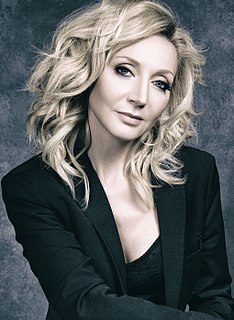
Kristina Edmundovna Orbakaitе, better known as Kristina Orbakaite, is a Russian-Lithuanian singer and actress. Her parents are Russian pop star Alla Pugacheva and Lithuanian circus performer Mykolas Orbakas.

Mikhail Grigorievich Zemtsov was a Russian Empire architect who practiced a sober, restrained Petrine Baroque style, which he learned from his peer Domenico Trezzini. He has been described as "the first professionally trained Russian architect in history".

Andrey Vasilievich Kvasov was a notable Baroque architect who worked in Russia including the territory of modern Ukraine. Very little is known about his life, and its dates are still uncertain. Only a handful of his buildings, though much altered, still stand.

Nikolai Vasilyevich Ogarkov was a prominent Soviet military personality. He was promoted to Marshal of the Soviet Union in 1977. Between 1977 and 1984, he was Chief of the General Staff of the USSR. He became widely known in the West when he became the Soviet military's spokesman following the shootdown of Korean Air Lines Flight 007 near Moneron Island in September 1983. He was dismissed as Chief of the General Staff on 6 September 1984.
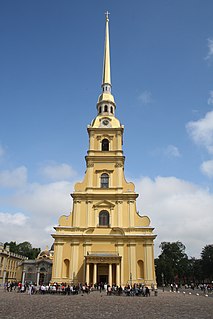
Petrine Baroque is a style of 17th and 18th century Baroque architecture and decoration favoured by Peter the Great and employed to design buildings in the newly founded Russian capital, Saint Petersburg, under this monarch and his immediate successors.

The Anichkov Palace, a former imperial palace in Saint Petersburg, stands at the intersection of Nevsky Avenue and the Fontanka River.
Gérard Caussé is a French violist.
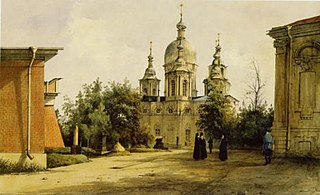
Pietro Antonio Trezzini was a Swiss architect from the Trezzini family who worked primarily in St. Petersburg. After several years of training in Milan, Trezzini arrived in St. Petersburg (1726), perhaps summoned by a relative, Domenico Trezzini.
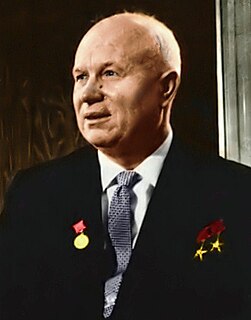
A member of the Presidium of the Central Committee of the Communist Party of the Soviet Union was a member of the nomenklatura, the country's de facto ruling class. Nikita Khrushchev chaired the Presidium from 1955 to 1964; Leonid Brezhnev succeeded him that year and chaired until 1982. In contrast to full members, candidate members of the Presidium could not vote during Presidium sessions. It was normal that a full member of the Presidium had previously served as a candidate member, but this was not always the case. During the term 23 people held seats in the Presidium: 14 full members and 9 candidate members. One candidate member was promoted to full membership in the Presidium during the term. Not a single Presidium member died during this period while retaining office.

The Premier of the Soviet Union was the head of government of the Union of Soviet Socialist Republics (USSR). The office had three different names throughout its existence: Chairman of the Council of People's Commissars (1923–1946), Chairman of the Council of Ministers (1946–1991) and Prime Minister of the Soviet Union (1991). The term premier was used by outside commentators to describe the office of head of government.
The 23rd Politburo of the Communist Party of the Soviet Union was elected by the 23rd Central Committee in the aftermath of the 23rd Congress.
Fartsovka is a slang term for an illegal business occupation peculiar to the second economy of the Soviet Union: acquiring consumer goods and currency from foreigners. A person of this occupation was called a fartsovshchik.

Anxious Sunday is a 1983 disaster film directed by Rudolf Fruntov.

The Occupation of Moscow by the Great Army under the command of the Emperor Napoleon lasted a little more than a month, from September 14 to October 20, 1812, and became a turning point in the Patriotic War of 1812. During the occupation, the city was looted and devastated by fire, the causes of which are controversial among historians. The last time before this, Moscow was occupied by foreign troops exactly 200 years before.
This page is based on this
Wikipedia article Text is available under the
CC BY-SA 4.0 license; additional terms may apply.
Images, videos and audio are available under their respective licenses.
