It is proposed that this article be deleted because of the following concern: Wikipedia is not for things made up one day even if you then make a home page for it and use that as a "source" If you can address this concern by improving, copyediting, sourcing, renaming, or merging the page, please edit this page and do so. You may remove this message if you improve the article or otherwise object to deletion for any reason. Although not required, you are encouraged to explain why you object to the deletion, either in your edit summary or on the talk page. If this template is removed, do not replace it . ContentsThe article may be deleted if this message remains in place for seven days, i.e., after 13:34, 31 May 2018 (UTC). Nominator: Please consider notifying the author/project: {{subst:proposed deletion notify |Zonk (game)|concern=Wikipedia is [[WP:NFT|not for things made up one day]] even if you then make a home page for it and use that as a "source"}} ~~~~ |
 | This article has multiple issues. Please help improve it or discuss these issues on the talk page . (Learn how and when to remove these template messages)
|

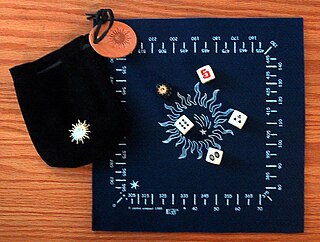
Zonk is an underground dice game played since the 1970s, often by university students, which is sometimes associated with drug culture, specifically marijuana use, a parallel to drinking games. [1] Game play uses 6 dice, consisting of 3 pairs of white, red, and green dice, and involves 2-6 players. The goal of the game is to accumulate more points than the other players, and if played as a marijuana related game, to earn "bong hits".

A counterculture is a subculture whose values and norms of behavior differ substantially from those of mainstream society, often in opposition to mainstream cultural mores. A countercultural movement expresses the ethos and aspirations of a specific population during a well-defined era. When oppositional forces reach critical mass, countercultures can trigger dramatic cultural changes. Prominent examples of countercultures in Europe and North America include Romanticism (1790–1840), Bohemianism (1850–1910), the more fragmentary counterculture of the Beat Generation (1944–1964), followed by the globalized counterculture of the 1960s (1964–1974), usually associated with the hippie subculture and the diversified punk subculture of the 1970s and 1980s.
Drug cultures are examples of countercultures that are primarily defined by recreational drug use. They may be focused on a single drug, or endorse polydrug use. They sometimes eagerly or reluctantly initiate newcomers, but their main functions are to share drug experiences, to reduce harm by providing knowledge of how to use a drug as safely as possible, and to exchange information on suppliers and avoiding law enforcement. There are YouTube "channels" devoted to recreational drug use.

A bong is a filtration device generally used for smoking cannabis, tobacco, or other herbal substances. In the bong shown in the photo, the gas flows from the lower port on the left to the upper port on the right.
One possible origin for the game says Zonk was created in 1978, in a freshman dormitory at an upstate New York university. A set of "official" handwritten rules were distributed in 1983.