Related Research Articles

Human rights in Saudi Arabia are a topic of concern. The Saudi government, which enforces sharia law under the absolute rule of the House of Saud, have been accused of and denounced by various international organizations and governments for violating multiple human rights within the country. The totalitarian regime ruling the Kingdom of Saudi Arabia is consistently ranked among the "worst of the worst" in Freedom House's annual survey of political and civil rights. Qorvis MSLGroup, a U.S. subsidiary of Publicis Groupe, has been working with Saudi Arabia amidst its executions of political protesters and opponents for more than a decade to whitewash its record of human rights abuses.

The Mabahith, also spelled Mabaheth, is the secret police agency of the Presidency of State Security in Saudi Arabia, and deals with domestic security and counter-intelligence. The officers of the Mabahith have delegated powers to investigate, survey, and detain individuals who are deemed to be "threats to national security". The Mabahith has conducted a wide variety of security operations that have led to the arrest of high profile terrorists, opposition members, and human rights activists. Officially, the Mabahith are to turn over arrested individuals to the Saudi courts for sentencing. Yet, there have been many documented instances in which the Mabahith have tortured detainees and held them without a court appearance. The Mabahith have been used by the government of Saudi Arabia to monitor political opposition and individuals they deem to be "threatening to Saudi society." The organization has been criticized by the United Nations, Amnesty International, and Human Rights Watch for abuse of power and the violation of human rights.

The Saudi Civil and Political Rights Association (ACPRA) is a Saudi Arabian human rights non-governmental organisation created in 2009. On 9 March 2013, the Saudi court sentenced two of its prominent leaders to at least 10 years in prison for "offences that included sedition and giving inaccurate information to foreign media", while dissolving the group. The association is also known in Arabic by its acronym HASEM.

Eman al-Nafjan is a Saudi Arabian blogger and women's rights activist. She was detained by Saudi authorities in May 2018 along with Loujain al-Hathloul and five other women's rights activists in what Human Rights Watch interpreted as an attempt to frighten her and the other activists, during the 2018–2019 Saudi crackdown on feminists.
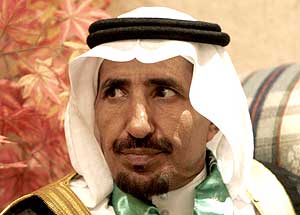
Mikhlif Alshammari was a human rights defender. The Sunni writer was sanctioned on several occasions by the Saudi government for his pro-Shia sympathy, and was sentenced to death in December 2016 for allegedly spying for Iran.

Samar bint Muhammad Badawi is a Saudi Arabian human rights activist. She and her father filed court cases against each other. Badawi's father accused her of disobedience under the Saudi Arabian male guardianship system and she charged her father with adhl—"making it hard or impossible for a person, especially a woman, to have what she wants, or what's rightfully hers; e.g, her right to marry" according to Islamic jurisprudence—for refusing to allow her to marry. After Badawi missed several trial dates relating to the charge, an arrest warrant was issued for her, and Badawi was imprisoned on 4 April 2010. In July 2010, Jeddah General Court ruled in Samar Badawi's favor, and she was released on 25 October 2010, and her guardianship was transferred to an uncle. There had been a local and international support campaign for her release. The Saudi NGO Human Rights First Society described Badawi's imprisonment as "outrageous illegal detention".
The Specialized Criminal Court (SCC) is a non-Sharia court created in Saudi Arabia in 2008 that tries suspected terrorists and human rights activists. On 26 June 2011, the court started trials of 85 people suspected of being involved in Al-Qaeda in the Arabian Peninsula and the 2003 Riyadh compound bombings and in September 2011 another 41 al-Qaeda suspects appeared in the court. In the same year, the court held trial sessions of human rights activists, including co-founder Mohammed Saleh al-Bejadi of the Saudi Civil and Political Rights Association (ACPRA) and Mubarak Zu'air, a lawyer for long-term prisoners, and Khaled al-Johani, who spoke to BBC Arabic Television at a protest in Riyadh, thus becoming known as "the bravest man in Saudi Arabia". The court convicted 16 of the human rights activists to sentences of 5–30 years' imprisonment on 22 November 2011.

Mohammed Saleh al-Bejadi is a co-founder of the Saudi Arabian human rights organisation Saudi Civil and Political Rights Association (ACPRA) who has campaigned for prisoners' rights since 2007. He spent four months in prison without charge or trial in 2007 and was banned from foreign travel in 2009.

Mohammad Fahad Muflih al-Qahtani is an economics professor and co-founder of the Saudi Arabian human rights organisation Saudi Civil and Political Rights Association (ACPRA) and, during 2011, its leader. Alkarama described al-Qahtani as "one of [the Saudi Arabian judiciary's] most eloquent and fervent critics". On 9 March 2013, al-Qahtani was sentenced to ten years in prison and ten years of travel ban after being convicted of several charges relating to his human rights activities.

Judge Suliman Ibrahim al-Reshoudi is a Saudi Arabian human rights lawyer and pro-democracy activist. He was imprisoned in the 1990s, and again from 2007 until his release on humanitarian grounds on 23 June 2011 at the age of 74–75. In November 2011 he was convicted of "breaking allegiance with the King" and possessing literature by Madawi al-Rasheed and sentenced to 15 years' imprisonment followed by a 15-year travel ban. As of January 2012, his conviction was pending appeal at the Specialized Criminal Court.
Dissidents have been detained as political prisoners in Saudi Arabia during the 1990s, 2000s and 2010s. Protests and sit-ins calling for political prisoners to be released took place during the 2011–2012 Saudi Arabian protests in many cities throughout Saudi Arabia, with security forces firing live bullets in the air on 19 August 2012 at a protest at al-Ha'ir Prison. As of 2012, recent estimates of the number of political prisoners in Mabahith prisons range from a denial of any political prisoners at all by the Ministry of Interior, to 30,000 by the UK-based Islamic Human Rights Commission and the BBC.

Abdullah Hamid Ali al-Hamid or Abu Bilal was a Saudi poet, Arabic professor, human rights activist and a co-founder of the Saudi Civil and Political Rights Association (ACPRA). He was imprisoned several times for calling for the establishment of a constitutional monarchy in Saudi Arabia.
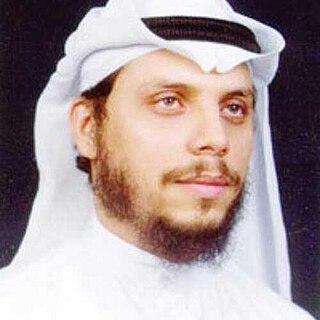
Saud mukhtar al-Hashimi is a Saudi Arabian doctor graduated from king abdulaziz university in 1988.

Waleed Sami Abulkhair is a Saudi Arabian lawyer and human rights activist, and the head of the Monitor of Human Rights in Saudi Arabia (MHRSA) organization. He is the first activist to be prosecuted by the Terrorism Law. He was arrested on April 15, 2014, and was sent to al-Ha'ir Prison while awaiting prosecution. On July 6, 2014, Abulkhair was sentenced to 15 years in prison by the Specialized Criminal Court, and a travel ban for another 15 years, in addition to a fine of 200,000 riyals (US$53,333). On January 12, 2015, the case returned to the Court of Appeals, after which the judge requested increasing the previous sentence, because Abulkhair refused to apologize. Thus, the judgment was tightened to 15-year executed. In response, Abulkhair prayed for God's victory and refused to recognize the legitimacy of the Specialized Criminal Court. Abulkhair is incarcerated in the Dhahban Central Prison in Jeddah, Saudi Arabia, a facility used to hold high-profile political prisoners, as well as members of Al Qaeda and the Islamic State.

Loujain al-Hathloul is a Saudi women's rights activist, a social media figure, and a political prisoner. She is a graduate of the University of British Columbia. Al-Hathloul has been arrested and released on several occasions for defying the ban on women driving in Saudi Arabia and was arrested in May 2018, with several prominent women's rights activists, on the charge of "attempting to destabilise the kingdom" after being effectively kidnapped in the United Arab Emirates. As of October 2018, her husband, Saudi stand-up comedian Fahad al-Butairi, had also been forcefully returned from Jordan to the Kingdom and was under arrest.
Saleh al-Ashwan is a member of the Saudi Civil and Political Rights Association, an organization that has advocated for the release of political prisoners and greater respect for human rights in Saudi Arabia and that was banned in March 2013. Saudi authorities arrested al-Ashwan in July 2012 for defending women's rights and held him without trial or access to lawyers for nearly four years, while confiscating his electronic devices. During his first two months of detention he was held incommunicado and Saudi activists allege that he was tortured, beaten, as well as stripped and suspended by his limbs from the ceiling of an interrogation room. In 2016 a Saudi court sentenced al-Ashwan to five years in prison and a five-year ban on travel abroad. He is currently held in al-Ha’ir prison south of Riyadh. Due to these abuses, he is considered to be a prisoner of conscience by Amnesty International.
Fadhil al-Manasif is a photographer and member of the Saudi human rights organization Adala Center for Human Rights. Authorities arrested him in April 2009 along with 20 others for participating in protests and again in May 2011 for disseminating information to human rights groups and international media outlets covering street protests in the Eastern Province. In April 2014 the Specialized Criminal Court sentenced al-Manasif to 15 years in prison, imposed a 15-year ban on foreign travel, and fined him 100,000 Riyals, on charges including “breaking allegiance with the ruler,” “being in contact with foreign news agencies to exaggerate news and harm the reputation of Saudi Arabia and its people,” and communicating with international human rights organizations. The punishment was later reduced to 14 years on appeal.
Israa al-Ghomgham is a Saudi Arabian human rights advocate. She is especially known for her documentation of the 2017–18 Qatif unrest.
ALQST or Al Qst is a human rights organisation that documents and promotes human rights in Saudi Arabia, with a team in Saudi Arabia that researches cases and a team in London that publishes reports and news.
The 2018–2019 Saudi crackdown on feminists consisted of waves of arrests of women's rights activists in Saudi Arabia involved in the women to drive movement and the Saudi anti male-guardianship campaign and of their supporters during 2018 and 2019. The crackdown was described in June 2018 by a United Nations special rapporteur as taking place "on a wide scale across" Saudi Arabia; the special rapporteur called for the "urgent release" of the detainees. Six of the women arrestees were tortured, some in the presence of Crown Prince advisor Saud al-Qahtani.
References
- ↑ "Saudi Arabia: Further information: Saudi Arabian human rights defender imprisoned: Abdulaziz al-Shubaily". www.amnesty.org. Retrieved 2017-11-19.
- ↑ "Dispatches: Saudi Arabia Touts Reforms, Delivers Repression". Human Rights Watch. 2016-06-03. Retrieved 2017-11-19.
- ↑ "Saudi Arabia: Intensified Repression of Writers, Activists". Human Rights Watch. 2017-02-06. Retrieved 2017-11-19.
- ↑ "Saudi Arabia: Leadership Change Should Prioritize Improving Rights". Human Rights Watch. 2017-06-22. Retrieved 2017-11-19.
- ↑ "Saudi Arabia: Arrest of two prominent activists a deadly blow for human rights". Amnesty International. Archived from the original on 14 December 2017. Retrieved 14 December 2017.