
Alexander Lucius Twilight was an American educator, minister and politician. He was recognized as the first African American to have earned a bachelor's degree from an American college or university, graduating from Middlebury College in 1823. He was ordained as a Congregational minister and worked in education and ministry all his career. In 1829, Twilight became principal of the Orleans County Grammar School. There he designed and built Athenian Hall, the first granite public building in the state of Vermont. In 1836, he was the first African American elected as a state legislator, serving in the Vermont House of Representatives; he was also the only African American ever elected to a state legislature before the Civil War.

Solomon Foot was an American politician and attorney. He held numerous offices during his career, including Speaker of the Vermont House of Representatives, State's Attorney for Rutland County, member of the United States House of Representatives, and United States Senator.

Daniel Azro Ashley Buck was an American lawyer and politician in the U.S. state of Vermont. He served as a U.S. Representative from Vermont and as Speaker of the Vermont House of Representatives.

Beriah Green Jr. was an American reformer, abolitionist, temperance advocate, college professor, minister, and head of the Oneida Institute. He was "consumed totally by his abolitionist views". Former student Alexander Crummell described him as a "bluff, kind-hearted man," a "master-thinker". Modern scholars have described him as "cantankerous", "obdurate," "caustic, belligerent, [and] suspicious". "He was so firmly convinced of his opinions and so uncompromising that he aroused hostility all about him."
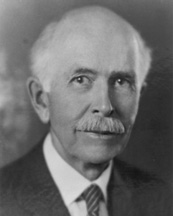
Frank C. Partridge was an American attorney, diplomat, and business executive from Vermont. A Republican, he served briefly in the United States Senate, appointed to fill the vacancy left by the death of Frank L. Greene.
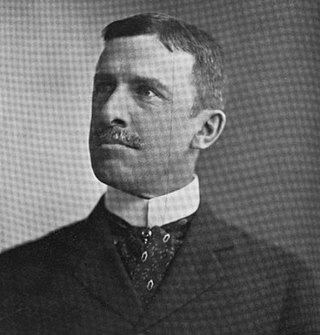
Edward Curtis Smith was an American attorney, businessman, and politician from Vermont. A Republican, he was most notable for his service as the 47th governor of Vermont from 1898 to 1900.
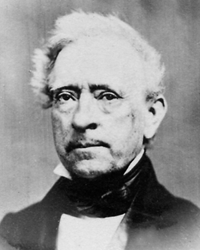
Carlos Coolidge was an American Whig politician, a lawyer, a Vermont state representative, the Speaker of the Vermont House, a state senator, and the 19th governor of Vermont.
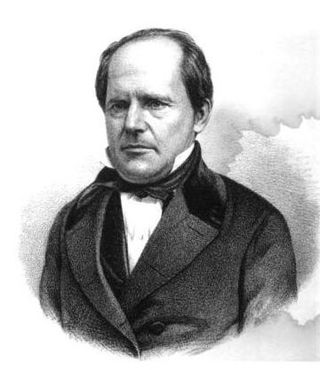
James Meacham was an American politician, minister and professor. He served as a U.S. Representative from Vermont from 1849 until his death.

Jeremiah Eames Rankin was an abolitionist, champion of the temperance movement, minister of Washington D.C.'s First Congregational Church, and correspondent with Frederick Douglass. In 1890 he was appointed sixth president of Howard University in Washington, D.C. Howard's Andrew Rankin Memorial Chapel was built during Jeremiah Rankin's tenure as president (1890–1903) and named after his brother. Rankin is best known as author of the hymns "God Be with You 'Til we Meet Again" and "Tell It to Jesus". In 1903 Rankin published a fictional journal of Esther Burr.

Ahiman Louis Miner was an American politician. He served two terms as a U.S. Representative from Vermont from 1851 to 1853.
Simon Larned was a U.S. Representative from Massachusetts.
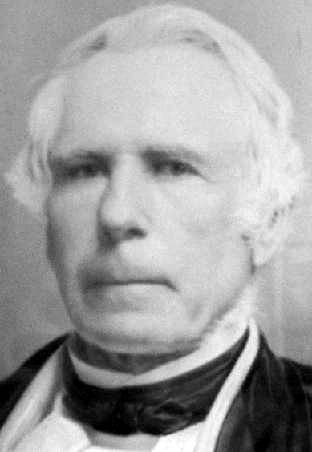
Asahel Peck was an American lawyer, politician, and judge. He is most notable for his service as an associate justice of the Vermont Supreme Court (1859–1874) and the 35th governor of Vermont from 1874 to 1876.
John Jay Shipherd was an American clergyman who co-founded Oberlin College in Oberlin, Ohio, in 1833 with Philo Penfield Stewart. In 1844, Shipherd also founded Olivet College in Olivet, Michigan.

Silas H. Hodges was a Vermont attorney, clergyman and politician who served as State Auditor and Commissioner of the U.S. Patent Office.

Aaron Leland was a minister and politician who served as the seventh lieutenant governor of Vermont.

Robert Pierpoint was a Vermont politician and lawyer who served as 16th lieutenant governor of Vermont from 1848 to 1850.

Joel Doolittle was a Vermont attorney, judge and politician. He served as a member of the Vermont House of Representatives, a member of the state executive council, president of the state Council of Censors, and a justice of the Vermont Supreme Court.

John Pierpoint was a Vermont attorney and judge. He served as a justice of the Vermont Supreme Court from 1857 until his death, and was Chief Justice beginning in 1865.

Walter Henry Cleary was a Vermont attorney and judge. His career was most notable for his service as an associate justice of the Vermont Supreme Court from 1948 to 1958, and chief justice from 1958 to 1959.
Marvin Hill Dana was an American author and journalist.


