Related Research Articles

The Royal London Hospital is a large teaching hospital in Whitechapel in the London Borough of Tower Hamlets. It is part of Barts Health NHS Trust. It provides district general hospital services for the City of London and Tower Hamlets and specialist tertiary care services for patients from across London and elsewhere. The current hospital building has 1248 beds and 34 wards. It opened in February 2012.
The History of the Second World War is the official history of the British contribution to the Second World War and was published by Her Majesty's Stationery Office (HMSO). The immense project was sub-divided into areas to ease publication, United Kingdom Military Series, the United Kingdom Civil Series for the civilian war effort; the Foreign Policy series, the Intelligence series and the Medical series are eponymous. Other volumes not under the aegis of the series but published by HMSO may be read as adjuncts, covering matters not considered in great detail or at all, in one case, in the main series. Further volumes, published after the privatisation of HMSO or in the series about the Special Operations Executive, are also useful.
Sir Kenneth Robinson was a British Labour politician who served as Minister of Health in Harold Wilson's first government, from 1964 to 1968, when the position was merged into the new title of Secretary of State for Social Services. Robinson died in London on 16 February 1996.

Clement Attlee was invited by King George VI to form the Attlee ministry in the United Kingdom in July 1945, succeeding Winston Churchill as Prime Minister of the United Kingdom. The Labour Party had won a landslide victory at the 1945 general election, and went on to enact policies of what became known as the post-war consensus, including the establishment of the welfare state and the nationalisation of 20 percent of the entire economy. The government's spell in office was marked by post-war austerity measures; the crushing of pro-independence and communist movements in Malaya; the grant of independence to India, Pakistan, Ceylon, and Burma; the engagement in the Cold War against Soviet Communism; and the creation of the country's National Health Service (NHS).
Oliver Sheldon (1894–1951) was a director of the Rowntree's in York, England. He wrote on principles of public and business administration in the 1920s.

The Royal National Orthopaedic Hospital (RNOH) is a specialist orthopaedic hospital located in Stanmore in the London Borough of Harrow, run by the Royal National Orthopaedic Hospital NHS Trust. It provides the most comprehensive range of neuro-musculoskeletal health care in the UK, including acute spinal injury, complex bone tumour treatment, orthopaedic medicine and specialist rehabilitation for chronic back pain. The RNOH is a major teaching centre and around 20% of orthopaedic surgeons in the UK receive training there.

North Manchester General Hospital (NMGH) is a large NHS hospital in Crumpsall, North Manchester, England. It is operated by Manchester University NHS Foundation Trust. There is an accident and emergency unit, together with a maternity unit, high dependency unit and a mental health wing. A plan to rebuild the hospital was announced by Boris Johnson in the 2019 General Election campaign, and in November 2020 a £54 million funding bid for improvement works was made by the Trust, Manchester City Council, and Manchester Health and Care Commissioning.
Rosemary Stewart was a British researcher and writer on business management and healthcare management.
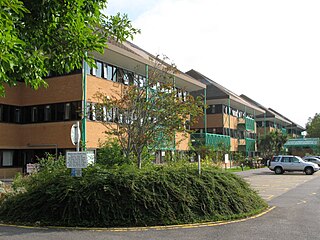
Weston General Hospital is an NHS district general hospital in the town of Weston-super-Mare, Somerset, England, operated by University Hospitals Bristol and Weston NHS Foundation Trust. As of June 2019, the hospital had 261 beds and around 1,800 clinical and non-clinical staff. It has a part-time Accident & Emergency department, an intensive care unit, an oncology and haematology day unit, and a day case unit. The hospital also has a 12-bed private unit, The Waterside Suite, wholly owned by the hospital trust, with profits being re-invested into the main hospital.

David John Teece is a New Zealand-born US-based organizational economist and the Professor in Global Business and director of the Tusher Center for the Management of Intellectual Capital at the Walter A. Haas School of Business at the University of California, Berkeley.
Nottingham University Hospitals NHS Trust (NUH) is one of England's largest acute teaching trusts. It was established on 1 April 2006 following the merger of Nottingham City Hospital and the Queen's Medical Centre NHS Trusts. They provide acute and specialist services to 2.5m people within Nottingham and surrounding communities at the Queen's Medical Centre (QMC) and the City Hospital campuses, as well as specialist services for a further 3-4m people from across the region.

The Building Research Establishment (BRE) is a centre of building science in the United Kingdom, owned by charitable organisation the BRE Trust. It is a former UK government national laboratory that was privatised in 1997. BRE provides research, advice, training, testing, certification and standards for both public and private sector organisations in the UK and abroad. It has its headquarters in Garston, Hertfordshire, England, with regional sites in Glasgow, Swansea, the US, India, the Middle East and China.

Trevor Arthur Smith, Baron Smith of Clifton, was a British politician, academic and member of the House of Lords. He was the Liberal Democrat spokesman in the House on Northern Ireland and constitutional affairs.
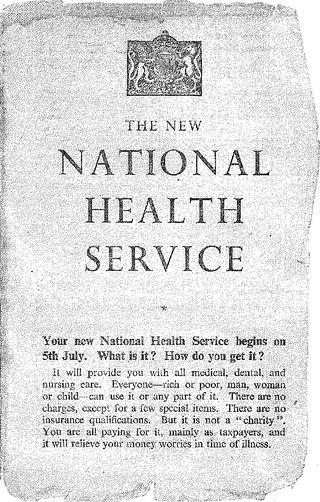
The National Health Service in England was created by the National Health Service Act 1946. Responsibility for the NHS in Wales was passed to the Secretary of State for Wales in 1969, leaving the Secretary of State for Social Services responsible for the NHS in England by itself.
Social work as a profession dates back to years ago, with the first social welfare agencies appearing in urban areas in the 1800s. It has its roots in the attempts of society at large to deal with the problem of poverty and inequality. Social work is intricately linked with the idea of charity work, but must be understood in broader terms. The concept of charity goes back to ancient times, and the practice of providing for the poor has roots in all major world religions.
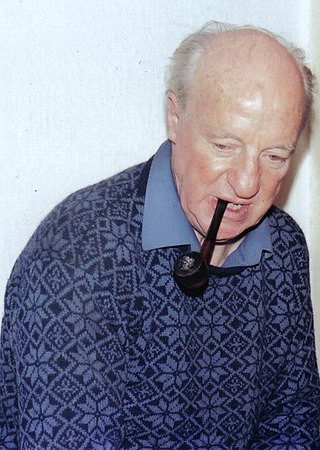
Tom Burns FBA (1913–2001) was an English sociologist, author and founder of the Sociology department at Edinburgh University.
Health Education England (HEE) is an executive non-departmental public body of the Department of Health and Social Care. Its function is to provide national leadership and coordination for the education and training within the health and public health workforce within England. It has been operational since June 2012.
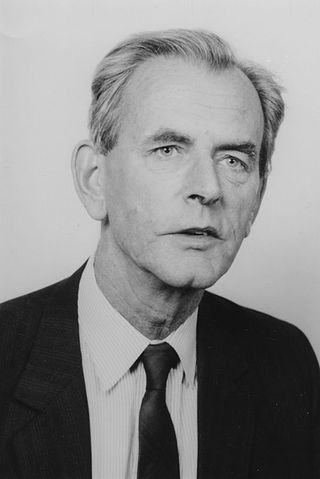
Brian Abel-Smith was a British economist and expert adviser and one of the most influential figures of the twentieth century in shaping health and social welfare. In Britain, his research for the Guillebaud committee in 1956 proved that the NHS provided extremely good value for money and deserved more investment. From the 1960s he was one of a new breed of special advisers to Labour government ministers – helping Richard Crossman, Barbara Castle and David Ennals to reconfigure the NHS, set up Resource Allocation Working Party, and the Black Inquiry into Health Inequalities. Internationally, he steered the development of health services in over 50 countries. He was a key WHO and EEC adviser, intimately involved in setting the agenda for global campaigns such as Health for All by the year 2000.
Teddy Chester (1908–1990) was the first professor of Social Administration at Manchester University.
Professor Grigor McClelland CBE MBA CBIM Hons.DCL was a British businessman, academic and social activist. Born into a family of grocers, he managed his family firm of Laws Stores from 1948 to 1962, and again between 1978 to 1984. He became the first senior research fellow in Management Studies at the University of Oxford with Balliol College in 1962. During his time there he founded both the Journal of Management Studies and the Society for the Advancement of Management Studies. In 1965, he became the first director of the newly formed Manchester Business School, and wrote various papers on management techniques and ideas.
References
- ↑ "Joseph Rowntree Reform Trust". The Rowntree Society. Retrieved 14 March 2016.
- ↑ "Submitted evidence: The Acton Society Trust". National Archives. Retrieved 14 March 2016.
- ↑ "Obituary: Rosemary Stewart - Pioneer academic who knew just what makes a good boss". Oxford Mail. 2 July 2015. Retrieved 2021-08-18.