Related Research Articles

Julian Otto Trevelyan was an English artist and poet.
The Havell family of Reading, Berkshire, England, included a number of notable engravers, etchers and painters, as well as writers, publishers, educators, and musicians. In particular, members of this family were among the foremost practitioners of aquatint; and had a long association with Indian art and culture. The family first came to notice through the brothers Luke Havell and Robert Havell the Elder ; along with their nephew Daniel Havell.

Sir Ernest George was a British architect, landscape and architectural watercolourist, and etcher.

Alfred Robert Quinton was an English watercolour artist, known for his paintings of British villages and landscapes many of which were published as postcards.
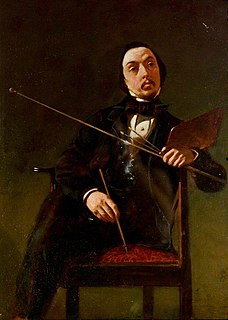
Edmund John Niemann (1813–1876) was a prolific and highly successful British landscape artist working mostly in oils. Nine of his paintings are held in the Wolverhampton Art Gallery.

Sidney Richard Percy was an English landscape painter during the Victorian era, and a member of the Williams family of painters.
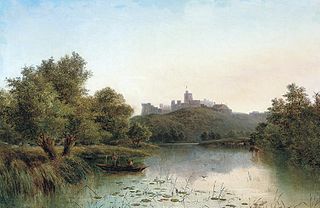
George Augustus Williams was an English landscape painter during the Victorian era, and a member of the Williams family of painters.

Alfred Walter Williams was an English landscape painter during the Victorian era, and a member of the Williams family of painters.
Alfred John Bennett was an English artist who worked in oils, watercolour and etching.
John Rogers Herbert was an English painter who is most notable as a precursor of Pre-Raphaelitism.

Alexander Munro was a British sculptor of the Pre-Raphaelite movement. He concentrated on portraiture and statues, but is best known for his Rossetti-influenced figure-group Paolo and Francesca (1852), which has often been identified as the epitome of Pre-Raphaelite sculpture.
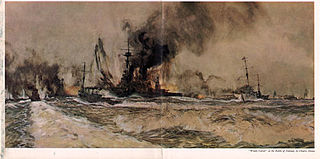
Charles Edward Dixon was a British maritime painter of the late nineteenth and early twentieth centuries, whose work was highly successful and regularly exhibited at the Royal Academy. Several of his paintings are held by the National Maritime Museum and he was a regular contributing artist to magazines and periodicals. He lived at Itchenor in Sussex and died in 1934.

John William North was a British landscape painter and illustrator, a prominent member of the Idyllists.
Andrew Hunt (1791–1861) was a British landscapist and teacher of drawing.

Alfred Joseph Woolmer (1805–1892) was an English painter whose subject matter covered the literary and historical genre. He was exceptionally prolific and, by age sixty, the number of works he had exhibited had reached 355 at the Society of British Artists, 45 at the British Institution, and 12 at the Royal Academy.

The Williams family of painters, also known as the Barnes School, is a family of prominent 19th-century Victorian landscape artists known for their paintings of the British countryside, coasts and mountains. They are represented by the artist Edward Williams (1781–1855), his six sons, and several grandchildren.

Keeley Halswelle (1831–1891), born John Keeley Haswell, was an English artist.

Arthur James Stark was an English painter and a member of the Norwich School of painters.
William Henry Margetson was a British painter and illustrator, mainly known for his aesthetic portraits of women.

Blanche Baker (1844–1929) was a Bristol-born English watercolour artist who specialised in landscape paintings. She trained at the Bristol School of Art, and went on to exhibit regularly at the Royal Academy and with the Society of Lady Artists and the Camsix Art Club. She taught drawing in London schools, and her work documents extensive British and European travel. In 1902 she was elected a full member of the Bristol Academy.
References
. Dictionary of National Biography . London: Smith, Elder & Co. 1885–1900.
| General | |
|---|---|
| Art research institutes | |
