
Naser Orić is a Bosnian former officer who commanded Army of the Republic of Bosnia and Herzegovina (ARBiH) forces in the Srebrenica enclave in eastern Bosnia surrounded by Bosnian Serb forces, during the Bosnian War.

The Bosnian War was an international armed conflict that took place in Bosnia and Herzegovina between 1992 and 1995. The war is commonly seen as having started on 6 April 1992, following several earlier violent incidents. It ended on 14 December 1995 when the Dayton Accords were signed. The main belligerents were the forces of the Republic of Bosnia and Herzegovina, the Republic of Herzeg-Bosnia, and the Republika Srpska, the latter two entities being proto-states led and supplied by Croatia and Serbia, respectively.

The Srebrenica massacre, also known as the Srebrenica genocide, was the July 1995 genocidal killing of more than 8,000 Bosniak Muslim men and boys in and around the town of Srebrenica during the Bosnian War. It was mainly perpetrated by units of the Bosnian Serb Army of Republika Srpska under Ratko Mladić, though the Serb paramilitary unit Scorpions also participated. The massacre was the first legally recognised genocide in Europe since the end of World War II.

Srđa Trifković is a Serbian-American publicist, politician and historian. He is currently a foreign affairs editor for the paleoconservative magazine Chronicles, and a politics professor at the University of Banja Luka in Bosnia and Herzegovina.
The Bosnian War attracted large numbers of foreign fighters and mercenaries from various countries. Volunteers came to fight for a variety of reasons including religious or ethnic loyalties, but mostly for money. Generally, Bosniaks received support from Muslim countries, Serbs from Eastern Orthodox countries, and Croats from Catholic countries. The numbers, activities and significance of the foreign fighters were often misrepresented. However, none of these groups constituted more than five percent of any of the respective armies' total manpower strength.
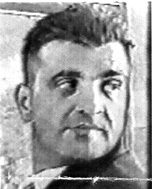
Milan Lukić is a Bosnian Serb war criminal who led the White Eagles paramilitary group during the Bosnian War. He was found guilty by the International Criminal Tribunal for the Former Yugoslavia (ICTY) in July 2009 of crimes against humanity and violations of war customs committed in the Višegrad municipality of Bosnia and Herzegovina during the Bosnian war and sentenced to life in prison.

The Houthi insurgency, also known as the Houthi rebellion, the Sa'dah War, or the Sa'dah conflict, was a military rebellion pitting Zaidi Shia Houthis against the Yemeni military that began in Northern Yemen and has since escalated into a full-scale civil war. The conflict was sparked in 2004 by the government's attempt to arrest Hussein Badreddin al-Houthi, a Zaidi religious leader of the Houthis and a former parliamentarian on whose head the government had placed a $55,000 bounty.
Khalid bin Mahfouz was a Saudi Arabian billionaire, banker, businessman, investor and former chairman of the National Commercial Bank (NCB). Khalid is the son of Salem Bin Mahfouz, a Saudi entrepreneur who rose from being a small-time moneychanger to becoming the founder of the NCB, the first private Saudi bank.
Bosnian mujahideen, also called El Mudžahid, were foreign Muslim volunteers who fought on the Bosnian Muslim side during the 1992–95 Bosnian War. They first arrived in central Bosnia in the latter half of 1992 with the aim of helping their Bosnian Muslim co-religionists in fights against Serb and Croat forces. Initially they mainly came from Arab countries, later from other Muslim-majority countries. Estimates of their numbers vary from 500 to 4,000.
The 1998 Arab Cup is the seventh edition of the Arab Cup hosted by Qatar, in Doha. Saudi Arabia won their first title.
Mujahideen, or Mujahidin, is the plural form of mujahid, an Arabic term that broadly refers to people who engage in jihad, interpreted in a jurisprudence of Islam as the fight on behalf of God, religion or the community (ummah).
Operation Miracle was a successful attack by the foreign troops of the Bosnian Mujahideen against the village of Krčevine in the Zavidovići municipality on 21 July 1995.

Konjic is a city located in the Herzegovina-Neretva Canton of the Federation of Bosnia and Herzegovina, one of two entities that make up Bosnia and Herzegovina. It is located in northern Herzegovina, around 60 kilometres (37 mi) southwest of Sarajevo, in a mountainous, heavily wooded area, and is 268 m (879 ft) above sea level. The municipality extends on both sides of the Neretva River. According to the 2013 census, the city of Konjic has a population of 10,732 inhabitants, whereas the municipality has 25,148.
The Trusina massacre occurred on 16 April 1993 in the village of Trusina, located in the municipality of Konjic in Bosnia and Herzegovina, where 22 people, four Croat prisoners of war and 18 Croat civilians, were killed by the Army of the Republic of Bosnia and Herzegovina (ARBiH) during the Croat–Bosniak War.
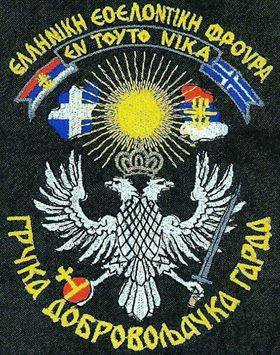
The Greek Volunteer Guard was a unit of Greek volunteers that fought in the Bosnian War on the side of the Army of the Republika Srpska. Some members of the unit are alleged to have been present in the area of the Srebrenica massacre and reportedly hoisted a Greek flag over the town, which was recorded 'for marketing purposes'.

The Zvornik massacre refers to acts of mass murder and violence committed against Bosniaks and other non-Serb civilians in Zvornik by Serb paramilitary groups at the beginning of the Bosnian War in 1992. It was part of a wider campaign of ethnic cleansing in the Bosnian War: by one estimate, 40,000 Bosniaks were expelled from the Zvornik district.
A car bomb exploded in Mostar, Bosnia and Herzegovina on 18 September 1997, injuring 29 people and destroying or damaging 120 apartments, as well as 120 vehicles. The attack is thought to have targeted Croat civilians and policemen as retribution against the Croatian Defence Council (HVO), which had fought Bosnian Muslim forces for control of the city during the Croat–Bosniak War. The attack was carried out by radical Islamists.
There has been an increase in incidents involving alleged radical Islamism in the Balkans since the 1990s.
Qatar has been accused of allowing terror financiers to operate within its borders, which has been one of the justifications for the Qatar diplomatic crisis that started in 2017 and ended in 2021. In 2014, David S. Cohen, then United States Under Secretary of the Treasury for Terrorism and Financial Intelligence, accused Qatari authorities of allowing financiers who were on international blacklists to live freely in the country: "There are U.S.- and UN-designated terrorist financiers in Qatar that have not been acted against under Qatari law." Accusations come from a wide variety of sources including intelligence reports, government officials, and journalists.
Foreign support in the Bosnian War included the funding, training or military support by foreign states and organizations outside Yugoslavia to any of the belligerents in the Bosnian War (1992–95).


