Creek mythology is related to a Creek Native American tribe who are originally from the southeastern United States, also known by their original name Mvskoke, the name they use to identify themselves today. Mvskoke is their name in traditional spelling. Modern Muscogees live primarily in Oklahoma, Alabama, Georgia, and Florida. Their language, Mvskoke, is a member of the Creek branch of the Muskogean language family. The Seminole are close kin to the Mvskoke and speak a Creek language as well. The Creeks were considered one of the Five Civilized Tribes. After the Creek War many of the Creeks escaped to Florida to create the Seminole.
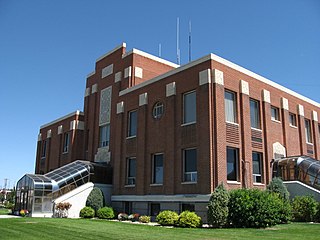
Cassia County is a county in the U.S. state of Idaho. As of the 2010 Census the county had a population of 22,952. The county seat and largest city is Burley.

Árpád was the head of the confederation of the Magyar tribes at the turn of the 9th and 10th centuries. He might have been either the sacred ruler or kende of the Hungarians, or their military leader or gyula, although most details of his life are debated by historians, because different sources contain contradictory information. Despite this, many Hungarians refer to him as the "founder of our country", and Árpád's preeminent role in the Hungarian conquest of the Carpathian Basin has been emphasized by some later chronicles. The dynasty descending from Árpád ruled the Kingdom of Hungary until 1301.

Coloman the Learned, also the Book-Lover or the Bookish was King of Hungary from 1095 and King of Croatia from 1097 until his death. Because Coloman and his younger brother Álmos were underage when their father Géza I died, their uncle Ladislaus I ascended the throne in 1077. Ladislaus prepared Coloman—who was "half-blind and humpbacked", according to late medieval Hungarian chronicles—for a church career, and Coloman was eventually appointed bishop of Eger or Várad in the early 1090s. The dying King Ladislaus preferred Álmos to Coloman when nominating his heir in early 1095. Coloman fled from Hungary but returned around 19 July 1095 when his uncle died. He was crowned in early 1096; the circumstances of his accession to the throne are unknown. He granted the Hungarian Duchy—one-third of the Kingdom of Hungary—to Álmos.
Shasta or Shastan may refer to:

Álmos was a Hungarian prince, the son of King Géza I of Hungary and brother of King Coloman. He held several governmental posts in the Kingdom of Hungary.

The City of Rocks National Reserve, also known as the Silent City of Rocks, is a United States National Reserve and state park lying 2 miles (3.2 km) north of the south central Idaho border with Utah. It is widely known for its excellent rock climbing and rock formations.
Almo is a very small unincorporated community in Cassia County, Idaho, United States. It is a short distance away from the City of Rocks National Reserve, a 14,300-acre (58 km2) area with granite columns as much as 600 feet (180 m) high.
Almo was in ancient Roman religion the eponymous god of the small river Almo in the vicinity of Rome. Like Tiberinus and others, he was prayed to by the augurs of Rome. In the water of Almo the aniconic stone embodying the mother of the gods, Cybele, used to be washed. He had a naiad daughter named Larunda.
Peter Bruntnell is a British singer-songwriter born in Wellington, New Zealand.

The Nanjundeshwara Temple is an ancient temple in the Hindu pilgrimage town of Nanjanagudu in the Karnataka state, Southern India. It is known for the ancient temple of the god Nanjundeshwara. The Nanjundeshwara temple is located in the town on the right bank of river Kapila, a tributary of the Kaveri. Nanjangudu is also known as "Dakshina Prayaga" or "Prayag of South".

The Albion Mountains are a mountain range in the U.S. states of Idaho (~99%) and Utah (~1%), spanning Cassia County, Idaho and barely reaching into Box Elder County, Utah. The highest point in the range is Cache Peak at 10,339 feet (3,151 m), and the range is a part of the Great Basin Divide and the Basin and Range Province. Most of the mountains are part of the Albion Division of the Minidoka Ranger District of Sawtooth National Forest.
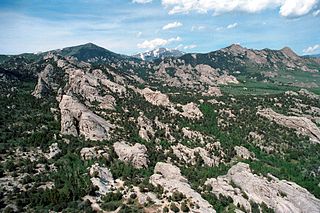
Cache Peak, at 10,339 feet (3,151 m) above sea level, is the highest peak in the Albion Mountains of Cassia County in Southern Idaho. Cache Peak is located in the central part of the range southeast of Oakley and north of Almo in the Albion Division of the Minidoka Ranger District of Sawtooth National Forest.

The Battle of Haram or Chramon was fought between the forces of King Stephen II of Hungary and Emperor John II Komnenos of the Byzantine Empire in the year 1128, or possibly earlier – in 1125, in what is now Serbia, and resulted in a major defeat for the Hungarians.

Almo is an unincorporated community in Calloway County, Kentucky, United States. No one knows when the community was founded by a rail center was established in the early 1890's by the Nashville, Chattanooga & St. Louis Railway. A post office was opened on February 11, 1891 and given the name Buena, Kentucky. The name of the post office was changed to Almo on November 18, 1892. The new name may have been a shortening of the name Alamo from the Texas Revolution.

Álmos, also Almos or Almus, was — according to the uniform account of Hungarian chronicles — the first head of the "loose federation" of the Hungarian tribes from around 850. Whether he was the sacred ruler (kende) of the Hungarians, or their military leader (gyula) is subject to scholarly debate. He apparently accepted the Khazar khagan's suzerainty in the first decade of his reign, but the Hungarians acted independently of the Khazars from around 860. The 14th-century Illuminated Chronicle narrates that he was murdered in Transylvania at the beginning of the Hungarian conquest of the Carpathian Basin around 895.

The Almone is a small river of the Ager Romanus, a few miles south of the city of Rome. Today the river is polluted and is channelled to a sewage treatment plant and no longer reaches its natural confluence with the Tiber.

The Orsova Offensive was a military engagement fought between the armies of Romania and Austria-Hungary at the start of the Romanian Campaign in August–September 1916. It ended in a Romanian victory which led to the Romanian occupation of the west bank of the Cserna (Cerna) River for over two months.
