
Sergeant York is a 1941 American biographical film about the life of Alvin C. York, one of the most decorated American soldiers of World War I. Directed by Howard Hawks and starring Gary Cooper in the title role, the film was a critical and commercial success, and became the highest-grossing film of 1941.

Alvin Cullum York, also known by his rank as Sergeant York, was one of the most decorated United States Army soldiers of World War I. He received the Medal of Honor for leading an attack on a German machine gun nest, gathering 35 machine guns, killing at least 25 enemy soldiers and capturing 132 prisoners. York's Medal of Honor action occurred during the United States-led portion of the Meuse–Argonne offensive in France, which was intended to breach the Hindenburg line and force the Germans to surrender. He earned decorations from several allied countries during WWI, including France, Italy and Montenegro.

The Meuse–Argonne offensive was a major part of the final Allied offensive of World War I that stretched along the entire Western Front. It was fought from September 26, 1918, until the Armistice of November 11, 1918, a total of 47 days. The Meuse–Argonne offensive was the largest in United States military history, involving 1.2 million American soldiers. It is also the deadliest battle in the history of the United States Army, resulting in over 350,000 casualties, including 28,000 German lives, 26,277 American lives and an unknown number of French lives. American losses were worsened by the inexperience of many of the troops, the tactics used during the early phases of the operation and the widespread onset of the global influenza outbreak called the "Spanish flu".

William Frank Buckley Jr. was an American conservative writer, public intellectual, and political commentator. In 1955, he founded National Review, the magazine that stimulated the conservative movement in the mid-20th century United States. Buckley hosted 1,429 episodes of the public affairs television show Firing Line (1966–1999), the longest-running public affairs show with a single host in American television history, where he became known for his distinctive Transatlantic accent and wide vocabulary.

James Elliot Lapine is an American stage director, playwright, screenwriter, and librettist. He has won the Tony Award for Best Book of a Musical three times, for Into the Woods, Falsettos, and Passion. He has frequently collaborated with Stephen Sondheim and William Finn.

Ross S. Bagdasarian, known professionally by his stage name David Seville, was an American singer, songwriter, record producer, and actor, best known for creating the cartoon band Alvin and the Chipmunks. Initially a stage and film actor, he rose to prominence in 1958 with the songs "Witch Doctor" and "The Chipmunk Song ", which both became Billboard number-one singles. He produced and directed The Alvin Show, which aired on CBS in 1961–62.
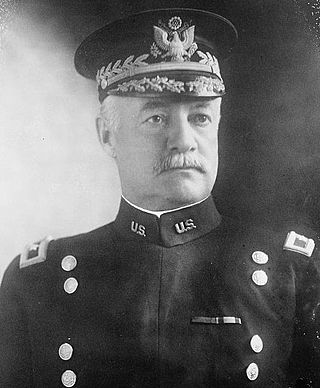
Lieutenant General Hunter Liggett was a senior United States Army officer. His 42 years of military service spanned the period from the Indian campaigns to the trench warfare of World War I. Additionally, he also identified possible invasion sites in Luzon, particularly Lingayen Gulf, which were used during World War II in 1941 by the Japanese and in 1945 by the United States.
William Edmund Butterworth III, better known by his pen name W. E. B. Griffin, was an American writer of military and detective fiction with 59 novels in seven series published under that name. Twenty-one of those books were co-written with his son, William E Butterworth IV. He also published under 11 other pseudonyms and three versions of his real name.
Douglas Century is a Canadian-American author and journalist. He was educated at Princeton University.
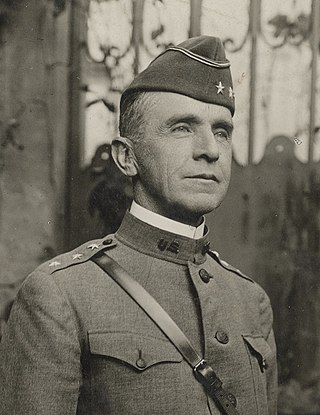
Lieutenant General Robert Lee Bullard was a senior officer of the United States Army. He was involved in conflicts in the American Western Frontier, the Philippines, and World War I, where he commanded the 1st Infantry Division during the Battle of Cantigny while serving on the Western Front. He later was an administrator in Cuba.

William Bast was an American screenwriter and author. In addition to writing scripts for motion pictures and television, he was the author of two biographies of the screen actor James Dean. He often worked with his partner Paul Huson.
The William E. Colby Military Writers' Award was established in 1999 by the William E. Colby Military Writers' Symposium at Norwich University in Vermont in order to recognize "a first work of fiction or non-fiction that has made a major contribution to the understanding of intelligence operations, military history, or international affairs." It is named in honor of William Egan Colby. As of 2021, Alex Kershaw is the chair of its selection committee.

Cornay is a commune in the Ardennes department in northern France.
Carlo D'Este was an American military historian and biographer, author of several books, especially on World War II. He was a decorated U.S. Army lieutenant colonel. In 2011, he was awarded the Pritzker Literature Award for Lifetime Achievement in Military Writing.

Patrick K. O’Donnell is an American author of books on military history.
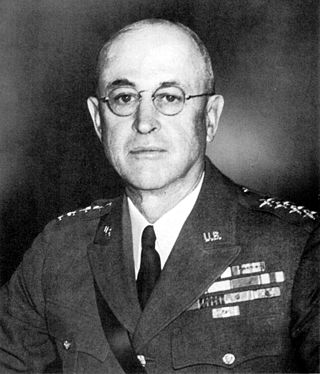
Malin Craig was a general in the United States Army who served as the 14th Chief of Staff of the United States Army from 1935 to 1939. He served in World War I and was recalled to active duty during World War II He played a large role in preparing the U.S. Army for World War II.

Douglas Vincent Mastriano is an American far-right politician and retired military officer who has served in the Pennsylvania Senate since 2019, representing the 33rd district. A member of the Republican Party, he was also the nominee in the 2022 Pennsylvania gubernatorial election.
Kate Klunk is a member of the Pennsylvania House of Representatives, representing the 169th House district in York County, Pennsylvania. Klunk was elected to serve as a representative on November 4, 2014.

The 2022 Pennsylvania gubernatorial election was held on November 8, 2022, to elect the governor of Pennsylvania and lieutenant governor of Pennsylvania. Democratic state attorney general Josh Shapiro defeated Republican state senator Doug Mastriano in a landslide victory to succeed term-limited incumbent Democratic governor Tom Wolf. Primaries were held on May 17, 2022. Shapiro won the Democratic nomination after running unopposed and Mastriano won the Republican nomination with 44% of the vote. Mastriano's nomination drew attention due to his far-right political views.

Douglas Stuart is a Scottish-American writer and fashion designer. Born in Glasgow, Scotland, he studied at the Scottish College of Textiles and London's Royal College of Art, before moving at the age of 24 to New York City, where he built a successful career in fashion design, while also beginning to write. His debut novel, Shuggie Bain – which had initially been turned down by many publishers on both sides of the Atlantic – was awarded the 2020 Booker Prize. His second novel, Young Mungo, was published in April 2022.


