Mansour ; also spelled Mounsor, Monsur (Bengali), Mansoor, Manser, Mansur, Mansyur (Indonesian) or Mensur (Turkish), is a male Arabic name that means "He who is victorious", from the Arabic root naṣr (نصر), meaning "victory."

Mirza Nasir-ud-Din Muḥammad Shah was the thirteenth Mughal emperor from 1719 to 1748. He was son of Khujista Akhtar, the fourth son of Bahadur Shah I. After being chosen by the Sayyid Brothers of Barha, he ascended the throne at the young age of 16, under their strict supervision.
Niazi or Niyazai is one of the largest Pashtun tribes which resides in Afghanistan and northwestern part of Pakistan.

Mughal architecture is the type of Indo-Islamic architecture developed by the Mughals in the 16th, 17th and 18th centuries throughout the ever-changing extent of their empire in the Indian subcontinent. It developed from the architectural styles of earlier Muslim dynasties in India and from Iranian and Central Asian architectural traditions, particularly Timurid architecture. It also further incorporated and syncretized influences from wider Indian architecture, especially during the reign of Akbar. Mughal buildings have a uniform pattern of structure and character, including large bulbous domes, slender minarets at the corners, massive halls, large vaulted gateways, and delicate ornamentation; examples of the style can be found in modern-day Afghanistan, Bangladesh, India and Pakistan.
Mirza is a name of Persian origin. It is used as a surname or prefix to identify patriarchal lineage.
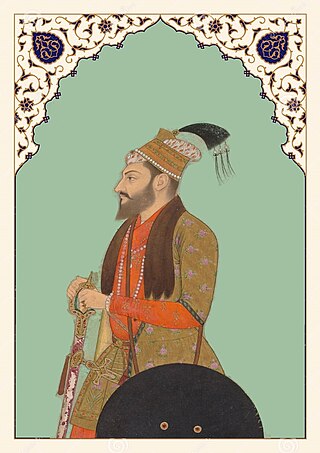
Mirza Muhammad Murad Bakhsh (9 October 1624 – 14 December 1661) was a Mughal prince and the youngest surviving son of Mughal Emperor Shah Jahan and Empress Mumtaz Mahal. He was the Subahdar of Balkh, till he was replaced by his elder brother Aurangzeb in the year 1647.

Bhopal State was an Islamic principality founded in the beginning of 18th-century India by the Afghan Mughal noble Dost Muhammad Khan. It was a tributary state during 18th century, a princely salute state with 19-gun salute in a subsidiary alliance with British India from 1818 to 1947, and an independent state from 1947 to 1949. Islamnagar was founded and served as the State's first capital, which was later shifted to the city of Bhopal.
Khan is a surname of Afghan-Mongol origin, today most commonly found in parts of India, Pakistan, Afghanistan, Bangladesh, and Iran. It is derived from the historic title khan, referring to military chief or royalty. It originated as a hereditary title among nomadic tribes in the Central and Eastern Eurasian Steppe during antiquity and was popularized by Afghan dynasties in the rest of Asia as well as in Eastern Europe during the medieval period.

Muhammad Saleh Kamboh Lahori was a noted Mughal calligraphist and official biographer of Emperor Shah Jahan and the teacher of Mughal Emperor Aurangzeb. Though a widely read person, little is known of the life of Muhammad Saleh Kamboh other than the works he composed. He was son of Mir Abdu-lla, Mushkin Kalam, whose title shows him to also have been a fine writer. He is believed to be younger brother of Inayat-Allah Kamboh and worked as a Shahi Dewan (Minister) with the governor of Lahore. He held the title of Sipahsalar.
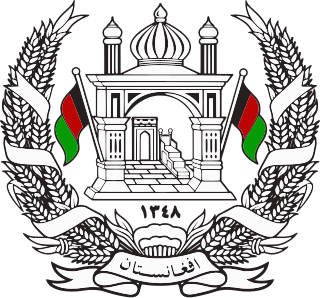
The Barakzai dynasty also known as the Muhammadzai dynasty ruled modern day Afghanistan from 1823 to 1978 when the monarchy ended de jure under Musahiban Mohammad Zahir Shah and de facto under his cousin Sardar Mohammad Daoud Khan. The Barakzai dynasty was established by Dost Mohammad Khan after the Durrani dynasty of Ahmad Shah Durrani was removed from power. As the Pahlavi era in Iran, the Muhammadzai era was known for its progressivist modernity in which Afghanistan was referred to as the "Switzerland of Asia".

Hafiz Rahmat Khan was the Regent of Rohilkhand in North India, from 1749 to 1774. He was a Pashtun by background, ruling over Rohillas. Hafiz Rahmat Khan had served honorably throughout the reign of three Mughal Emperors: Ahmad Shah Bahadur, Alamgir II and Shah Alam II. He was also a mentor of Prince Mirza Jawan Bakht.
Begum is a female title which is also used in Mirza families/lineages, Daughter of Beg or Wife of Beg, a given name and surname.
Fazal or Fazl is a given name meaning grace. Notable people with the name include:
Badi-uz-Zaman Safavi was a prince of the Safavid dynasty of Persia and a powerful amir at the Mughal court during Emperor Shah Jahan's reign. He is better known by the title Shahnawaz Khan or Mirza Deccan. Shahnawaz Khan was the father-in-law of Mughal emperor Aurangzeb and his younger brother Prince Murad Baksh.
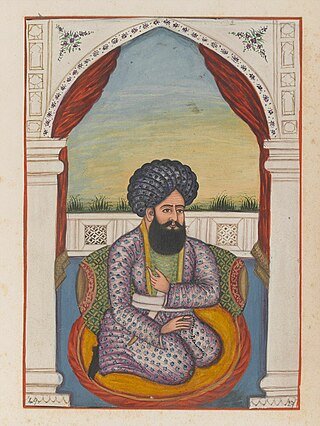
Sultan Mohammad Khan, also known as Ghazi Sardar Sultan Mohammad Talaei, and known by his epithet, Sultan Mohammad Khan the Golden was an Afghan chief minister and regent. He was a powerful brother of Emir Dost Mohammad Khan, the eventual ruler of Afghanistan who seized control of Kabul from him. Prior to and during the reign of Dost Mohammad Khan, Sultan Muhammad Khan Telai was chief minister and governor of various regions of Afghanistan, including Kabul, Peshawar and Kohat. He was the first of the Musahiban, a Mohammadzai dynasty that began with him and ruled Afghanistan for more than 150 years, in various forms such as emir, king or president from 1823 to 1978.

The Subah of Lahore was a province of the Mughal Empire encompassing the central Punjab region, now divided between Pakistan and India. It was created as one of the original 12 Subahs of the Mughal Empire under the administrative reforms carried by emperor Akbar in 1580. The province ceased to exist after the death of its last viceroy, Adina Beg in 1758, with large parts being incorporated into Durrani Empire.
This page is based on this
Wikipedia article Text is available under the
CC BY-SA 4.0 license; additional terms may apply.
Images, videos and audio are available under their respective licenses.
