
The politics of Andorra take place in a framework of a parliamentary constitutional diarchy, and a multi-party system. Executive power is exercised by the government, with the Head of Government of Andorra as chief executive. Legislative power is vested in both the government and parliament. The judiciary is independent of the executive and the legislature.
There are two types of elections in Andorra: parliamentary elections and local elections. The 28 members of the General Council of the Valleys are elected in parliamentary elections for a maximum term of four years. In the local elections, the council members of the seven parishes of Andorra are elected for a four-year term.
Municipal elections in Barcelona are held every four years to elect the city council. The mayor is elected indirectly by the councilliors on the first plenary session of the term.
Parliamentary elections were held in Andorra on 26 April 2009, the fourth under the 1993 Constitution. The elections were held at the end of the normal four-year term of the General Council, but also following months of intense pressure from Co-Prince Nicolas Sarkozy to change the country's banking secrecy laws.

The 2015 Barcelona City Council election, also the 2015 Barcelona municipal election, was held on Sunday, 24 May 2015, to elect the 10th City Council of the municipality of Barcelona. All 41 seats in the City Council were up for election. The election was held simultaneously with regional elections in thirteen autonomous communities and local elections all throughout Spain.

The 1987 Spanish local elections were held on Wednesday, 10 June 1987, to elect all 65,577 councillors in the 8,062 municipalities of Spain and all 1,028 seats in 38 provincial deputations. The elections were held simultaneously with regional elections in thirteen autonomous communities, as well as local elections in the three foral deputations of the Basque Country, the ten island councils in the Balearic and Canary Islands and the 1987 European Parliament election.

The 1987 Barcelona City Council election, also the 1987 Barcelona municipal election, was held on Wednesday, 10 June 1987, to elect the 3rd City Council of the municipality of Barcelona. All 43 seats in the City Council were up for election. The election was held simultaneously with regional elections in thirteen autonomous communities and local elections all throughout Spain, as well as the 1987 European Parliament election.

The 2015 Andorran local elections were held on 13 December. Voters elected the council members of the seven parishes.

The 2011 Andorran local elections were held on 4 December. Voters elected the representatives of the seven parishes.

The 1991 Spanish local elections were held on Sunday, 26 May 1991, to elect all 66,308 councillors in the 8,060 municipalities of Spain and all 1,032 seats in 38 provincial deputations. The elections were held simultaneously with regional elections in thirteen autonomous communities, as well as local elections in the three foral deputations of the Basque Country and the ten island councils in the Balearic and Canary Islands.

The 1995 Spanish local elections were held on Sunday, 28 May 1995, to elect all 65,869 councillors in the 8,067 municipalities of Spain and all 1,034 seats in 38 provincial deputations. The elections were held simultaneously with regional elections in thirteen autonomous communities, as well as local elections in the three foral deputations of the Basque Country and the ten island councils in the Balearic and Canary Islands.
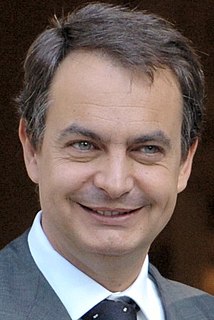
The 2003 Spanish local elections were held on Sunday, 25 May 2003, to elect all 65,510 councillors in the 8,108 municipalities of Spain and all 1,036 seats in 38 provincial deputations. The elections were held simultaneously with regional elections in thirteen autonomous communities, as well as local elections in the three foral deputations of the Basque Country and the ten island councils in the Balearic and Canary Islands.
The 1983 Andorran local elections were held on 12 December. Voters elected the council members of the seven parishes of Andorra. For first time since 1867, local elections were not hold on the same day as parliamentary elections. This was also the first time that the totality of the council seats were up for election.
The 1987 Andorran local elections were held on 13 and 20 December. Voters elected the council members of the seven parishes of Andorra. Following the election, the communal councils elected the mayors and deputy mayors.
The 1991 Andorran local elections were held on 15 and 22 December. Voters elected the council members of the seven parishes of Andorra. Following the election, the communal councils elected the mayors and deputy mayors.
The 1999 Andorran local elections were held on 12 December. Voters elected the council members of the seven parishes.

The 2003 Andorran local elections were held on 14 December. Voters elected the council members of the seven parishes.

The 2007 Andorran local elections were held on 2 December. Voters elected the council members of the seven parishes.
The 2014 Sammarinese local elections were held on 30 November to elect the mayors and the councils of the 9 municipalities of San Marino. Overall turnout was 44.9%.
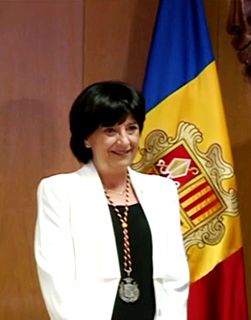
Maria Rosa Ferrer i ObiolsGOIH LH, was an Andorran lawyer and politician. She was the Cònsol Major of the Comú d'Andorra la Vella from 2007 until 2015 and the Minister of Health, Welfare and Employment of the Principality of Andorra until 4 January 2016.


