Aphasia is an inability to comprehend or formulate language because of damage to specific brain regions. This damage is typically caused by a cerebral vascular accident (stroke), or head trauma; however, these are not the only possible causes. To be diagnosed with aphasia, a person's speech or language must be significantly impaired in one of the four communication modalities following acquired brain injury or have significant decline over a short time period. The four communication modalities are auditory comprehension, verbal expression, reading and writing, and functional communication.

Expressive aphasia, also known as Broca's aphasia, is a type of aphasia characterized by partial loss of the ability to produce language, although comprehension generally remains intact. A person with expressive aphasia will exhibit effortful speech. Speech generally includes important content words, but leaves out function words that have only grammatical significance and not real-world meaning, such as prepositions and articles. This is known as "telegraphic speech". The person's intended message may still be understood but his or her sentence will not be grammatically correct. In very severe forms of expressive aphasia, a person may only speak using single word utterances. Typically, comprehension is mildly to moderately impaired in expressive aphasia due to difficulty understanding complex grammar.
Wernicke's aphasia, also known as receptive aphasia, sensory aphasia, or posterior aphasia, is a type of aphasia in which individuals have difficulty understanding written and spoken language. Patients with Wernicke's aphasia demonstrate fluent speech, which is characterized by typical speech rate, intact syntactic abilities, and effortless speech output. Writing often reflects speech in that it tends to lack content or meaning. In most cases, motor deficits do not occur in individuals with Wernicke's aphasia. Therefore, they may produce a large amount of speech without much meaning. Wernicke's aphasia was named after Carl Wernicke who is credited with discovering the area of the brain responsible for language comprehension. Individuals with Wernicke's aphasia are typically unaware of their errors in speech and do not realize their speech may lack meaning. They typically remain unaware of even their most profound language deficits.
Aphasiology is the study of language impairment usually resulting from brain damage, due to neurovascular accident—hemorrhage, stroke—or associated with a variety of neurodegenerative diseases, including different types of dementia. It is also the name of a scientific journal covering the area. These specific language deficits, termed aphasias, may be defined as impairments of language production or comprehension that cannot be attributed to trivial causes such as deafness or oral paralysis. A number of aphasias have been described, but two are best known: expressive aphasia and receptive aphasia.
Conduction aphasia, also called associative aphasia, is a relatively rare form of aphasia. An acquired language disorder, it is characterized by intact auditory comprehension, fluent speech production, but poor speech repetition. They are fully capable of understanding what they are hearing, but fail to encode phonological information for production. This deficit is load-sensitive as patients show significant difficulty repeating phrases, particularly as the phrases increase in length and complexity and as they stumble over words they are attempting to pronounce. Patients will display frequent errors during spontaneous speech, such as substituting or transposing sounds. They will also be aware of their errors, and will show significant difficulty correcting them. For example: "Clinician: Now, I want you to say some words after me. Say ‘boy’. Patient: Boy. Clinician: Home. Patient: Home. Clinician: Seventy-nine. Patient: Ninety-seven. No … sevinty-sine … siventy-nice…. Clinician: Let’s try another one. Say ‘refrigerator’. Patient: Frigilator … no? how about … frerigilator … no frigaliterlater … aahh! It’s all mixed up!"

Global aphasia is a severe form of nonfluent aphasia, caused by damage to the left side of the brain, that affects receptive and expressive language skills as well as auditory and visual comprehension. Acquired impairments of communicative abilities are present across all language modalities, impacting language production, comprehension, and repetition. Patients with global aphasia may be able to verbalize a few short utterances and use non-word neologisms, but their overall production ability is limited. Their ability to repeat words, utterances, or phrases is also affected. Due to the preservation of the right hemisphere, an individual with global aphasia may still be able to express themselves through facial expressions, gestures, and intonation. This type of aphasia often results from a large lesion of the left perisylvian cortex. The lesion is caused by an occlusion of the left middle cerebral artery and is associated with damage to Broca's area, Wernicke's area, and insular regions which are associated with aspects of language.

Mixed transcortical aphasia is the least common of the three transcortical aphasias. This type of aphasia can also be referred to as "Isolation Aphasia". This type of aphasia is a result of damage that isolates the language areas from other brain regions. Broca’s, Wernicke’s, and the arcuate fasiculus are left intact; however, they are isolated from other brain regions.
Semantic dementia (SD), also known as semantic variant primary progressive aphasia (svPPA), is a progressive neurodegenerative disorder characterized by loss of semantic memory in both the verbal and non-verbal domains. However, the most common presenting symptoms are in the verbal domain. SD is one of the three canonical clinical syndromes associated with frontotemporal lobar degeneration (FTLD), with the other two being frontotemporal dementia and progressive nonfluent aphasia. SD is a clinically defined syndrome, but is associated with predominantly temporal lobe atrophy and hence is sometimes called temporal variant FTLD (tvFTLD). SD is one of the three variants of Primary Progressive Aphasia (PPA), which results from neurodegenerative disorders such as FTLD or Alzheimer's disease. It is important to note the distinctions between Alzheimer’s Disease and Semantic dementia with regard to types of memory affected. In general, Alzheimer’s Disease is referred to as disorder affecting mainly episodic memory, defined as the memory related to specific, personal events distinct for each individual. Semantic dementia generally affects semantic memory, which refers to long-term memory that deals with common knowledge and facts.3
Progressive nonfluent aphasia (PNFA) is one of three clinical syndromes associated with frontotemporal lobar degeneration. PNFA has an insidious onset of language deficits over time as opposed to other stroke-based aphasias, which occur acutely following trauma to the brain. The specific degeneration of the frontal and temporal lobes in PNFA creates hallmark language deficits differentiating this disorder from other Alzheimer-type disorders by the initial absence of other cognitive and memory deficits. This disorder commonly has a primary effect on the left hemisphere, causing the symptomatic display of expressive language deficits and sometimes may disrupt receptive abilities in comprehending grammatically complex language.

Primary progressive aphasia (PPA) is a type of neurological syndrome in which language capabilities slowly and progressively become impaired. As with other types of aphasia, the symptoms that accompany PPA depend on what parts of the left hemisphere are significantly damaged. However, unlike most other aphasias, PPA results from continuous deterioration in brain tissue, which leads to early symptoms being far less detrimental than later symptoms. Those with PPA slowly lose the ability to speak, write, read, and generally comprehend language. Eventually, almost every patient becomes mute and completely loses the ability to understand both written and spoken language. Although it was first described as solely impairment of language capabilities while other mental functions remain intact, it is now recognized that many, if not most of those afflicted suffer from impairment of memory, short term memory formation and loss of executive functions. It was first described as a distinct syndrome by M.-Marsel Mesulam in 1982. Primary progressive aphasias have a clinical and pathological overlap with the frontotemporal lobar degeneration (FTLD) spectrum of disorders and Alzheimer's disease. However, PPA is not considered synonymous to Alzheimer's disease due to the fact that, unlike those affected by Alzheimer's disease, those with PPA are generally able to maintain the ability to care for themselves, remain employed, and pursue interests and hobbies. Moreover, in diseases such as Alzheimer's disease, Pick's disease, and Creutzfeldt-Jakob disease, progressive deterioration of comprehension and production of language is just one of the many possible types of mental deterioration, such as the progressive decline of memory, motor skills, reasoning, awareness, and visuospatial skills.
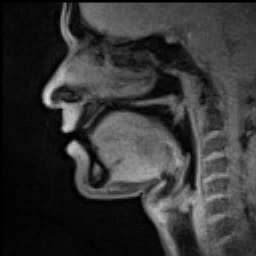
Speech is human vocal communication using language. Each language uses phonetic combinations of a limited set of perfectly articulated and individualized vowel and consonant sounds that form the sound of its words, and using those words in their semantic character as words in the lexicon of a language according to the syntactic constraints that govern lexical words' function in a sentence. In speaking, speakers perform many different intentional speech acts, e.g., informing, declaring, asking, persuading, directing, and can use enunciation, intonation, degrees of loudness, tempo, and other non-representational or paralinguistic aspects of vocalization to convey meaning. In their speech speakers also unintentionally communicate many aspects of their social position such as sex, age, place of origin, physical states, psychic states, physico-psychic states, education or experience, and the like.

Anomiidae is a family of saltwater clams, marine bivalve molluscs related to scallops and oysters, and known as anomiids. It contains seven genera.
Harold Goodglass was a prominent pioneer of neuropsychological tests and assessment, and spent much of his career investigating aphasia. The Boston VA Hospital, where he spent many years investigating brain function, now houses the Harold Goodglass Aphasia Research Center.

The mental lexicon is defined as a mental dictionary that contains information regarding a word's meaning, pronunciation, syntactic characteristics, and so on.
The Boston Naming Test (BNT), introduced in 1983 by Edith Kaplan, Harold Goodglass and Sandra Weintraub, is a widely used neuropsychological assessment tool to measure confrontational word retrieval in individuals with aphasia or other language disturbance caused by stroke, Alzheimer's disease, or other dementing disorder. A common and debilitating feature is anomic aphasia, an impairment in the ability to name objects. The BNT contains 60 line drawings graded in difficulty. Patients with anomia often have greater difficulties with the naming of not only difficult and low frequency objects but also easy and high frequency objects. Naming difficulties may be rank ordered along a continuum. Items are rank ordered in terms of their ability to be named, which is correlated with their frequency. This type of picture-naming test is also useful in the examination of children with learning disabilities and the evaluation of brain-injured adults.
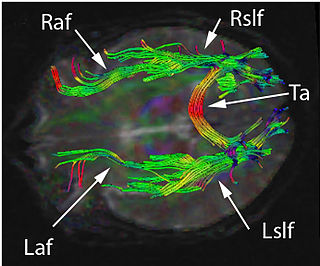
Disconnection syndrome is a general term for a number of neurological symptoms caused by damage to the white matter axons of communication pathways—via lesions to association fibers or commissural fibers—in the cerebrum, independent of any lesions to the cortex. The behavioral effects of such disconnections are relatively predictable in adults. Disconnection syndromes usually reflect circumstances where regions A and B still have their functional specializations except in domains that depend on the interconnections between the two regions.


