
Viljandi is a town and municipality in southern Estonia with a population of 17,407 in 2019. It is the capital of Viljandi County and is geographically located between two major Estonian cities, Pärnu and Tartu. The town was first mentioned in 1283, upon being granted its town charter by Wilhelm von Endorpe. The town became a member of the Hanseatic League at the beginning of the 14th century, and is one of five Estonian towns and cities in the league. The once influential Estonian newspaper Sakala was founded in Viljandi in 1878.

Eda-Ines Etti, also known as simply Ines, is an Estonian singer and songwriter. Etti represented Estonia in the Eurovision Song Contest 2000 with the song "Once in a Lifetime", placing fourth. Until their win the following year, this was Estonia's best result in the competition.

Vennaskond is an Estonian punk rock band founded in 1984. The band has toured in Estonia, Finland, Latvia, Romania, Sweden, Germany, France, India, Poland and the United States. To show respect to the band, Metallica covered Vennaskond's hit song Insener Garini hüperboloid in Estonia in front of a 60 000 strong crowd during their gig in Tartu, Estonia on 18 July 2019. The band is explicitly anarchist, with many lyrics referring to historical anarchists. The frontman of the band, Tõnu Trubetsky, has been called "Estonia's leading anarchist".

Singer Vinger is an Estonian punk rock band. It was founded in 1985, before that being named Pära Trust, Turist, and Aken (Window), among other names. The name Singer Vinger was picked by the authorities because Turist was deemed inappropriate by the Soviet Estonian ministry of culture. Throughout the name changes, the band's leader, main songwriter, and singer has been Hardi Volmer. The main themes in the band's songs are social-critical irony and humour.
The Estonian Academy of Music and Theatre began as a mixed choir of the Estonia Society Musical Department (EMD) on the eve of World War I. The assembly of the Estonia Society created the Tallinn Higher Music School on November 17, 1918. The opening ceremony took place on September 28, 1919. In 1923 the educational institution was renamed the Tallinn Conservatoire. In 1938 the State Drama School was opened. In 1993 the school was renamed the Estonian Academy of Music. In 1995 the Drama Faculty was renamed the Higher Theatre School.
Smilers is an Estonian rock band formed in 1991 by Hendrik Sal-Saller. The name reportedly originated from a Rod Stewart album, Smiler. The band was first named Lezer Brozers. In the early years Smilers produced two albums in Finland, but as these were not successful, they returned to Estonia and gained fame soon after. Smilers won the Artist of the Year award in the 2004 Estonian Music Awards. Smilers were also awarded a Golden Disc for Song of the Year in 2004 for "Ainult unustamiseks".
Raud-Ants is an Estonian folk metal band from Viljandi that was formed in 2002. Raud-Ants combines Estonian folk music with Heavy metal. The band was raised in Tartu and Tallinn.

The Estonian Cup, also known as the Kaamos SuperCup for sponsorship reasons, is an annual cup competition for Estonian basketball teams. It is organized by the Estonian Basketball Association.

Ott Kadarik is a notable Estonian architect.

The Princes is an Estonian rock band. The band was formed in 2009 by Edward Krimm and Jaagup Tormis, the grandson of one of the greatest living choral composers Veljo Tormis. The current lineup consists of Edward Krimm, Jaagup Tormis, Kaur Garšnek (guitar) and Valdur Viiklepp. All the members have a musical background and have taken part in other musical groups as well. Most notably, Jaagup Tormis has played in Sinine and Pedigree, Kaur Garšnek has played in Kreatiivmootor. Past members of The Princes have included Taavi Paomets, Kostja Tsõbulevski and Madis Viksi.
Pääru Oja is an Estonian stage, film, voice, and television actor.

Andres Raag is an Estonian stage, film, radio and television actor and singer with the band L'Dorado since 1993.

Tõnis Kõiv is an Estonian politician and lawyer who represented the Estonian Reform Party in the Riigikogu from 2005 to 2015.
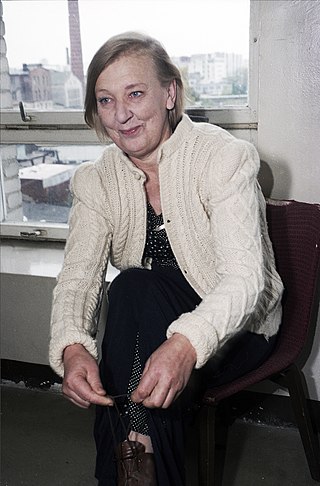
Ines Aru is an Estonian stage, radio, voice, television, and film actress whose career began in the early 1960s.
Kaur Alttoa is an Estonian art historian and cultural historian.

Kalju Orro is an Estonian stage, film and television actor, acting instructor, lecturer, theatre producer, and pedagogue.
This page summarizes Estonian football in 2020. It contains information about the league system, national teams, beach football and futsal. On 13 March 2020, football was suspended in Estonia due to the COVID-19 pandemic. Meistriliiga was resumed on 19 May and Esiliiga and Esiliiga B were continued a week later.
This page summarizes Estonian football in 2021. It contains information about the league system, national teams, beach football and futsal.
This page summarizes everything related to Estonian football in the year 2022. It contains information about different league systems, national teams, futsal, beach football and most important transfers.
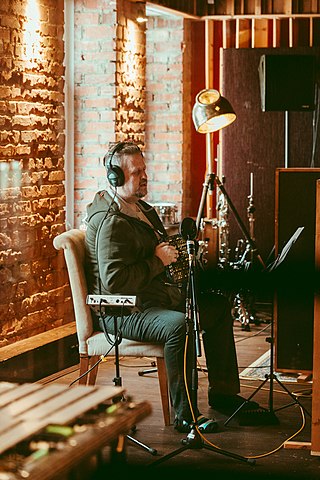
Margus Põldsepp is an Estonian musician who performs in several ensembles, including Untsakad, Lõõtsavägilased and Põldsepp ja Pojad.


