Hardcore, hard core or hard-core may refer to:

Fear Factory is an American industrial metal band formed in Los Angeles in 1989. Throughout the band's career, they have released ten full-length albums and have evolved through a succession of sounds, all in their main style of industrial metal. Over the years, Fear Factory has seen frequent changes in its lineup, with lead vocalist Burton C. Bell being the only consistent member for 31 years until his departure in 2020. Guitarist Dino Cazares is the only original member still in the band. The band went on hiatus in March 2002 following some internal disputes, but resumed activity a year later without founding member Cazares. Previous bassist Christian Olde Wolbers replaced him on guitar, while Byron Stroud handled bass duties. After a second hiatus in 2006, Fear Factory reunited in April 2009 with a new lineup that featured a returning Cazares, Gene Hoglan as the replacement of original drummer Raymond Herrera, and Bell and Stroud reprising their respective roles; this lineup recorded the band's seventh studio album titled Mechanize (2010). Wolbers and Herrera — together comprising 50% of the band's legal ownership — disputed the legitimacy of the reunited band, and a legal battle from both parties had begun. Despite this, Fear Factory has since released three more albums: The Industrialist (2012), Genexus (2015) and Aggression Continuum (2021).
Drone or The Drones may refer to:
An empire is a group of states or peoples under centralized rule.

Analytical psychology is a term coined by Carl Jung, a Swiss psychiatrist, to describe research into his new "empirical science" of the psyche. It was designed to distinguish it from Freud's psychoanalytic theories as their seven-year collaboration on psychoanalysis was drawing to an end between 1912 and 1913. The evolution of his science is contained in his monumental opus, the Collected Works, written over sixty years of his lifetime.
Ascension or ascending may refer to:

Archetype is the fifth studio album by American industrial metal band Fear Factory. It was the first album by the band not to feature Dino Cazares, with Christian Olde Wolbers handling both bass and guitar duties. It was released on April 20, 2004, through Liquid 8. It debuted at No. 30 on the Billboard 200 chart and is their highest charting album to date.
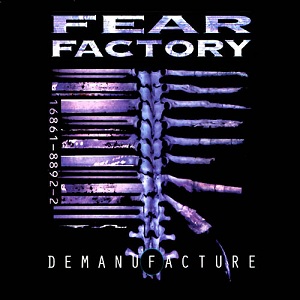
Demanufacture is the second studio album by American industrial metal band Fear Factory, released on March 3, 1995, by Roadrunner Records. It is the band's first album with their classic line-up, adding new bassist Christian Olde Wolbers, who performed on close to half of the album's tracks, with guitarist Dino Cazares handling the rest. Many regard it as the band's best album and a heavy metal classic. The album was certified Gold in Australia by ARIA and Silver in the UK by the BPI.

Spineshank is an American nu metal / industrial metal band from Los Angeles. The band released four studio albums: Strictly Diesel (1998), The Height of Callousness (2000), Self-Destructive Pattern (2003), and Anger Denial Acceptance (2012).

Transgression is the sixth studio album by American industrial metal band Fear Factory. It was released in the UK on August 22, 2005 through Calvin Records and released in the US and Canada the next day on August 23. Guest appearances include Billy Gould, the bassist of Faith No More, and Lamb of God guitarist Mark Morton, who co-wrote the song "New Promise". The album was released as an enhanced CD with access to the exclusive Fear Factory website. It was also released as an enhanced DualDisc with the DVD side featuring the whole album in (48,000 kHz), music videos and "The Making of Transgression" video. One could also retrieve another bonus track, entitled "My Grave", by putting the CD into the computer and clicking the 'Music' section at the special website.
Fear is an emotion that arises from the perception of danger.

The discography of Fear Factory, an American industrial metal band, consists of ten studio albums, three compilation albums, two remix albums, one demo album, one video album, five extended plays, twenty-one singles and thirteen music videos. Fear Factory formed in 1989, signing to Roadrunner Records three years later. The band's debut studio album, Soul of a New Machine, was released in 1992. The following year, Fear Is the Mindkiller was released as an EP, featuring remixes by Rhys Fulber and Bill Leeb of Front Line Assembly. In 1995, Fear Factory released their second studio album, Demanufacture, which peaked at number 27 on the UK Albums Chart, and was later certified silver by the British Phonographic Industry (BPI); it was followed two years later by another remix project, Remanufacture , which this time featured contributions from a number of different remixers, including many techno-oriented artists, as well as the band themselves.
A monolith is a monument or natural feature consisting of a single massive stone or rock.
Under the Skin may refer to:
Jungian archetypes are a concept from psychology that refers to a universal, inherited idea, pattern of thought, or image that is present in the collective unconscious of all human beings. The psychic counterpart of instinct, archetypes are thought to be the basis of many of the common themes and symbols that appear in stories, myths, and dreams across different cultures and societies. Some examples of archetypes include those of the mother, the child, the trickster, and the flood, among others. The concept of the collective unconscious was first proposed by Carl Jung, a Swiss psychiatrist and psychoanalyst.

