
The National Security Act of 1947 was a law enacting major restructuring of the United States government's military and intelligence agencies following World War II. The majority of the provisions of the act took effect on September 18, 1947, the day after the Senate confirmed James Forrestal as the first secretary of defense.
The United States Navy Working Capital Fund (NWCF) is a branch of the family of United States Department of Defense (DoD) Working Capital Funds. The NWCF is a revolving fund, an account or fund that relies on sales revenue rather than direct Congressional appropriations to finance its operations. It is intended to generate adequate revenue to cover the full costs of its operations, and to finance the fund's continuing operations without fiscal year limitation. A revolving fund is intended to operate on a break-even basis over time; that is, it neither makes a profit nor incurs a loss.

The Office of the Secretary of Defense (OSD) is a headquarters-level staff of the United States Department of Defense. It is the principal civilian staff element of the U.S. Secretary of Defense, and it assists the Secretary in carrying out authority, direction and control of the Department of Defense in the exercise of policy development, planning, resource management, fiscal, and program evaluation responsibilities. OSD is the Secretary of Defense's support staff for managing the Department of Defense, and it corresponds to what the Executive Office of the President of the U.S. is to the U.S. president for managing the whole of the Executive branch of the federal government.
The National Defense Authorization Act (NDAA) is any of a series of United States federal laws specifying the annual budget and expenditures of the U.S. Department of Defense. The first NDAA was passed in 1961. The U.S. Congress oversees the defense budget primarily through two yearly bills: the National Defense Authorization Act and defense appropriations bills. The authorization bill is the jurisdiction of the Senate Armed Services Committee and House Armed Services Committee and determines the agencies responsible for defense, establishes recommended funding levels, and sets the policies under which money will be spent. The appropriations bill provides funds.
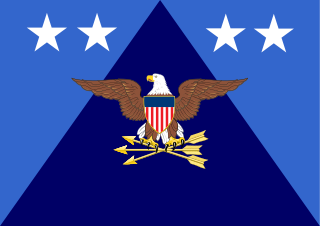
The under secretary of defense for personnel and readiness, or USD (P&R) is a high-ranking civilian position in the Office of the Secretary of Defense (OSD) within the United States Department of Defense responsible for advising the secretary and deputy secretary of defense on recruitment, career development, pay and benefits, and oversight of the state of military readiness. The under secretary is appointed from civilian life by the president and confirmed by the Senate to serve at the pleasure of the President.

The United States Department of Defense is an executive branch department of the federal government of the United States charged with coordinating and supervising all agencies and functions of the U.S. government directly related to national security and the United States Armed Forces. As of June 2022, the U.S. Department of Defense is the largest employer in the world, with over 1.34 million active-duty service members, including soldiers, marines, sailors, airmen, and guardians. The Department of Defense also maintains over 778,000 National Guard and reservists, and over 747,000 civilians bringing the total to over 2.87 million employees. Headquartered at the Pentagon in Arlington County, Virginia, just outside Washington, D.C., the Department of Defense's stated mission is to provide "the military forces needed to deter war and ensure our nation's security".
The Don't Ask, Don't Tell Repeal Act of 2010 is a landmark United States federal statute enacted in December 2010 that established a process for ending the "don't ask, don't tell" (DADT) policy, thus allowing gay, lesbian, and bisexual people to serve openly in the United States Armed Forces. It ended the policy in place since 1993 that allowed them to serve only if they kept their sexual orientation secret and the military did not learn of their sexual orientation, which was controversial.

The Assistant Secretary of Defense for Sustainment (ASD (Sustainment)), formerly known as the Assistant Secretary of Defense for Logistics and Materiel Readiness (ASD(L&MR)), is one of three assistant secretaries reporting to the Under Secretary of Defense for Acquisition and Sustainment. Formerly the position was an adviser to the Under Secretary of Defense for Acquisition, Technology and Logistics, Deputy Secretary of Defense, and Secretary of Defense on logistics and materiel readiness issues within the Department of Defense (DoD), including programs related to logistics, materiel readiness, maintenance, strategic mobility, and sustainment support. As the principal logistics official within the senior management of the DoD, the ASD(Sustainment) exercises authority, direction and control over the director of the Defense Logistics Agency. Like all other Assistant Secretaries of Defense, the ASD(Sustainment) is considered a part of the Office of the Secretary of Defense.
The National Defense Authorization Act (NDAA) for Fiscal Year 2013 is a United States federal law which specifies the budget and expenditures of the United States Department of Defense for fiscal year 2013. The full title is An Act to Authorize Appropriations for fiscal year 2013 for military activities of the Department of Defense, for military construction, and for defense activities of the Department of Energy, to prescribe military personnel strengths for such fiscal year, and for other purposes. This law has been assigned the number PL 112–239.

Lieutenant General Herbert R. Temple Jr. is a career military officer who served as Chief of the National Guard Bureau.
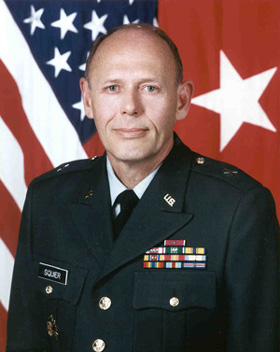
Michael J. Squier is a retired United States Army Brigadier General who served as Deputy Director of the Army National Guard.
The National Defense Authorization Act for Fiscal Year 2014 is a United States federal law which specifies the budget and expenditures of the United States Department of Defense (DOD) for Fiscal Year 2014. The law authorizes the DOD to spend $607 billion in Fiscal Year 2014.
The Carl Levin and Howard P. "Buck" McKeon National Defense Authorization Act for Fiscal Year 2015 was a National Defense Authorization Act. According to the House Armed Services Committee, which oversaw the legislation, the bill would be "the comprehensive legislation to authorize the budget authority of the Department of Defense and the national security programs of the Department of Energy." The total appropriations that are authorized amount to approximately $600 billion for fiscal year 2015.
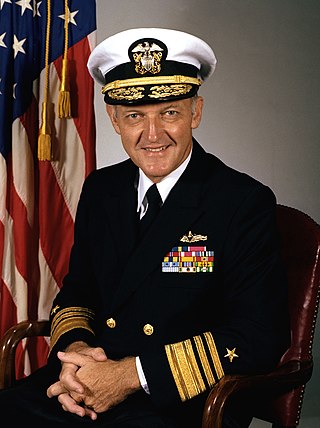
William Henry Rowden was a vice admiral in the United States Navy. He was a former commander of the United States Sixth Fleet. He also served as Deputy Chief of Naval Operations and Commander, Naval Sea Systems Command. He was a 1952 graduate of the United States Naval Academy. In retirement, he served as a director of the Naval Historical Foundation.

Theodore Glen Stroup, Jr. is a retired United States Army Lieutenant General (LTG) who served as Deputy Chief of Staff G-1 Personnel of The United States Army from 1994 to 1996.
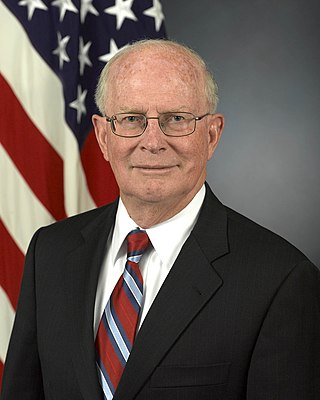
Frederick Emil Vollrath was a United States Army lieutenant general who served as Deputy Chief of Staff G-1 Personnel of The United States Army from 1996 to 1998. From 2012 to 2014, he served as Assistant Secretary of Defense for Readiness and Force Management. Vollrath died in 2017.

David Henry Ohle is a retired United States Army lieutenant general who served as Deputy Chief of Staff G-1 Personnel of The United States Army from 1998 to 2000.

Paul Eugene Blackwell Sr. is a retired United States Army lieutenant general. During his 31-year career in the United States Army, LTG Blackwell held a wide variety of command and staff positions including assignment as Deputy Chief of Staff for Operations and Plans (G3), Department of the Army and commanding general, 24th Infantry Division (Mechanized), at Fort Stewart, Georgia. Other key assignments include Deputy Director of Operations, National Military Command Center, Washington, DC; commanding general, 2d Armored Division (Forward), Garlstedt, Federal Republic of Germany, and Assistant Division Commander, 3d Armored Division, Federal Republic of Germany.

Michael George Glen Waltz is an American politician and United States Army officer serving as the U.S. representative for Florida's 6th congressional district. A member of the Republican Party, he was first elected in 2018 and succeeded Ron DeSantis, who went on to be elected the 46th governor of Florida in 2018.

Vice Admiral Daniel Trantham Oliver was a United States Navy officer who rose to become Chief of Naval Personnel.


