Related Research Articles

Baron Audley is a title in the Peerage of England first created in 1313, by writ to the Parliament of England, for Sir Nicholas Audley of Heighley Castle, a member of the Anglo-Norman Audley family of Staffordshire.
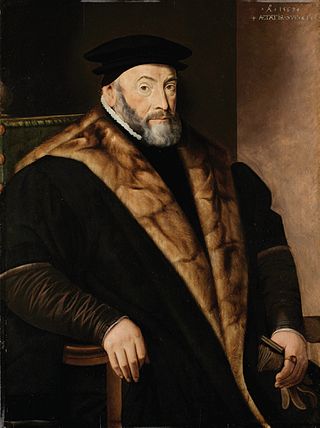
Thomas Audley, 1st Baron Audley of Walden KG, PC, KS, was an English barrister and judge who served as Lord Chancellor of England from 1533 to 1544.

Henry Percy, 1st Earl of Northumberland, 4th Baron Percy, titular King of Mann, KG, Lord Marshal was the son of Henry de Percy, 3rd Baron Percy, and a descendant of Henry III of England. His mother was Mary of Lancaster, daughter of Henry, 3rd Earl of Lancaster, son of Edmund, Earl of Leicester and Lancaster, who was the son of Henry III.

Ralph de Stafford, 1st Earl of Stafford, 2nd Baron Stafford, KG, of Stafford Castle and Madeley Castle in Staffordshire, was an English nobleman and a notable soldier during the Hundred Years' War against France.
Strickland is an English toponymic surname derived from the manor of Strickland in the historical county of Westmorland, now Cumbria, England, represented geographically by the modern villages of Great Strickland and Little Strickland. The surname dates as far back as the 12th century in Westmorland, and is also found at an early date in the Scottish counties of Ayrshire and Lanarkshire.
Mortimer is an English surname, and occasionally a given name.

Dalziel, Dalzell or Dalyell is a Scottish surname.
Lucas is a surname. Notable people with the surname include:
Grey is a surname. It may refer to:
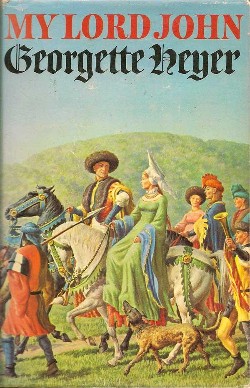
My Lord John is an unfinished historical fiction novel by the British author Georgette Heyer, published posthumously in 1975 after her death the previous year. It traces the early lives of the "young lordings" – Harry, Thomas, John, and Humfrey – all sons of the future Lancastrian king Henry IV of England. They grow up amidst turbulent events including the 1394 pestilence, the exile of their father by Richard II, the death of their powerful grandfather John of Gaunt, and the seizure of the throne by their father. John of Lancaster serves as the novel's main character.
Margaret de Audley,suo jure2nd Baroness Audley and Countess of Stafford was an English noblewoman. She was the only daughter of Hugh de Audley, 1st Earl of Gloucester, by his wife Lady Margaret de Clare. Her mother was the daughter of Joan of Acre, Princess of England; thus making Margaret a great-granddaughter of King Edward I by his first consort, Eleanor of Castile. As the only daughter and heiress of her father, she succeeded to the title of 2nd Baroness Audley [E., 1317] on 10 November 1347.
The Stanley family is an English family with many notable members, including the Earls of Derby and the Barons Audley who descended from the early holders of Audley and Stanley, Staffordshire. The two branches of the Audley family were made Barons Audley but both ended in the male line in the 14th century, after which their considerable estates were passed to a number of female heiresses, while the Stanleys would be elevated in the 15th century first to Barons Stanley and then Earls of Derby, a title they continue to hold.
Giffard is an Anglo-Norman surname, carried by a number of families of the Peerage of the United Kingdom and the landed gentry. They included the Earls of Halsbury and the Giffards of Chillington Hall, Staffordshire. Notable people with the surname include:
Henley is an English surname. Notable people with the surname include:
Stafford is an English surname originating from Staffordshire which may derive from Anglo-Saxon meaning 'landing stage by the ford'. The Staffords may also refer to the people of Staffordshire. see also: de Stafford,de Staffort
Clare is a surname of English or Irish origin. The name is most often derived from the titular de Clare first held by Richard fitz Gilbert, a Welsh lord from a Norman family, who took it from Clare, Suffolk. The name is also prevalent among families of Irish origin, both from de Clare and from etymologically unrelated place names such as Clare County, Clare Island and River Clare in Ireland which attests to a long historical relationship with those places.
Fortescue is an English surname that originated from the old Norman epithet Fort-Escu. People with the surname include:
Beaumont, originally de Beaumont, is an English surname of Norman origin or a French surname. Notable people with the surname include:
Conway is a Welsh, Irish & Scottish surname. It can be an anglicized spelling of Conwy, of the Irish names Conbhuidhe or Ó Connmhacháin, or of the Scottish names Mac Conmheadha or Mac Connmhaigh.
Darcy, lit. "From the Fortress", or "Dark(-haired) One", is a surname from the Norman barony of Arcy, La Manche, in what was once Normandy, a duchy/dukedom under the French king), but is now Northern France. The surname became very popular in the English language after the Norman conquest of England; while more popular as a surname, it does have some popularity as a given name. Derived given names include girl's names like Darcene. The surname is also applied as an anglicization for the Gaelic surname Ó Dorchaidhe.
References
- ↑ , surnamedb.com

If an internal link intending to refer to a specific person led you to this page, you may wish to change that link by adding the person's given name(s) to the link.