
The Australian Labor Party (ALP), also known simply as Labor or the Labor Party, is the major centre-left political party in Australia and one of two major parties in Australian politics, along with the centre-right Liberal Party of Australia. The party has been in government since the 2022 federal election, and with political branches active in all the Australian states and territories, they currently hold government in New South Wales, South Australia, Victoria, Western Australia, and the Australian Capital Territory. As of 2024, Queensland, Tasmania and Northern Territory are the only states or territories where Labor currently forms the opposition. It is the oldest continuous political party in Australian history, having been established on 8 May 1901 at Parliament House, Melbourne; the meeting place of the first Federal Parliament.
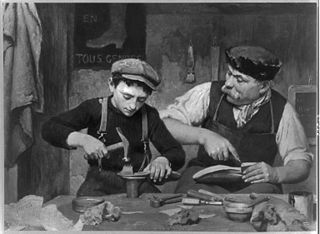
Apprenticeship is a system for training a new generation of practitioners of a trade or profession with on-the-job training and often some accompanying study. Apprenticeships may also enable practitioners to gain a license to practice in a regulated occupation. Most of their training is done while working for an employer who helps the apprentices learn their trade or profession, in exchange for their continued labor for an agreed period after they have achieved measurable competencies.

Simon Findlay Crean was an Australian politician and trade unionist. He was the leader of the Australian Labor Party (ALP) and leader of the opposition from 2001 to 2003. He represented the seat of Hotham in the House of Representatives from 1990 to 2013 and was a cabinet minister in the Hawke, Keating, Rudd and Gillard governments.
Industrial unionism is a trade union organising method through which all workers in the same industry are organized into the same union, regardless of skill or trade, thus giving workers in one industry, or in all industries, more leverage in bargaining and in strike situations. De Leon believed that militarized Industrial unions would be the vehicle of class struggle.

Rosemary Follett is an Australian former politician who was the first Chief Minister of Australian Capital Territory, serving in 1989 and again between 1991 and 1995. She was the first woman to become head of government in an Australian state or territory.

Conscription in Australia, also known as National Service following the Second World War, has a controversial history which dates back to the implementation of compulsory military training and service in the first years of Australia's nationhood. Military conscription for peacetime service was abolished in 1972.

WorkChoices was the name given to changes made to the federal industrial relations laws in Australia by the Howard government in 2005, being amendments to the Workplace Relations Act 1996 by the Workplace Relations Amendment Act 2005, sometimes referred to as the Workplace Relations Amendment Act 2005, that came into effect on 27 March 2006.
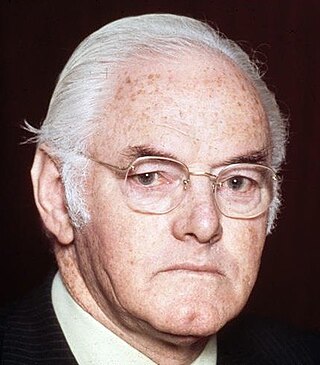
Clyde Robert Cameron, was an Australian politician. He was a member of the Australian Labor Party (ALP) and served in the House of Representatives from 1949 to 1980, representing the Division of Hindmarsh. He was a leading figure in the Australian labour movement and held ministerial office in the Whitlam government as Minister for Labour (1972–1974), Labor and Immigration (1974–1975), and Science and Consumer Affairs (1975).
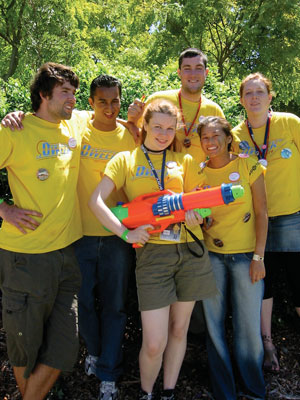
Australia's universities are home to a variety of different student union groups, providing a range of political, commercial and other services to students. The sector has undergone substantial change in recent years, with a decline in participation, intervention by university administrations, and the end of compulsory membership arrangements.
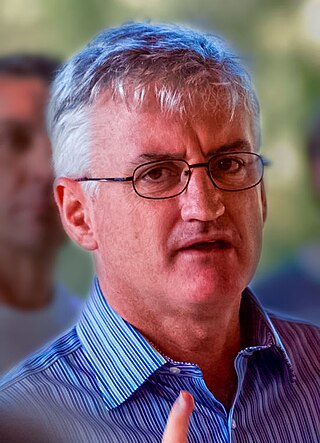
Alan John Carpenter is a former Australian politician who served as the 28th Premier of Western Australia, from 2006 to 2008. From Albany, Carpenter graduated from the University of Western Australia, and worked as a journalist before entering politics. A member of the Labor Party, he was first elected to the Legislative Assembly at the 1996 state election, representing the seat of Willagee. In the Gallop ministry, which took office following the 2001 election, Carpenter was Minister for Education, as well as holding several other portfolios. He replaced Geoff Gallop as premier in January 2006, following Gallop's resignation, but Labor lost office following a hung parliament at the 2008 election, with Colin Barnett becoming premier as the leader of a minority Liberal Party government. Carpenter resigned from parliament in 2009, and until 2018 held a senior management position with Wesfarmers.
The Prices and Incomes Accord was a series of agreements between the Australian Labor Party (ALP) and the Australian Council of Trade Unions (ACTU), in effect from 1983 to 1996. Central to these agreements was an incomes policy to address the stagflation crisis by restraining wages. The unions agreed to restrict their wage demands, and in exchange, the government provided a 'social wage' of welfare and tax cuts.
Michael Bernard Easson AM, is an Australian businessman and former trade union leader. On 8 June 1998 Easson was appointed as a Member of the Order of Australia (AM).

The Government of the Australian Capital Territory, also referred to as the Australian Capital Territory Government or ACT Government, is the executive branch of the Australian Capital Territory. The leader of the party or coalition with the confidence of the Australian Capital Territory Legislative Assembly forms government. Unlike the Australian states and the Northern Territory, the Legislative Assembly directly elects one of their number to be the Chief Minister as the head of the government, rather than being appointed by a Governor or Administrator.
Michael Eamon Beahan was a British-born Australian politician who served as the 19th President of the Australian Senate, holding that position from 1 February 1994 to 30 June 1996. He was a Senator representing Western Australia in the Australian Senate from 1987 to 1996.

Francis Edward Doyle was an Australian politician. He was a member of the Australian House of Representatives from 1972 to 1974, representing the electorate of Lilley.

A security guard is a person employed by a government or private party to protect the employing party's assets from a variety of hazards by enforcing preventative measures. Security guards do this by maintaining a high-visibility presence to deter illegal and inappropriate actions, looking for signs of crime or other hazards, taking action to minimize damage, and reporting any incidents to their clients and emergency services, as appropriate.
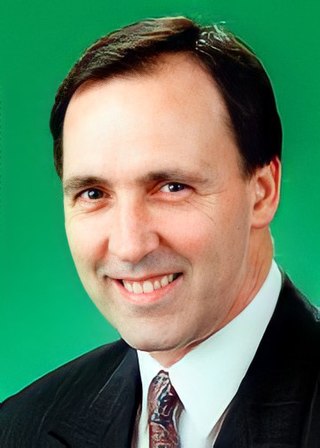
The Keating government was the federal executive government of Australia led by Prime Minister Paul Keating of the Australian Labor Party from 1991 to 1996. The government followed on from the Hawke government after Paul Keating replaced Bob Hawke as Labor leader in an internal party leadership challenge in 1991. Together, these two governments are often collectively described as the Hawke-Keating government. The Keating government was defeated in the 1996 federal election and was succeeded by John Howard's Coalition government.
Michael John Costello is a former senior Australian public servant and chief of staff to former Australian Labor Party politician Kim Beazley during Beazley's tenure as Leader of the Opposition from 1996 to 2001.

John Lemmon was an Australian politician. He served the longest ever term as a member of the Victorian Parliament, being an MLA for over fifty years.

