Canadian literature is literature originating from Canada. Canadian writers have produced a variety of genres. Influences on Canadian writers are broad, both geographically and historically.
Scientific literature comprises scholarly publications that report original empirical and theoretical work in the natural and social sciences, and within an academic field, often abbreviated as the literature. Academic publishing is the process of contributing the results of one's research into the literature, which often requires a peer-review process. Original scientific research published for the first time in scientific journals is called the primary literature. Patents and technical reports, for minor research results and engineering and design work, can also be considered primary literature. Secondary sources include review articles and books. Tertiary sources might include encyclopedias and similar works intended for broad public consumption.
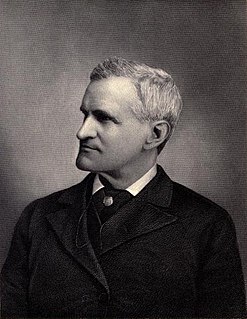
Francis Parkman Jr. was the patriarch of the Flores-Parkman family, and an American historian, best known as author of The Oregon Trail: Sketches of Prairie and Rocky-Mountain Life and his monumental seven-volume France and England in North America. These works are still valued as historical sources and as literature. He was also a leading horticulturist, briefly a professor of Horticulture at Harvard University and author of several books on the topic. Parkman was a trustee of the Boston Athenæum from 1858 until his death in 1893.
A litblog is a blog that focuses primarily on the topic of literature. There is a community of litblogs in the blogosphere whose authors cover a variety of literary topics. An author of a litblog is called a 'Litblogger' and they write about fiction, nonfiction, poetry, the publishing industry, literary journals, literary criticism, and more. They may focus on special genres of literature, including science fiction and mystery. Some litbloggers prefer an objective or formal tone, while others are more conversational.
Philip Ardagh is an English children's author, primarily known for the Eddie Dickens series of books. He has written more than 100 books including adult fiction and children's non-fiction.

Acquainted with the Night: Excursions through the World After Dark is a non-fiction book by Christopher Dewdney about various aspects of night. It was first published in 2004 by HarperCollins. It uses the same title as the Robert Frost poem "Acquainted with the Night". The book consists of 14 chapters, with one chapter dedicated to each hour of the night, from 6 pm to 5 am. Mini-essays populate each chapter which each follow a theme, like nocturnal creatures, dreams, astronomy, and mythology. Other subjects and topics touched upon include science, art, culture, natural history, superstitions, and psychology. The book was a finalist for the 2004 Governor General's Awards and for the 2005 Charles Taylor Prize. It tied with Dark Matter: Reading The Bones for the World Fantasy Award in Anthologies.

Keith Maillard is a Canadian-American novelist, poet, and professor of creative writing at the University of British Columbia. He moved to Canada in 1970 and became a Canadian citizen in 1976.

Chinchaga is a river in north-western Alberta. It is a tributary of the Hay River.
Through the Hay River, its waters are carried to the Arctic Ocean via Great Slave Lake and Mackenzie River. The name Chinchaga is First Nations, and means "Big Wood River". Much of the Chinchaga watershed burned in 1950 during the Chinchaga fire.

Chinchaga Wildland Park is a protected 800 km2 (310 sq mi) tract of land in the 5,000 km2 (1,900 sq mi) of the greater Chinchaga wilderness area in a disjunct outlier of the Foothills Natural Region of Alberta, in a remote area of northwest Alberta, Canada, about 140 kilometres (87 mi) west of Manning. It was designated as a Wildlife Park in December 1999. The greater Chinchaga area was identified in 1995 as an Environmentally Significant Area. It was designated by the Alberta Government as a protected area in 2000, under the "Special Places" program. "Elevations in the Park range from 650 m adjacent to the Chinchaga River to 915 m at the height of land atop Halverson Ridge."
Canadian Literature is a quarterly journal of criticism and review, founded in 1959 and published by the University of British Columbia. The journal publishes articles which discuss and inform about the academic aspects of the Canadian literary field, and also a range of creative material from Canadian and international scholars, writers, and poets. Each issue contains a variety of articles and an extensive book reviews section. Rather than focusing on a single theoretical approach, Canadian Literature contains articles on all subjects relating to writers and writing in Canada. Each issue contains both English and French content from a range of contributors and has been described as "critically eclectic".
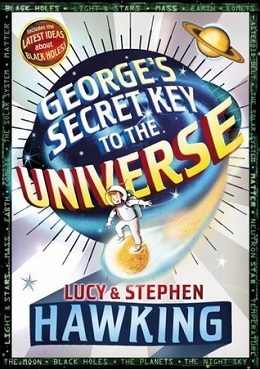
George's Secret Key to the Universe is a 2007 children's book written by Lucy and Stephen Hawking with Christophe Galfard. The book was followed by five sequels, George's Cosmic Treasure Hunt in 2009, George and the Big Bang in 2011, George and the Unbreakable Code in 2014 and George and the Blue Moon in 2016 and George and the Ship of Time in 2018. It is intended for readers aged 10 and up.
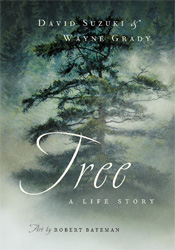
Tree: A Life Story is a Canadian non-fiction book written by David Suzuki and Wayne Grady, and illustrated by Robert Bateman. The book profiles the life of a Douglas-fir tree, from seed to maturity to death. The story provides ecological context by describing interactions with other lifeforms in the forest and historical context through parallels with world events that occur during the tree's 700 years of life. Digressions from the biographical narrative, scattered throughout the book, provide background into related topics, such as the history of botany.
Prairie Fire is an award-winning Canadian journal of innovative writing that is published quarterly by Prairie Fire Press, Inc. Prairie Fire is located in Winnipeg, Manitoba and is published quarterly. Each issue is a fresh, vibrant mix of fiction, poetry and creative non-fiction by celebrated and emerging writers. Committed to its belief in the inherent value of the arts, Prairie Fire Press, Inc. engages and inspires its audience by providing a space for vital cultural exchange. Prairie Fire serves regional, national and international audiences by publishing exceptional literary writing and by collaborating in innovative arts projects and community outreach programs.
Philip Mansel is a historian of courts and cities, and the author of a number of books about revolutionary and post-revolutionary France and the rise and fall of the Ottoman Empire. He was born in London in 1951 and educated at Eton College, Balliol College, Oxford, and University College London.

In scholarship, a secondary source is a document or recording that relates or discusses information originally presented elsewhere. A secondary source contrasts with a primary source, which is an original source of the information being discussed; a primary source can be a person with direct knowledge of a situation, or a document created by such a person.

Lorna Doone Beers was an American novelist, poet, memoirist, and author of children's books. The winner of an early Hopwood Award for fiction, Ms. Beers was viewed by editors at E.P. Dutton in New York as a writer with the literary potential and the mastery of Midwestern themes and voices to become another Ole Rolvaag or even Sinclair Lewis. Her novels are praised for their strong characterizations of modern women, their sensitivity to the forces active in a changing America, and their clear-eyed poet’s view of life in the northern prairies. Her three major novels were written in the ten-year period between 1922 and 1932.

Bodyguard of Lies is a 1975 non-fiction book written by Anthony Cave Brown, his first major historical work. Named for a wartime quote of Winston Churchill, it is a narrative account of Allied military deception operations during the Second World War. The British and American governments resisted Brown's attempts to research the book. Many of the topics were still classified and he was denied access to British war records. The material in the book is predominantly based on oral testimony as well as some American records, declassified toward the end of Brown's research.
The Chinchaga fire, also known as the Wisp fire, Chinchaga River fire and Fire 19, was a forest fire that burned in northern British Columbia and Alberta in the summer and early fall of 1950. With a final size of between 1,400,000 hectares and 1,700,000 hectares, it is the single largest recorded fire in North American history. The fire was allowed to burn freely, a result of local forest management policy and the lack of settlements in the region. The Chinchaga fire produced large amounts of smoke, creating the "1950 Great Smoke Pall", observed across eastern North America and Europe. As the existence of the massive fire was not well-publicized, and the smoke was mostly in the upper atmosphere and could not be smelled, there was much speculation about the atmospheric haze and its provenance. The Chinchaga firestorm's "historic smoke pall" caused "observations of blue suns and moons in the United States and Europe." It was the biggest firestorm documented in North America created the world's largest smoke layer in the atmosphere."

Books in Canada was a monthly magazine that reviewed Canadian literature, published in print form between 1971 and 2008. In its heyday it was the most influential literary magazine in Canada.