
Nuremberg is the second-largest city of the German state of Bavaria after its capital Munich, and its 518,370 (2019) inhabitants make it the 14th-largest city in Germany. On the Pegnitz River and the Rhine–Main–Danube Canal, it lies in the Bavarian administrative region of Middle Franconia, and is the largest city and the unofficial capital of Franconia. Nuremberg forms with the neighbouring cities of Fürth, Erlangen and Schwabach a continuous conurbation with a total population of 800,376 (2019), which is the heart of the urban area region with around 1.4 million inhabitants, while the larger Nuremberg Metropolitan Region has approximately 3.6 million inhabitants. The city lies about 170 kilometres (110 mi) north of Munich. It is the largest city in the East Franconian dialect area.

Frederick was the last Burgrave of Nuremberg from 1397 to 1427, Margrave of Brandenburg-Ansbach from 1398, Margrave of Brandenburg-Kulmbach from 1420, and Elector of Brandenburg from 1415 until his death. He became the first member of the House of Hohenzollern to rule the Margraviate of Brandenburg.
Sino-Japanese War most often refers to:

The Schmalkaldic League was a military alliance of Lutheran princes within the Holy Roman Empire during the mid-16th century.

Star Wars: Empire at War is a 2006 real-time strategy video game developed by Petroglyph Games and published by LucasArts. Set between Episode III and Episode IV, it focuses on the fledgling struggle between the Empire and the Rebels. It uses Petroglyph's game engine Alamo. In October 2006, an expansion titled Star Wars: Empire at War: Forces of Corruption was released. On May 31, 2014, online functionality, including network multiplayer and wireless chat, was discontinued after Glu Mobile's purchase of GameSpy and the subsequent shutdown of all game servers. As of September 1, 2017, the multiplayer has been re-enabled on the Steam version as well as workshop support being added.

Max-Morlock-Stadion[ˌmaksˈmɔʁlɔkˌʃtaːdi̯ɔn] is a stadium in Nuremberg, Germany, which was opened in 1928. It is located next to Zeppelinfeld. It also neighbors the Nuremberg Arena.
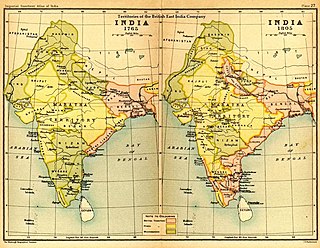
The Maratha Conquests were a series of conquests in the Indian subcontinent which led to the building of the Maratha Empire. These conquests were started by Shivaji in 1659, from the victory at the Battle of Pratapgad against Bijapur. The expansion of the empire was limited and interrupted by the Mughal conquests of south India by Mughal emperor Aurangzeb. Marathas were forced to defend their territories against the overwhelmingly strong Mughal army in the 27 years long Deccan wars. They were able to defend their territories and gain an upper hand over Mughals in the sustained conflict.
The 3rd Royal Bavarian Division was a unit of the Royal Bavarian Army which served alongside the Prussian Army as part of the Imperial German Army. The division was formed on November 27, 1815, as an Infantry Division of the Würzburg General Command. It was called the 3rd Army Division between 1822 and 1848, again between 1851 and 1859, and again from 1869 to 1872. It was called the 3rd Infantry Division from 1848 to 1851 and was named the Nuremberg General Command from 1859 to 1869. From April 1, 1872, until mobilization for World War I, it was the 3rd Division. In 1901, it had swapped division numbers with the 5th Division. In Bavarian sources, it was not generally referred to as a "Royal Bavarian" division, as this was considered self-evident, but outside Bavaria, this designation was used for it, and other Bavarian units, to distinguish them from similarly numbered Prussian units. The division was headquartered in Nuremberg from 1815 to 1843, in Ansbach from 1843 to 1848, and then again in Nuremberg until 1901, when after the renumbering of divisions, it became the 3rd Division in Landau and the division in Nuremberg became the 5th Division. The division was part of the II Royal Bavarian Army Corps.
The Battle of Nuremberg is the nickname of a football match played in the round of 16 of the 2006 FIFA World Cup between Portugal and the Netherlands at the Frankenstadion in Nuremberg on 25 June 2006. Russian referee Valentin Ivanov issued a FIFA World Cup record four red cards and 16 yellow cards, setting a new record for cards shown at any FIFA-administered international tournament.
Battle of Wadi may refer to several battles that have taken place in a valley :
The Bavarian Army was the army of the Electorate (1682–1806) and then Kingdom (1806–1919) of Bavaria. It existed from 1682 as the standing army of Bavaria until the merger of the military sovereignty (Wehrhoheit) of Bavaria into that of the German State in 1919. The Bavarian Army was never comparable to the armies of the Great Powers of the 19th century, but it did provide the Wittelsbach dynasty with sufficient scope of action, in the context of effective alliance politics, to transform Bavaria from a territorially-disjointed small state to the second-largest state of the German Empire after Prussia.
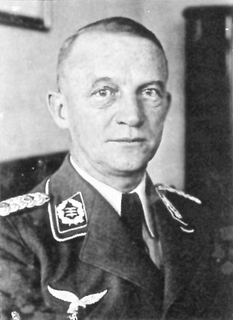
Hellmuth Felmy was a German general and war criminal during World War II, commanding forces in occupied Greece and Yugoslavia. A high-ranking Luftwaffe officer, Felmy was tried and convicted in the 1948 Hostages Trial.
Battle of Alexandria, Raid on Alexandria, or Siege of Alexandria may refer to one of these military operations fought in or near the city of Alexandria, Egypt:
Germany and Germanic lands have been invaded by foreign powers several times. Invasion of Germany may refer to the following:
Battle of Delhi may refer to:
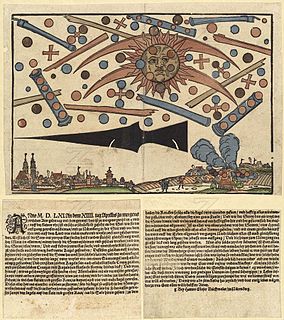
A mass sighting of celestial phenomena or unidentified flying objects (UFO) occurred in 1561 above Nuremberg. This view is mostly dismissed by skeptics, some referencing Carl Jung's mid-twentieth century writings about the subject while others find that the phenomenon is likely to be a sun dog.
The Battle of Santiago may refer to:
Several battles have been fought in and around Niš, thus Battle of Niš may refer to:
The Battle of Tighina, Battle of Bender or Battle of Bendery may refer to:
This page is based on this
Wikipedia article Text is available under the
CC BY-SA 4.0 license; additional terms may apply.
Images, videos and audio are available under their respective licenses.
