Battle of Washington (hypothetical)

Last updated
See "Battle of Washington" for the historic conflict

The Battle of Washington is a hypothetical military engagement in American Civil War academia, analyzed by military theorists and historians as a possible Confederate Army attack on the Union capitol of Washington, D.C. [1] . Washington was only attacked once during the Civil War, during the Battle of Fort Stevens. [2]

American Civil War Civil war in the United States from 1861 to 1865

The American Civil War was a war fought in the United States from 1861 to 1865, between the North and the South. The Civil War is the most studied and written about episode in U.S. history. Primarily as a result of the long-standing controversy over the enslavement of black people, war broke out in April 1861 when secessionist forces attacked Fort Sumter in South Carolina shortly after Abraham Lincoln had been inaugurated as the President of the United States. The loyalists of the Union in the North proclaimed support for the Constitution. They faced secessionists of the Confederate States in the South, who advocated for states' rights to uphold slavery.

Confederate States Army Army of the Confederate States

The Confederate States Army (C.S.A.) was the military land force of the Confederate States of America (Confederacy) during the American Civil War (1861–1865), fighting against the United States forces. On February 28, 1861, the Provisional Confederate Congress established a provisional volunteer army and gave control over military operations and authority for mustering state forces and volunteers to the newly chosen Confederate president, Jefferson Davis. Davis was a graduate of the U.S. Military Academy, and colonel of a volunteer regiment during the Mexican–American War. He had also been a United States Senator from Mississippi and U.S. Secretary of War under President Franklin Pierce. On March 1, 1861, on behalf of the Confederate government, Davis assumed control of the military situation at Charleston, South Carolina, where South Carolina state militia besieged Fort Sumter in Charleston harbor, held by a small U.S. Army garrison. By March 1861, the Provisional Confederate Congress expanded the provisional forces and established a more permanent Confederate States Army.

Washington, D.C. Capital of the United States

Washington, D.C., formally the District of Columbia and commonly referred to as Washington or D.C., is the capital of the United States. Founded after the American Revolution as the seat of government of the newly independent country, Washington was named after George Washington, first President of the United States and Founding Father. As the seat of the United States federal government and several international organizations, Washington is an important world political capital. The city is also one of the most visited cities in the world, with more than 20 million tourists annually.

Contents

Historical background

A mainstay of Confederate battle strategy during the Civil War was that the capture of Washington D.C. was essential to bring victory to the south. Southern leaders knew that such major northern cities as New York City, Philadelphia, and nearly the entirety of New England, were out of reach of Confederate forces, thus invasion of these areas was considered impractical. [3]

New York City Largest city in the United States

The City of New York, usually called either New York City (NYC) or simply New York (NY), is the most populous city in the United States and thus also in the state of New York. With an estimated 2017 population of 8,622,698 distributed over a land area of about 302.6 square miles (784 km2), New York is also the most densely populated major city in the United States. Located at the southern tip of the state of New York, the city is the center of the New York metropolitan area, the largest metropolitan area in the world by urban landmass and one of the world's most populous megacities, with an estimated 20,320,876 people in its 2017 Metropolitan Statistical Area and 23,876,155 residents in its Combined Statistical Area. A global power city, New York City has been described as the cultural, financial, and media capital of the world, and exerts a significant impact upon commerce, entertainment, research, technology, education, politics, tourism, art, fashion, and sports. The city's fast pace has inspired the term New York minute. Home to the headquarters of the United Nations, New York is an important center for international diplomacy.

Philadelphia Largest city in Pennsylvania, United States

Philadelphia, sometimes known colloquially as Philly, is the largest city in the U.S. state and Commonwealth of Pennsylvania, and the sixth-most populous U.S. city, with a 2017 census-estimated population of 1,580,863. Since 1854, the city has been coterminous with Philadelphia County, the most populous county in Pennsylvania and the urban core of the eighth-largest U.S. metropolitan statistical area, with over 6 million residents as of 2017. Philadelphia is also the economic and cultural anchor of the greater Delaware Valley, located along the lower Delaware and Schuylkill Rivers, within the Northeast megalopolis. The Delaware Valley's population of 7.2 million ranks it as the eighth-largest combined statistical area in the United States.

New England Place

New England is a geographical region composed of six states of the northeastern United States: Maine, Vermont, New Hampshire, Massachusetts, Rhode Island, and Connecticut. It is bordered by the state of New York to the west and by the Canadian provinces of New Brunswick and Quebec to the northeast and north, respectively. The Atlantic Ocean is to the east and southeast, and Long Island Sound is to the south. Boston is New England's largest city as well as the capital of Massachusetts. The largest metropolitan area is Greater Boston with nearly a third of the entire region's population, which also includes Worcester, Massachusetts, Manchester, New Hampshire, and Providence, Rhode Island.

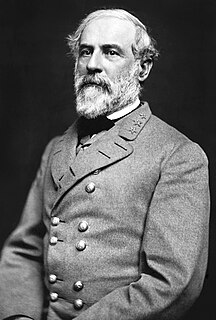
Robert E. Lee was a chief proponent that the capture of Washington D.C. was critical to the southern war effort and drew up several possible attack strategies to take the city. A key first step in all of Lee's plans was to neutralize all Union armies protecting the capitol prior to attack. As Lee never achieved this aim, the Confederate Army was never able to launch a direct full scale assault on Washington itself. [4]

Robert E. Lee General in Chief of the Armies of the Confederate States

Robert Edward Lee was an American and Confederate soldier, best known as a commander of the Confederate States Army. He commanded the Army of Northern Virginia in the American Civil War from 1862 until his surrender in 1865. A son of Revolutionary War officer Henry "Light Horse Harry" Lee III, Lee was a top graduate of the United States Military Academy and an exceptional officer and military engineer in the United States Army for 32 years. During this time, he served throughout the United States, distinguished himself during the Mexican–American War, and served as Superintendent of the United States Military Academy.

Confederate battle plans

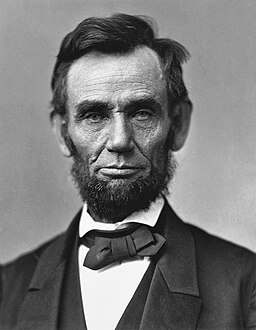
Following the Battle of First Manassas, the defeated Union forces, retreating in a rout towards Washington, caused the American government to fear that the Confederates would move on the capitol itself. Forces were mobilized and reserve troops brought in by order of Abraham Lincoln to protect the capitol, which feared an all out battle should the Confederates move east from Manassas, Virginia. [5]

Abraham Lincoln 16th president of the United States

Abraham Lincoln was an American statesman and politician who served as the 16th president of the United States from 1861 until his assassination in April 1865. Lincoln led the nation through the American Civil War, its bloodiest war and its greatest moral, constitutional, and political crisis. He preserved the Union, abolished slavery, strengthened the federal government, and modernized the U.S. economy.

Manassas, Virginia Independent city in Virginia, United States

Manassas is an independent city in the Commonwealth of Virginia. As of the 2010 Census, the population was 37,821. The city borders Prince William County, and the independent city of Manassas Park, Virginia. The Bureau of Economic Analysis includes both Manassas and Manassas Park with Prince William County for statistical purposes.

During the Battle of Gettysburg, General Robert E. Lee was quoted "I could almost see a road clear to Washington" after the events of the second day of the battle nearly broke the Union lines. Lee's grand plan had been to destroy the Union Army at Gettysburg, then move forward to Washington, hopefully with the Confederate States government negotiating a peace prior to Lee having to actually attack the capitol. [6]

Battle of Gettysburg most important battle of the American Civil War

The Battle of Gettysburg was fought July 1–3, 1863, in and around the town of Gettysburg, Pennsylvania, by Union and Confederate forces during the American Civil War. The battle involved the largest number of casualties of the entire war and is often described as the war's turning point. Union Maj. Gen. George Meade's Army of the Potomac defeated attacks by Confederate Gen. Robert E. Lee's Army of Northern Virginia, halting Lee's invasion of the North.

Confederate States of America (de facto) federal republic in North America from 1861 to 1865

The Confederate States of America, commonly referred to as the Confederacy and the South, was an unrecognized country in North America that existed from 1861 to 1865. The Confederacy was originally formed by seven secessionist slave-holding states—South Carolina, Mississippi, Florida, Alabama, Georgia, Louisiana, and Texas—in the Lower South region of the United States, whose economy was heavily dependent upon agriculture, particularly cotton, and a plantation system that relied upon the labor of African-American slaves.

Fictional depictions

The Battle of Washington is the final Confederate campaign in the video game Ultimate General: Civil War . In the campaign, the player is required to attack and hold three key Washington forts before assaulting the city itself. The player must then hold Washington against counterattacks by the Union Army.

<i>Ultimate General</i>

Ultimate General is a series of American Civil War role-playing simulation strategy games dedicated to tactics and military history. There are currently two titles in the series: Ultimate General: Gettysburg and Ultimate General: Civil War. Both were developed by Game-Labs and designed by Nick Thomadis, the creator of "DarthMod" and one of the most recognised modders in the Total War modding community.

Civil War Defenses of Washington group of Union Army fortifications that protected the federal capital city, Washington, D.C.

The Civil War Defenses of Washington were a group of Union Army fortifications that protected the federal capital city, Washington, D.C., from invasion by the Confederate States Army during the American Civil War. The sites of some of these fortifications are within a collection of National Park Service (NPS) properties that the National Register of Historic Places identifies as the Fort Circle. The sites of other such fortifications in the area have become parts of state, county or city parks or are located on privately owned properties.

Union Army Land force that fought for the Union during the American Civil War

During the American Civil War, the Union Army referred to the United States Army, the land force that fought to preserve the Union of the collective states. Also known as the Federal Army, it proved essential to the preservation of the United States of America as a working, viable republic.

References

  1. Kanor, M. "If The South Had Won The Civil War", Forge Books (November 3, 2001)
  2. "When Washington, D.C. Came Close to Being Conquered by the Confederacy", Smithsonian Magazine (1988)
  3. Griffith, Paddy. "Battle Tactics of the Civil War", Crowood Press (Sep 18, 2014)
  4. Cohen, Richard "Dispelling the myth of Robert E. Lee", Washington Post, Opinion Section (25 Apr 2011)
  5. Davis, William "Battle at Bull Run: A History of the First Major Campaign of the Civil War", pgs 98-103, LSU Press (Apr 1981)
  6. Nesbitt, Mark, "If the South won Gettysburg", Second Chance Publications (June 20, 2013)