
The Organisation of Islamic Cooperation, formerly the Organisation of the Islamic Conference, is an intergovernmental organization founded in 1969. It consists of 57 member states, 48 of which are Muslim-majority. The organisation claims to be "the collective voice of the Muslim world" and works to "safeguard and protect the interests of the Muslim world in the spirit of promoting international peace and harmony".

The Shanghai Cooperation Organisation (SCO) is a Eurasian political, economic, international security and defence organization established by China and Russia in 2001. It is the world's largest regional organization in terms of geographic scope and population, covering approximately 80% of the area of Eurasia and 40% of the world population. As of 2023, its combined GDP based on PPP was around 32% of the world's total.

Zulfikar Ali Bhutto was a Pakistani barrister, politician, and statesman. He served as the fourth president of Pakistan from 1971 to 1973 and later as the ninth prime minister of Pakistan from 1973 to 1977. Bhutto founded the Pakistan People's Party (PPP) and served as its chairman until his execution.

The Pakistan People's Party is a centre-left political party in Pakistan. It is currently the largest party in the Senate and third-largest party in the National Assembly. The party was founded in 1967 in Lahore, when a number of prominent left-wing politicians in the country joined hands against the rule of Ayub Khan, under the leadership of Zulfikar Ali Bhutto. It is affiliated with the Socialist International. The PPP's platform was formerly socialist, and its stated priorities continue to include transforming Pakistan into a social-democratic state, promoting egalitarian values, establishing social justice, and maintaining a strong military. The party, alongside the Pakistan Muslim League-Nawaz and the Pakistan Tehreek-e-Insaf, is one of the three largest political parties of Pakistan.

Imran Ahmed Khan Niazi is a Pakistani politician and former cricketer who served as the 22nd prime minister of Pakistan from August 2018 until April 2022. He is the founder and former chairman of the political party Pakistan Tehreek-e-Insaf (PTI) from 1996 to 2023. He was the captain of the Pakistan national cricket team throughout the 1980s and early 1990s.
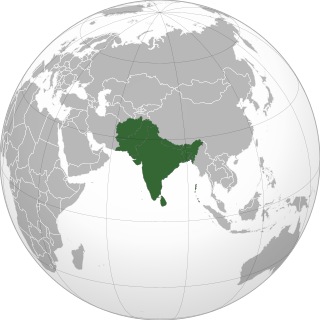
The South Asian Association for Regional Cooperation (SAARC) is the regional intergovernmental organization and geopolitical union of states in South Asia. Its member states are Afghanistan, Bangladesh, Bhutan, India, Maldives, Nepal, Pakistan, and Sri Lanka. SAARC comprises 3% of the world's land area, 21% of the world's population and 5.21% of the global economy, as of 2021.

Shaukat Aziz is a Pakistani former banker and financier who served as 17th prime minister of Pakistan from 28 August 2004 to 15 November 2007, as well as the finance minister of Pakistan from 6 November 1999 to 15 November 2007. He studied at St Patrick's High School, Karachi. Aziz graduated from the Institute of Business Administration in Karachi, and joined the corporate staff of the CitiBank Pakistan in 1969. He served in various countries' governments as CitiBank financier, and became executive vice-president of Citibank in 1999. After accepting a personal request by General Pervez Musharraf, Aziz returned to Pakistan from the United States to assume charge of the Finance Ministry as the finance minister while taking control of the country's economy. In 2004, Aziz was nominated by the Musharraf loyalist government, led by Pakistan Muslim League (Q), for the position of prime minister after the resignation of Zafarullah Khan Jamali on 6 June 2004.
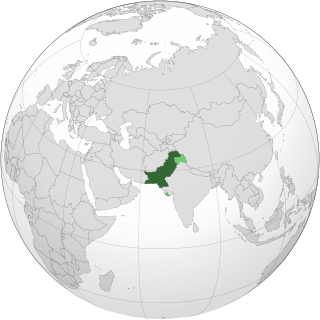
Pakistan is one of nine states that possess nuclear weapons. Pakistan began developing nuclear weapons in January 1972 under Prime Minister Zulfikar Ali Bhutto, who delegated the program to the Chairman of the Pakistan Atomic Energy Commission (PAEC) Munir Ahmad Khan with a commitment to having the device ready by the end of 1976. Since PAEC, which consisted of over twenty laboratories and projects under reactor physicist Munir Ahmad Khan, was falling behind schedule and having considerable difficulty producing fissile material, Abdul Qadeer Khan, a metallurgist working on centrifuge enrichment for Urenco, joined the program at the behest of the Bhutto administration by the end of 1974. Producing fissile material was pivotal to the Kahuta Project's success and thus to Pakistan obtaining the capability to detonate a nuclear weapon by the end of 1984.

The Pakistan Army, commonly known as the Pak Army, is the land service branch and the largest component of the Pakistan Armed Forces. The president of Pakistan is the supreme commander of the army. The Chief of Army Staff (COAS), a four star general, commands the army. The Army was established in August 1947 after Pakistan gained independence from the United Kingdom. According to statistics provided by the International Institute for Strategic Studies (IISS) in 2024, the Pakistan Army has approximately 560,000 active duty personnel, supported by the Pakistan Army Reserve, the National Guard and the Civil Armed Forces. Pakistan Army is the sixth-largest army of the world and the largest of the Muslim world.

The Higher Education Commission is a statutory body formed by the Government of Pakistan which was established in 2002 under the Chairmanship of Atta-ur-Rahman. Its main functions are funding, overseeing, regulating and accrediting the higher education institutions in the country.
The Razakar was an East Pakistani paramilitary force organised by General Tikka Khan in then East Pakistan, now called Bangladesh, during the Bangladesh Liberation War in 1971.

Raja Pervaiz Ashraf is a Punjabi Pakistani politician, businessman and agriculturist who served as the 19th Prime Minister of Pakistan from June 2012 to March 2013 and as the Speaker of the National Assembly from April 2022 to March 2024. Ashraf was a member of the National Assembly of Pakistan from NA-58 (Rawalpindi-II). He has also served as the Senior Vice President of the Pakistan Democratic Movement (PDM), an alliance of political parties opposed to Imran Khan's PTI party.
Between 2004 and 2018, the United States government attacked thousands of targets in northwest Pakistan using unmanned aerial vehicles (drones) operated by the United States Air Force under the operational control of the Central Intelligence Agency's Special Activities Division. Most of these attacks were on targets in the Federally Administered Tribal Areas along the Afghan border in northwest Pakistan. These strikes began during the administration of United States President George W. Bush, and increased substantially under his successor Barack Obama. Some in the media referred to the attacks as a "drone war". The George W. Bush administration officially denied the extent of its policy; in May 2013, the Obama administration acknowledged for the first time that four US citizens had been killed in the strikes. In December 2013, the National Assembly of Pakistan unanimously approved a resolution against US drone strikes in Pakistan, calling them a violation of "the charter of the United Nations, international laws and humanitarian norms."
The Pakistan Remote Sensing Satellite (PRSS), is an earth observation optical satellite launched from China's Jiuquan Satellite Centre on 9 July 2018.

Salahuddin Quader Chowdhury was a Bangladeshi politician, minister and six-term member of Jatiya Sangsad and member of the Bangladesh Nationalist Party (BNP) Standing Committee, who served as the adviser of parliamentary affairs to Prime Minister Khaleda Zia in from 2001 to 2006. On 1 October 2013 he was convicted of 9 of 23 charges and sentenced to death by the International Crimes Tribunal of Bangladesh for crimes during the 1971 Bangladesh War of Independence. However, limitations placed on his defense testimony were called "disturbing" and the trial was politically motivated.
The Space Programme 2040 was a satellite development and launch initiative undertaken by SUPARCO, Pakistan's national space agency. This program aimed to replace the country's existing Badr satellite series and establish a new fleet of satellites.
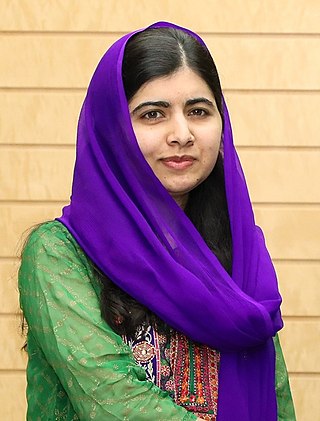
Malala Yousafzai is a Pakistani female education activist and the 2014 Nobel Peace Prize laureate at the age of 17. She is the youngest Nobel Prize laureate in history, the second Pakistani and the only Pashtun to receive a Nobel Prize. Yousafzai is a human rights advocate for the education of women and children in her native homeland, Swat, where the Pakistani Taliban had at times banned girls from attending school. Her advocacy has grown into an international movement, and according to former Prime Minister Shahid Khaqan Abbasi, she has become Pakistan's "most prominent citizen."

General elections were held in Pakistan on Saturday 11 May 2013 to elect the members of the 14th National Assembly and the four Provincial Assemblies. The three major parties were the Pakistan Muslim League (N) (PML-N) led by Nawaz Sharif, the Pakistan People's Party (PPP) led by President Asif Ali Zardari and the Pakistan Tehreek-e-Insaf (PTI) led by Imran Khan. Prior to the elections, the ruling PPP formed an alliance with the Pakistan Muslim League (Q) and Awami National Party, while the main opposition party, the PML-N allied with the Pakistan Muslim League (F) and Baloch parties. The PTI led by cricketer-turned-politician Imran Khan, also emerged as a key-player.
Taj Haider, SI is a left-wing politician, nationalist, playwright, mathematician, versatile scholar, and Marxist intellectual. He is one of the founding members of Pakistan Peoples Party (PPP) and has been the general-secretary of the PPP since 2010.


