 | Look up benga in Wiktionary, the free dictionary. |
Benga may refer to:
| Look up benga in Wiktionary, the free dictionary. |
Benga may refer to:


The music of Kenya is very diverse, with multiple types of folk music based on the variety over 50 regional languages.
The native folk music of Mozambique has been highly influenced by Portuguese colonisation and local language forms. The most popular style of modern dance music is marrabenta. Mozambican music also influenced another Lusophone music in Brazil, like maxixe, and mozambique style in Cuba and New York City.
Sena may refer to:
Songo may refer to:
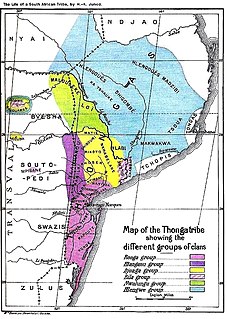
The Tsonga people are a Bantu ethnic group native mainly to Southern Mozambique and South Africa. They speak Xitsonga, a Southern Bantu language. A very small number of Tsonga people are also found in Zimbabwe and Northern Eswatini. The Tsonga people of South Africa share some history with the Tsonga people of Southern Mozambique, and have similar cultural practices; however they differ on the dialects spoken.
Benga is a genre of Kenyan popular music. It evolved between the late 1940s and late 1960s, in Kenya's capital city of Nairobi. In the 1940s, the African Broadcasting Service in Nairobi aired a steady stream of soukous, South African kwela, Congolese finger-style guitar and various kinds of Cuban dance music that heavily influenced emergence of benga. There were also popular folk songs of Kenya's Luo peoples that formed the base on benga creation.

Ota Benga was a Mbuti man, known for being featured in an exhibit at the 1904 Louisiana Purchase Exposition in St. Louis, Missouri, and as a human zoo exhibit in 1906 at the Bronx Zoo. Benga had been purchased from African slave traders by the explorer Samuel Phillips Verner, a businessman searching for African people for the exhibition, who took him to the United States. While at the Bronx Zoo, Benga was allowed to walk the grounds before and after he was exhibited in the zoo's Monkey House. Benga was placed in a cage with an orangutan as a lampoon on Darwinism. To enhance the primitive image and presumably protect himself if need be from the ape, he was given a functional bow and arrow. He used this instead to shoot at visitors who mocked him and partially as a result of this the exhibition was ended. Except for a brief visit to Africa with Verner after the close of the St. Louis Fair, Benga lived in the United States, mostly in Virginia, for the rest of his life.
The Ndau an ethnic group which inhabits the areas in south-eastern Zimbabwe in the districts of Chipinge and Chimanimani in which they are natives. They are also found in parts of Bikita, in the Zambezi valley, in central Mozambique all the way to the coast and in central Malawi. The name "Ndau" is a derivation from the people's traditional salutation "Ndau wee!" in greetings and other social settings. When the Ngoni observed this, they called them the Ndau people, the name itself meaning the land, the place or the country in their language. Some suggestions are that the name is derived from the Nguni words "Amading'indawo" which means "those looking for a place" as this is what the Gaza Nguni called them and the name then evolved to Ndau. This is erroneous as the natives are described in detail to have already been occupying parts of Zimbabwe and Mozambique in 1500s by Joao dos Santos. The five largest Ndau groups are the Magova; the Mashanga; the Vatomboti, the Madanda and the Teve. Ancient Ndau People met with the Khoi/San during the first trade with the Arabs at Shiriyandenga currently known as Mapungumbye. They traded with Arabs with “Mpalu” “Njeti” and “Vukotlo’’ these are the red, white and blue coloured cloths together with golden beads. Ndau people traded traditional herbs, spiritual powers, animal skins and bones.
Sanga may refer to:
Lolo can refer to:
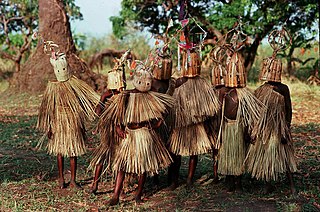
The Yao people, waYao, are a major Bantu ethnic and linguistic group based at the southern end of Lake Malawi, who played an important part in the history of Southeast Africa during the 19th century. The Yao are a predominantly Muslim people of about 2 million spread over three countries, Malawi, northern Mozambique, and in Ruvuma Region and Mtwara Region of Tanzania. The Yao people have a strong cultural identity, which transcends the national borders.
Gaza may refer to:
Daniel Owino Misiani was a Tanzanian-born musician based in Kenya, where he led the Shirati Jazz collective. He was known as the "King of History" in Kenya; overseas and in Tanzania, he was known as "the grandfather of benga", which he pioneered.
Articles related to Mozambique include:
The Chopi are an ethnic group of Mozambique. They have lived primarily in the Zavala region of southern Mozambique, in the Inhambane Province. They traditionally lived a life of subsistence agriculture, traditionally living a rural existence, although many were displaced or killed in the civil war that followed Mozambique's liberation from Portuguese colonial rule in 1975. In addition, drought forced many away from their homeland and into the nation's cities.
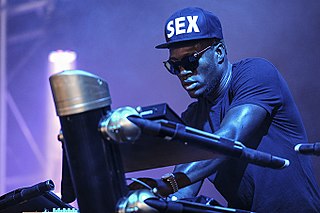
Adegbenga Adejumo, known as Benga, is a British musician from Croydon, known for being a pioneer of dubstep record production. He has been featured on a variety of compilations including Mary Anne Hobbs's Warrior Dubz, Tempa's The Roots of Dubstep and the BBC Radio 1Xtra anniversary mix.
Collela Mazee was a Kenyan musician, who was a leading member of the Victoria Jazz band alongside Ochieng Nelly. They were among the originators of the benga music, a music genre with origins in Kenya's Luoland.
Benga is a Bantu language spoken by the Benga people of Equatorial Guinea and Gabon. It has a dialectal variation called Bapuku. Benga speakers inhabit a small coastal portion of Río Muni, the Cape of San Juan, suburban enclaves of Rio Benito and Bata, the islands of Corisco, Small Elobey and Great Elobey.
Nyungwe is a Bantu language of Mozambique. It is used as a trade language throughout Tete Province.
The Benga Coal Mine is a coal mine located in Tete, Changara District, Tete Province, Mozambique. The mine has coal reserves amounting to 1.9 billion tonnes of coking coal, one of the largest coal reserves in Africa and the world. The mine is operating and is currently producing prime hard coking coal and thermal coal.