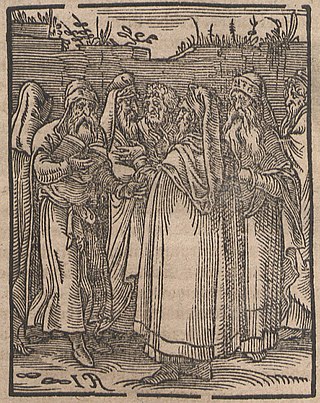
Kabbalah or Qabalah is an esoteric method, discipline and school of thought in Jewish mysticism. It forms the foundation of mystical religious interpretations within Judaism. A traditional Kabbalist is called a Mekubbal.
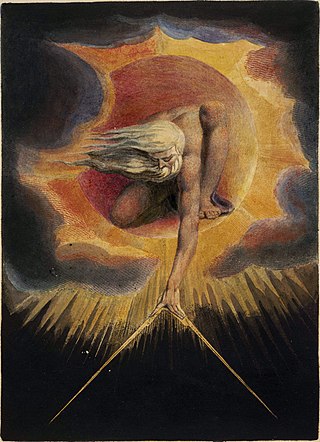
Ancient of Days is a name for God in the Book of Daniel.
Tikkun olam is a concept in Judaism, which refers to various forms of action intended to repair and improve the world.
In the Zohar, Lurianic Kabbalah, and Hermetic Qabalah, the qlippoth, are the representation of evil or impure spiritual forces in Jewish mysticism, the opposites of the Sefirot. The realm of evil is called Sitra Achra in Kabbalistic texts.

Sefirot, meaning emanations, are the 10 attributes/emanations in Kabbalah, through which Ein Sof reveals itself and continuously creates both the physical realm and the seder hishtalshelut. The term is alternatively transliterated into English as sephirot/sephiroth, singular sefira/sephirah.
In the branch of Jewish mysticism known as Kabbalah, Daʻat or Da'ath is the location where all ten sefirot in the Tree of Life are united as one.
Pardes is a Kabbalistic theory of Biblical exegesis first advanced by Moses de León, adapting the popular "fourfold" method of medieval Christianity. The term, sometimes also rendered PaRDeS, means "orchard" when taken literally, but is used in this context as a Hebrew acronym formed from the initials of the following four approaches:
In Kabbalistic and Hasidic philosophy, seder hishtalshelut refers to the chain-like descent of the Four Worlds between God and Creation. Each spiritual world denotes a complete realm of existence, resulting from its general proximity or distance to divine revelation. Each realm is also a form of consciousness reflected in this world through the psychology of the soul. Kabbalah is concerned with defining the esoteric nature, particularly the partzufim or divine manifestations or personas, as well as the functional role of each level between the infinite and the finite. Each spiritual realm embodies a creative stage God uses to go from his self to the creation of the physical world, the material Universe being the end of the chain and the only physical realm. Hasidic thought applies the Kabbalistic scheme to its concern of perceiving divine omnipresence in this material world. In this, Hasidism varies in its use of Kabbalah, Mainstream-Hasidism avoiding Kabbalistic focus, while Chabad thought explains seder hishtalshelut concerning man's psychology. In contrast to the functional aim of Kabbalah, this contemplates seder hishtalshelut as a vehicle for relating to the divine unity with creation. "Seder Hishtalshelut" is sometimes used restrictively to refer to the emergent Created Order, the Four Worlds. More broadly, all preceding levels are included, as their function underlies existence. This page lists and links to all the main spiritual levels described in Lurianic Kabbalah, the scheme of Isaac Luria (1534–1572), the basis of modern Jewish mysticism. Its listing incorporated, expanded and explained earlier Medieval/Classical Kabbalah. After Luria, esoteric Kabbalists broadened their explanation within the Lurianic listing. The supra-rational doctrines of Luria described the Chokmah levels of divinity that preceded the "rationally" perceived Bina levels of Medieval Kabbalah and Moses ben Jacob Cordovero. In turn, the Habad Hasidic exploration described Keter (will) levels of Divine intention that preceded Creation.
Ze`ir Anpin (Aramaic: זְעֵיר אַנפִּין meaning "Lesser Countenance/Small Face", is a revealed aspect of God in Kabbalah, comprising the emotional sephirot attributes: Chesed, Gevurah, Tiphereth, Netzach, Hod and Yesod.
Lurianic Kabbalah is a school of Kabbalah named after Isaac Luria (1534–1572), the Jewish rabbi who developed it. Lurianic Kabbalah gave a seminal new account of Kabbalistic thought that its followers synthesised with, and read into, the earlier Kabbalah of the Zohar that had disseminated in Medieval circles.
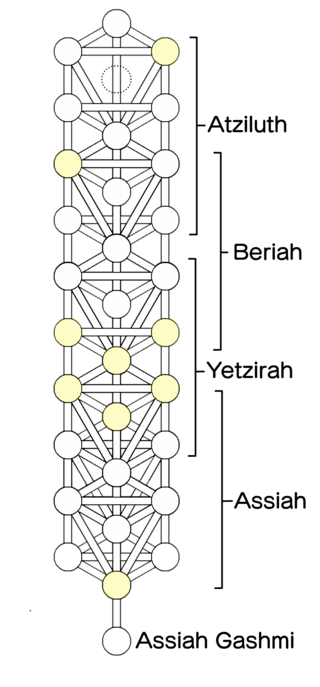
The Four Worlds, sometimes counted with a primordial world, Adam Kadmon, and called the Five Worlds, are the comprehensive categories of spiritual realms in Kabbalah in a descending chain of existence.
The realm known as Akudim/Olam Ha'Akudim is one of the many spiritual worlds described by Kabbalah as being part of the order of development that God utilized to create the physical world. Its significance emerges in Lurianic Kabbalah, as a stage in the process of Tohu and Tikun.
The realm known as Nekudim/Olam HaNekudim is one of the many spiritual worlds (Olamot) described by Kabbalah, as part of the order of development in Creation. Its significance emerges in Lurianic Kabbalah as part of the process of Tohu and Tikun.
Ohr is a central Kabbalistic term in Jewish mysticism. The analogy of physical light describes divine emanations. Shefa "flow" and its derivative, hashpaʾa "influence" השפעה hašpāʿā), are sometimes alternatively used in Kabbalah and medieval Jewish philosophy to mean divine influence, while the Kabbalists favour ʾor because its numerical value equals ר״ז, a homonym for רז rāz "mystery". ʾOr is one of the two main Kabbalistic metaphors for understanding God, along with the other metaphor of the human soul-body relationship for the sefirot.

Kochos/Kochot haNefesh, meaning "Powers of the Soul", are the innate constituent character-aspects within the soul, in Hasidic thought's psychological internalisation of Kabbalah. They derive from the 10 Sephirot Heavenly emanations of Kabbalah, by relating each quality to its parallel internal motivation in man. The Hasidic discussion of the sephirot, particularly in the Kabbalistically oriented system of Habad thought, focuses principally on the Soul Powers, the experience of the sephirot in Jewish worship.
Partzufim or Partsufim, meaning "Divine Personas", are particular reconfigured arrangements of the ten sefirot, divine attributes/emanations of Kabbalah. Each partzuf is thus a configuration of disparate entities into a harmonious unit. The names of the partzufim are derived from the Zohar, the foundational text of Kabbalah. There, they are synonymous terms for the sefirot. Their full doctrinal significance emerged in 16th century Lurianic Kabbalah with reference to the cosmic processes of Tohu and Tikun, "Chaos and Rectification".
Arich Anpin or Arikh Anpin (Aramaic: אריך אנפין meaning "Long Face/Extended Countenance" (also implying "The Infinitely Patient One", is an aspect of Divine emanation in Kabbalah, identified with the sephirah attribute of Keter, the Divine Will.
The World of Chaos and The World of Rectification are two general stages in Jewish Kabbalah in the order of descending spiritual worlds known as "the Four Worlds". In subsequent creations, they also represent two archetypal spiritual states of being and consciousness. Their concepts derive from the new scheme of Lurianic Kabbalah by Isaac Luria (1534–1572), the father of modern Kabbalah, based on his interpretation of classic references in the Zohar.
Yichudim is a specific form of Jewish meditation in Kabbalistic Jewish mysticism, especially denoting the complete meditative method developed by Isaac Luria (1534–1572). The term Yichud is found in Halakha, denoting male-female "seclusion". In the esoteric anthropomorphism in Kabbalah, Yichudim denote unifications between male and female Divine aspects in the supernal sephirot.

