Related Research Articles

An airline is a company that provides air transport services for traveling passengers and/or freight. Airlines use aircraft to supply these services and may form partnerships or alliances with other airlines for codeshare agreements, in which they both offer and operate the same flight. Generally, airline companies are recognized with an air operating certificate or license issued by a governmental aviation body. Airlines may be scheduled or charter operators.
The Airline Deregulation Act is a 1978 United States federal law that deregulated the airline industry in the United States, removing federal control over such areas as fares, routes, and market entry of new airlines. The Civil Aeronautics Board's powers of regulation were phased out, but the regulatory powers of the Federal Aviation Administration (FAA) were not diminished over all aspects of aviation safety.
Price discrimination is a microeconomic pricing strategy where identical or largely similar goods or services are sold at different prices by the same provider in different market segments. Price discrimination is distinguished from product differentiation by the more substantial difference in production cost for the differently priced products involved in the latter strategy. Price differentiation essentially relies on the variation in the customers' willingness to pay and in the elasticity of their demand. For price discrimination to succeed, a firm must have market power, such as a dominant market share, product uniqueness, sole pricing power, etc. All prices under price discrimination are higher than the equilibrium price in a perfectly competitive market. However, some prices under price discrimination may be lower than the price charged by a single-price monopolist. Price discrimination is utilised by the monopolist to recapture some deadweight loss. This Pricing strategy enables firms to capture additional consumer surplus and maximize their profits while benefiting some consumers at lower prices. Price discrimination can take many forms and is prevalent in many industries, from education and telecommunications to healthcare.

A frequent-flyer program or frequent-flyer programme is a loyalty program offered by an airline.
Airline deregulation is the process of removing government-imposed entry and price restrictions on airlines affecting, in particular, the carriers permitted to serve specific routes. In the United States, the term usually applies to the Airline Deregulation Act of 1978. A new form of regulation has been developed to some extent to deal with problems such as the allocation of the limited number of slots available at airports.

A low-cost carrier or low-cost airline is an airline that is operated with an especially high emphasis on minimizing operating costs and without some of the traditional services and amenities provided in the fare, resulting in lower fares and fewer comforts. To make up for revenue lost in decreased ticket prices, the airline may charge extra fees – such as for carry-on baggage. As of April 2020, the world's largest low-cost carrier is Southwest Airlines, which operates primarily in the United States, as well as in some surrounding areas.
AAdvantage is the frequent-flyer program of JetBlue Airways and American Airlines. Launched May 1, 1981, it was the second such loyalty program in the world and remains the largest, with more than 115 million members as of April, 2021.
Dynamic packaging is a method used in package holiday bookings to enable consumers to build their own package of flights, accommodation, and car rental instead of purchasing a pre-defined package. Dynamic packages differ from traditional package tours in that the pricing is always based on current availability, escorted group tours are rarely included, and trip-specific add-ons such as airport parking and show tickets are often available. Dynamic packages are similar in that often the air, hotel, and car rates are available only as part of a package or only from a specific seller. The term "dynamic packaging" is often used incorrectly to describe the less sophisticated process of interchanging various travel components within a package, however, this practice is more accurately described as "dynamic bundling". True dynamic packaging demands the automated recombination of travel components based on the inclusion of rules that not only dictate the content of the package but also conditional pricing rules based on various conditions such as the trip characteristics, suppliers contributing components, the channel of distribution, and terms of sale. Dynamic packages are primarily sold online, but online travel agencies will also sell by phone owing to the strong margins and high sale price of the product.
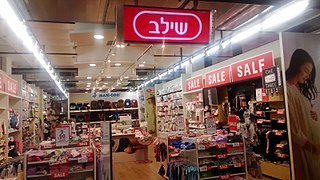
A store-within-a-store, also referred to as shop-in-shop, is an agreement in which a retailer rents a part of the retail space to be used by a different company to run another, independent shop.

A duty-free shop is a retail outlet whose goods are exempt from the payment of certain local or national taxes and duties, on the requirement that the goods sold will be sold to travelers who will take them out of the country, who will then pay duties and taxes in their destination country. Which products can be sold duty-free vary by jurisdiction, as well as how they can be sold, and the process of calculating the duty or refunding the duty component.
Airline booking ploys are used by travelers in commercial aviation to lower the price of flying by circumventing airlines' rules about how tickets may be used. They are generally a breach of the contract of carriage between the passenger and the airline, which airlines may try to enforce in various ways.
A flat fee, also referred to as a flat rate or a linear rate refers to a pricing structure that charges a single fixed fee for a service, regardless of usage. Less commonly, the term may refer to a rate that does not vary with usage or time of use.
Fractional ownership of aircraft is an arrangement in which multiple owners share the use and costs of purchasing and operating an aircraft. Several management companies provide fractional ownership programs for aircraft, including NetJets, Flexjet, Volato, PlaneSense, and AirSprint. Alternatively, owners can join together to purchase their aircraft, independently of a larger management company.
On most modern airlines, flying standby is when a passenger without a seat assignment waits at the gate to see if there is an extra seat after all scheduled passengers have boarded. There are several common circumstances in which passengers fly standby:
Dynamic pricing, also referred to as surge pricing, demand pricing, or time-based pricing, is a revenue management pricing strategy in which businesses set flexible prices for products or services based on current market demands. Businesses are able to change prices based on algorithms that take into account competitor pricing, supply and demand, and other external factors in the market. Dynamic pricing is a common practice in several industries such as hospitality, tourism, entertainment, retail, electricity, and public transport. Each industry takes a slightly different approach to dynamic pricing based on its individual needs and the demand for the product.

An aircraft cabin is the section of an aircraft in which passengers travel. Most modern commercial aircraft are pressurized, as cruising altitudes are high enough such that the surrounding atmosphere is too thin for passengers and crew to breathe.
Saturday-night stay is a rule used by airlines to separate business and leisure travelers.

Joel Widzer is an American author of travel-related literature, consultant, and travel strategist. In 1999 he wrote The Penny Pincher's Passport to Luxury Travel. He is currently the managing partner of JlwConsulting a division of JetReady LLC.

MileagePlus is the loyalty program of United Airlines and Aeromar that offers rewards to passengers traveling on certain types of tickets. Following the 2011 merger agreement between United and Continental Airlines, United Mileage Plus was chosen to be the frequent flyer program for the combined airline. The program was subsequently renamed to MileagePlus, and maintains its relationship with its Star Alliance partners, as well as other airline and travel enterprise agreements.
SkyMiles is the frequent-flyer program of Delta Air Lines that offers points to passengers traveling on most fare types, as well as to consumers who utilize Delta co-branded credit cards, which accumulate towards free awards such as airline tickets, business and first-class upgrades, and luxury products. Created in 1981 as the "Delta Air Lines Frequent Flyer Program", its name was changed to SkyMiles in 1995. Originally all airlines including Delta, only gave miles for airline travel and not credit card spend. Delta claims to have been the first major U.S. airline without mileage expiration, so travelers can redeem awards at their leisure, but others have since followed. The airline also has a separate SkyBonus program that provides small to mid-sized business owners with a way to earn points for trips taken by employees, good towards free flights, upgrades, Medallion status and other travel awards. It has been ranked fairly highly according to some independent news outlets.
References
- ↑ "Airfare Expert: Don't let blackout dates ground you". Rick Seaney, special for USA TODAY. Retrieved 2010-12-06.
)
 | This marketing-related article is a stub. You can help Wikipedia by expanding it. |