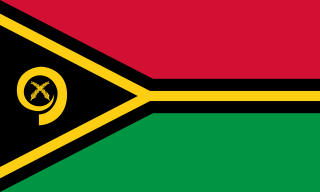
Vanuatu, officially the Republic of Vanuatu, is an island country in Melanesia located in the South Pacific Ocean. The archipelago, which is of volcanic origin, is 1,750 km (1,090 mi) east of northern Australia, 540 km (340 mi) northeast of New Caledonia, east of New Guinea, southeast of Solomon Islands, and west of Fiji.
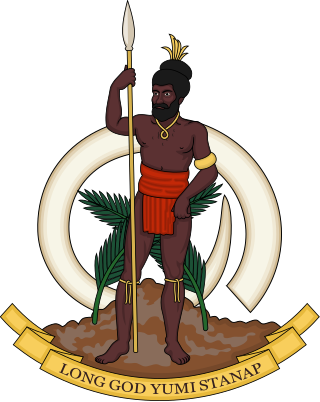
The politics of Vanuatu take place within the framework of a constitutional democracy. The constitution provides for a representative parliamentary system. The head of the Republic is an elected president. The prime minister of Vanuatu is the head of government.

New Hebrides, officially the New Hebrides Condominium and named after the Hebrides in Scotland, was the colonial name for the island group in the South Pacific Ocean that is now Vanuatu. Native people had inhabited the islands for three thousand years before the first Europeans arrived in 1606 from a Spanish expedition led by Portuguese navigator Pedro Fernandes de Queirós. The islands were named by Captain James Cook in 1774 and subsequently colonised by both the British and the French.

Long Island University (LIU) is a private university with two main campuses, LIU Post in Brookville, New York, on Long Island, and LIU Brooklyn in Brooklyn, New York City. The university offers over 500 academic programs at its main campuses, online, and at multiple non-residential locations. LIU has an NCAA Division I athletics programs and hosts and sponsors the annual George Polk Awards in journalism.

The University of the South Pacific (USP) is a public research university with locations spread throughout a dozen countries in Oceania. Established in 1968, the university is organised as an intergovernmental organisation and is owned by the governments of 12 Pacific island countries: the Cook Islands, Fiji, Kiribati, Marshall Islands, Nauru, Niue, Samoa, Solomon Islands, Tokelau, Tonga, Tuvalu and Vanuatu.

Luganville is the second largest city in Vanuatu after the capital Port Vila; it is located on the island of Espiritu Santo and has a population of 18,062 as of the 2020 census. Those on Vanuatu's northern islands who regard Luganville as their big city, particularly indigenous populations, call it Santo; rural residents of Espiritu Santo call it Kanal. Luganville served as a major base of operations for American troops during World War II.

Lillian D. Wald was an American nurse, humanitarian and author. She strove for human rights and started American community nursing. She founded the Henry Street Settlement in New York City and was an early advocate for nurses in public schools.
Levinia Nuqaalaq Brown is a Canadian Inuk politician who served as the Member of the Legislative Assembly (MLA) for the electoral district of Rankin Inlet South/Whale Cove in the Legislative Assembly of Nunavut from 2004 to 2008. She was elected as a MLA on February 16, 2004, and further elected by other MLAs to serve on the Executive Council of Nunavut. Premier Paul Okalik named her as the Deputy Premier on March 9, 2004. She also served as the territory's Minister of Community and Government Services.
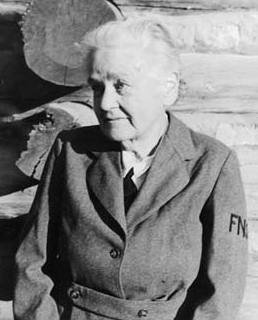
Mary Carson Breckinridge was an American nurse midwife and the founder of the Frontier Nursing Service (FNS), which provided comprehensive family medical care to the mountain people of rural Kentucky. FNS served remote and impoverished areas off the road and rail system but accessible by horseback. She modeled her services on European practices and sought to professionalize American nurse-midwives to practice autonomously in homes and decentralized clinics. Although Breckinridge's work demonstrated efficacy by dramatically reducing infant and maternal mortality in Appalachia, at a comparatively low cost, her model of nurse-midwifery never took root in the United States.
Grace Mera Molisa was a Ni-Vanuatu politician, poet and campaigner for women's equality in politics. The Australian described her as "a vanguard for Melanesian culture and a voice of the Vanuatuans, especially women". She has also been described as one of the Pacific's "leading public intellectuals and activists".
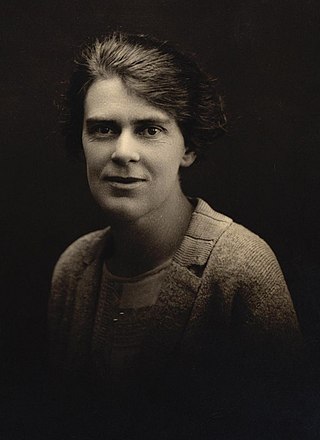
Mary Isabel Lambie was a New Zealand nurse and nursing educator. After World War II she became an international advocate for nursing and nursing education, eventually working with the World Health Organization.
Life expectancy in Vanuatu is 67 years for men, and 70 years for women.

Women in Tuvalu continue to maintain a traditional Polynesian culture within a predominantly Christian society. Tuvaluan cultural identity is sustained through an individual's connection to their home island. In the traditional community system in Tuvalu, each family has its own task, or salanga, to perform for the community. The skills of a family are passed on from parents to children. The women of Tuvalu participate in the traditional music of Tuvalu and in the creation of the art of Tuvalu including using cowrie and other shells in traditional handicrafts. There are opportunities of further education and paid employment with non-government organisations (NGOs) and government enterprises, education and health agencies being the primary opportunities for Tuvaluan women.

Hilda Cathy Heine is a Marshallese educator and politician. She has been serving as the president of the Marshall Islands since 2024, having previously served from 2016 to 2020. Heine was the first woman to lead any sovereign country in Micronesia and the first person from the Marshall Islands to earn a doctorate. Prior to entering politics, she worked as a teacher and counselor at Marshall Islands High School and then as a women's rights activist with her organization Women United Together Marshall Islands.
Sumiko Tanaka Hennessy is an American social worker, trauma therapist, academic, and activist for the Asian-American community in Denver, Colorado. Born in Yokohama, Japan, she earned her Master of Social Work degree at Fordham Graduate School of Social Service and her doctorate at the University of Denver. She was a founding board member and later executive director of the Asian Pacific Development Center, which provides mental health services, counseling, education, and youth activities for the Asian immigrant community in the Denver metropolitan area. In 2000 she helped inaugurate the Tokyo University of Social Welfare and is presently a professor emeritus of that institution. In 2004 she and her husband founded Crossroads for Social Work, LLC, a training program for mental health professionals in Japan and the United States. The recipient of numerous awards, she was inducted into the Colorado Women's Hall of Fame in 1989.
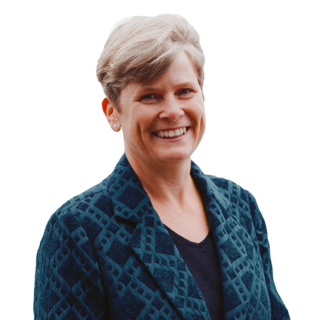
Josie Osborne is a Canadian politician who was elected to the Legislative Assembly of British Columbia in the 2020 provincial election. She represents the electoral district of Mid Island-Pacific Rim as a member of the British Columbia New Democratic Party. She has served in the cabinet of British Columbia since 2020, currently as Minister of Health.

Shinobu Mailo Poll was a Chuukese nurse and women's rights activist, who was President of Chuuk Women's Council (CWC) in the Federated States of Micronesia from 1997 to 2009.
Patsy Yates is an Australian registered nurse, university professor, and institutional leader who works at the Queensland University of Technology (Brisbane), where she is a Distinguished Professor and Executive Dean of the Faculty of Health, Research Director of the Centre for Palliative Care Research and Education, and Co-Director of the Centre for Healthcare Transformation. She is a specialist in the field of palliative, cancer and aged care.
