
A marsh is a wetland that is dominated by herbaceous rather than woody plant species. Marshes can often be found at the edges of lakes and streams, where they form a transition between the aquatic and terrestrial ecosystems. They are often dominated by grasses, rushes or reeds. If woody plants are present they tend to be low-growing shrubs, and the marsh is sometimes called a carr. This form of vegetation is what differentiates marshes from other types of wetland such as swamps, which are dominated by trees, and mires, which are wetlands that have accumulated deposits of acidic peat.

In ecology, a biological interaction is the effect that a pair of organisms living together in a community have on each other. They can be either of the same species, or of different species. These effects may be short-term, or long-term, both often strongly influence the adaptation and evolution of the species involved. Biological interactions range from mutualism, beneficial to both partners, to competition, harmful to both partners. Interactions can be direct when physical contact is established or indirect, through intermediaries such as shared resources, territories, ecological services, metabolic waste, toxins or growth inhibitors. This type of relationship can be shown by net effect based on individual effects on both organisms arising out of relationship.
The Zoological Society of London (ZSL) is a charity devoted to the worldwide conservation of animals and their habitats. It was founded in 1826. Since 1828, it has maintained the London Zoo, and since 1931 Whipsnade Park.

Silliman University is a private research university in Dumaguete City, Negros Oriental, the Philippines. Established in 1901 as Silliman Institute by the Presbyterian Board of Foreign Missions, it is the first American and Protestant founded institution of higher learning in the Philippines and in Asia.

In ecology, the foundation species are species that have a strong role in structuring a community. A foundation species can occupy any trophic level in a food web. The term was coined by Paul K. Dayton in 1972, who applied it to certain members of marine invertebrate and algae communities. It was clear from studies in several locations that there were a small handful of species whose activities had a disproportionate effect on the rest of the marine community and they were therefore key to the resilience of the community. Dayton’s view was that focusing on foundation species would allow for a simplified approach to more rapidly understand how a community as a whole would react to disturbances, such as pollution, instead of attempting the extremely difficult task of tracking the responses of all community members simultaneously. The term has since been applied to a range of organisms in ecosystems around the world, in both aquatic and terrestrial environments. Aaron Ellison et al. introduced the term to terrestrial ecology by applying the term foundation species to tree species that define and structure certain forest ecosystems through their influences on associated organisms and modulation of ecosystem processes.
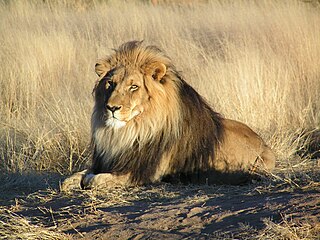
An apex predator, also known as a top predator, is a predator at the top of a food chain, without natural predators of its own.
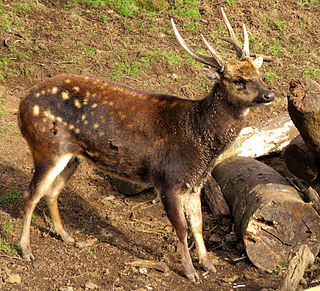
The Visayan spotted deer, also known as the Visayan deer, the Philippine spotted deer or Prince Alfred's deer, is a nocturnal and endangered species of deer located primarily in the rainforests of the Visayan islands of Panay and Negros though it once roamed other islands such as Cebu, Guimaras, Leyte, Masbate, and Samar. It is one of three endemic deer species in the Philippines, although it was not recognized as a separate species until 1983. An estimated 2,500 mature individuals survived worldwide as of 1996, according to the IUCN, although it is uncertain of how many of them still survive in the wild. The diet of the deer, which consists of a variety of different types of grasses, leaves, and buds within the forest, is the primary indicator of its habitat. Since 1991 the range of the species has severely decreased and is now almost co-extensive with that of the Visayan warty pig.
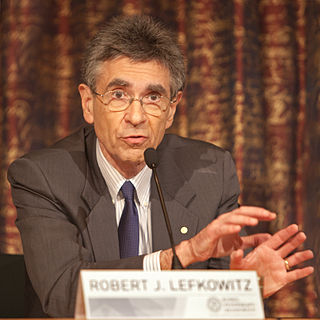
Robert Joseph Lefkowitz is an American physician and biochemist. He is best known for his groundbreaking discoveries that reveal the inner workings of an important family G protein-coupled receptors, for which he was awarded the 2012 Nobel Prize for Chemistry with Brian Kobilka. He is currently an Investigator with the Howard Hughes Medical Institute as well as a James B. Duke Professor of Medicine and Professor of Biochemistry and Chemistry at Duke University.
Ernesto Christian Enkerlin Hoeflich is the Director of Conservation and Sustainability at Parque Fundidora. A prominent Mexican conservationist, environmentalist and researcher, he specializes in parrots' ecology, environmental policy, sustainability and biodiversity stewardship.
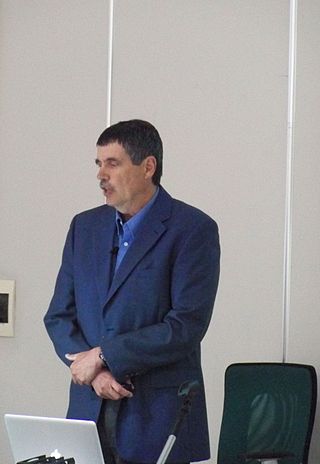
John Charles Avise is an American evolutionary geneticist, conservationist, ecologist and natural historian. He is a Distinguished Professor of Ecology & Evolution, University of California, Irvine, and was previously a Distinguished Professor of Genetics at the University of Georgia.
Dioscoro Siarot Rabor, also known as Joe Rabor, was a Filipino ornithologist, zoologist, and conservationist. Known as the "Father of Philippine Wildlife Conservation", he led more than 50 wildlife expeditions in the Philippines, authored 87 scientific papers and articles, and described 69 new bird taxa and numerous mammal species.
John Edward Morton was a biologist, scholar, theologian, and conservationist from New Zealand. Trained at Auckland University College and the University of London, he became the author of numerous books, papers, and newspaper columns. Morton researched New Zealand's ecology and marine life, and was a marine zoologist. He was also the presenter of the imported nature and science television programme, Our World.

Angel Chua Alcala,, is a Filipino biologist who was named a National Scientist of the Philippines in 2014. Alcala is known for his fieldwork to build sanctuaries and to promote biodiversity in the aquatic ecosystems of the Philippines. He is currently Chairman of the Board of Advisers at the Angelo King Center for Research and Environmental Management located in Silliman University. Responsible for publishing more than 200 peer-reviewed articles and books, his biological contributions to the environment and ecosystems have made him a renowned hero for natural sciences in the Philippines.
Aaron M. Ellison is an ecologist, photographer, sculptor, and writer. He retired in July 2021 after 20 years as the senior research fellow in ecology at Harvard University and as a Senior Ecologist at the Harvard Forest. He also served as deputy director of the Harvard Forest from 2018 to 2021. Until 2018, he also was an adjunct research professor at the University of Massachusetts in the Departments of Biology and Environmental Conservation. Ellison has both authored and co-authored numerous scientific papers, books, book reviews and software reviews. For more than 30 years, Ellison has studied food-web dynamics and community ecology of wetlands and forests; the evolutionary ecology of carnivorous plants; the responses of plants and ants to global climate change; application of Bayesian statistical inference to ecological research and environmental decision-making; and the critical reaction of Ecology to Modernism. In 2012 he was elected a fellow of the Ecological Society of America. He was the editor-in-chief of Ecological Monographs from 2008 to 2015, was a senior editor of Methods in Ecology and Evolution from 2018-2021, and since 2021 has been the executive editor of Methods in Ecology and Evolution.

Reed F. Noss, a Conservation biologist since the beginning of the field in the early 1980s, is a writer, photographer, and speaker, retired in 2017 as Provost's Distinguished Research Professor, Pegasus Professor, and Davis-Shine Professor at the University of Central Florida. He is President and Chief Scientist for the Florida Institute for Conservation Science, Chief Science Advisor for the Southeastern Grasslands Initiative, and Chief Science Advisor for the Endangered Ecosystems Alliance. Noss' published work consists of over 350 published or in press scientific articles, book chapters, and major reports and eight published books, with another book in preparation.

Luiz Alves Rocha is the Curator and Follett Chair of Ichthyology at the California Academy of Sciences. He is also an adjunct professor at the University of California Santa Cruz and San Francisco State University.

The Duke University Marine Laboratory is a research facility and campus of Duke University on Piver's Island, near Beaufort and the Outer Banks, North Carolina specializing in studying marine biology. It is part of the Nicholas School of the Environment's Division of Marine Science and Conservation.
Richard Charles Thompson is a marine biologist who researches marine litter. At the University of Plymouth he is director of the Marine Institute; professor of Marine Biology; and leads the International Marine Litter Research Unit. Thompson coined the term "microplastics" in 2004.
Nyawira A. Muthiga is an African conservation zoologist who is Director of the Western Indian Ocean Marine Science Association Marine Programme in Kenya. She is a conservation scientist for the Wildlife Conservation Society.

The Department of Biology, established in 2022, is a science department in the University of Oxford's Mathematical, Physical and Life Sciences Division. It was formed on 1 August 2022 after a merger between the Department of Plant Sciences and Department of Zoology.

