Related Research Articles
The year 1847 in science and technology involved some significant events, listed below.
The University of Glasgow Medico-Chirurgical Society is a student society at the University of Glasgow which organises social and educational events for medical students at the University. The President for 2023/24 is Jarrar Khan.

Aberdeen Maternity Hospital (AMH) is a specialist maternity hospital in Aberdeen, Scotland. Between 4,000 and 5,000 babies are born at AMH each year. The hospital is located in the Foresterhill area of Aberdeen and serves the region of Grampian as well as the islands of Shetland and Orkney. It is managed by NHS Grampian.
The Journal of the Royal Society of Medicine is a peer-reviewed medical journal. It is the flagship journal of the Royal Society of Medicine with full editorial independence. Its continuous publication history dates back to 1809. Since July 2005 the editor-in-chief is Kamran Abbasi, who succeeded Robin Fox who was editor for almost 10 years.
Carey Franklin Coombs was a British cardiologist known for his work involving rheumatic heart disease and the eponymous Carey Coombs murmur.
Aberdeen Medico-Chirurgical Society is a society for medical practitioners in the North East of Scotland.

James Johnson was an influential British writer on diseases of tropical climates in the first half of the nineteenth century. Born in Ireland, at the early age of 15 he became an apprentice to a surgeon-apothecary in Antrim for two years. After spending two further two years in Belfast, he moved to London for the surgeon's examination, which he passed in 1798. Immediately afterwards, he was appointed surgeon's mate on a naval vessel, on which he sailed to Newfoundland and Nova Scotia. In 1800 he took part in an expedition to Egypt and, in 1803, sailed for India.
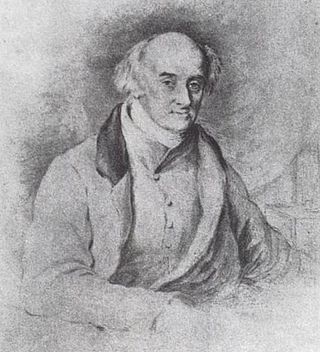
Edward Long Fox was an English psychiatrist. He established an insane asylum at Brislington House, near Bristol, England, and classified the patients according to social class as well as behavioural presentation.

Thomas Bevill Peacock was a cardiologist in London remembered for founding the London Chest Hospital. He also made a large contribution to the understanding of aortic dissection by publishing several case series on the condition.
George William Callender (1830–1879) was an English surgeon.

Eliza Walker Dunbar was a Scottish physician and the first woman from the UK to qualify and work as a doctor.

Thomas Turner, FRCS, FLS, was an English surgeon known primarily for his involvement in developing medical education outside its then traditional base of London. He established a medical school in Manchester and was both a Fellow of the Royal College of Surgeons of England and the Linnean Society of London.
The Royal Physical Society of Edinburgh was a learned society based in Edinburgh, Scotland "for the cultivation of the physical sciences".

Joseph Griffiths Swayne (1819–1903) was an English obstetric physician. He is now known for investigations on cholera, which may have anticipated the discovery of the responsible micro-organism by Robert Koch

Professor Alastair Vincent Campbell MA, BD, Th.D., FRSE is a British theologian and bioethicist. He was the founding editor of the Journal of Medical Ethics and received the Henry K. Beecher award from the Hastings Centre in 1999.

Sir Henry Jebb was an Irish surgeon and midwife, who served as the president of the Royal College of Surgeons in Ireland in 1800.
Prof James Greig Smith FRSE (1854–1897) was a 19th-century Scottish surgeon and author of the highly successful textbook Abdominal Surgery.
John Richard Seale was a British venereologist and advocate in the 1980s of the now-discredited theory that HIV which causes AIDS might have been created in a germ-warfare laboratory by gene-editing. His views and writings were subsequently used to back-up the claims of those that proposed a man-made origin for the virus, and in Soviet propaganda against the United States. A collection of papers relating to Seale's views on HIV are held by the Wellcome Collection.
Francis Washington Everard Hare was an Irish physician and low-carbohydrate diet advocate.
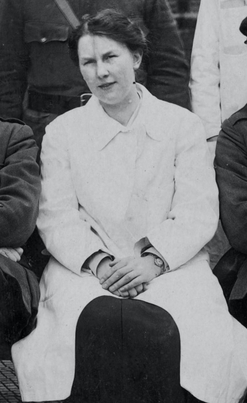
Dulcie Mary Pillers was an English medical illustrator and a founding member of the Medical Artists' Association of Great Britain (MAA). The daughter of a Bristol solicitor, she completed her art training at Kensington Government School of Art, Berkeley Square, Clifton, Bristol, graduating in September 1911 with an Art Class Teachers' Certificate.
References
- ↑ "Archive of "Bristol Medico-Chirurgical Journal"". Ncbi.nlm.nih.gov. Retrieved 22 December 2018.
- ↑ "The West of England Medical Journal". Bristolmedchi.co.uk. Retrieved 22 December 2018.
