
Viscount Dilhorne, of Greens Norton in the County of Northampton, is a title in the Peerage of the United Kingdom. It was created on 7 December 1964 for the lawyer, Conservative politician and former Lord Chancellor, Reginald Manningham-Buller, 1st Baron Dilhorne. He had already succeeded his father as fourth Baronet of Dilhorne and been created Baron Dilhorne, of Towcester in the County of Northampton on 17 July 1962, also in the Peerage of the United Kingdom.
Baron Churston, of Churston Ferrers and Lupton in the County of Devon, is a title in the Peerage of the United Kingdom. It was created in 1858 for the former Conservative Member of Parliament, Sir John Yarde, 3rd Baronet. He had earlier represented South Devon in the House of Commons. Two years later, in 1860, he assumed by Royal licence the additional surname of Buller. As of 2023 the titles are held by his great-great-great-great-grandson, the sixth Baron, who succeeded his father in that year.
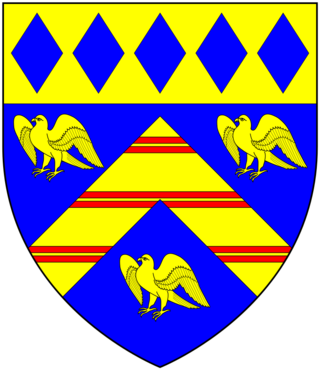
Baron Roborough, of Maristow in the County of Devon, is a title in the Peerage of the United Kingdom. It was created on 24 January 1938 for Sir Henry Lopes, 4th Baronet. He had earlier represented Grantham, Lincolnshire, in Parliament as a Conservative. The Baronetcy, of Maristow House in the County of Devon, had been created in the Baronetage of the United Kingdom on 1 November 1805 for Manasseh Masseh Lopes, a member of a wealthy family of Portuguese Jewish origin, with special remainder to his nephew Ralph Franco, son of his sister Maria. Manasseh Masseh Lopes converted to Christianity in 1802, and later represented Evesham, in Worcestershire, Barnstaple in Devon, and Westbury in Somerset, in Parliament. However, in 1819 he was twice convicted of bribing the voters in both Barnstaple and Grampound in order to be elected to Parliament, and was sentenced to imprisonment and heavy fines. He was also unseated by the House of Commons, but after his release from prison he nonetheless got elected for Westbury, a pocket borough which he controlled to a great extent.

Baron Dufferin and Claneboye, of Ballyleidy and Killyleagh in County Down, Northern Ireland, is a title in the Peerage of Ireland. It was created on 30 July 1800 for Dame Dorcas Blackwood, widow of Sir John Blackwood, 2nd Baronet, Member of the Irish Parliament for Killyleagh and Bangor, in return for support for the Union of Ireland and the United Kingdom.

Jessie Smither, Duchess of Leinster, known by her stage name Denise Orme, was an English music hall singer, actress and musician who appeared regularly at the Alhambra and Gaiety Theatres in London in the early years of the 20th century. Married, successively, to an English baron, a Danish millionaire, and an Irish duke, she was the maternal grandmother of Aga Khan IV.
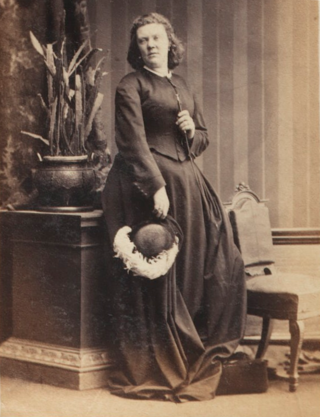
Edith Maud Rawdon-Hastings, 10th Countess of Loudoun was a Scottish peer. She died aged 40 after caring for Rowallan Castle. Sir George Gilbert Scott designed an Eleanor Cross style monument to her which was erected in Ashby de la Zouch.
There have been three baronetcies created for members of the Anstruther family, two in the Baronetage of Nova Scotia and one in the Baronetage of Great Britain. Two of the creations are extant while one is extinct.
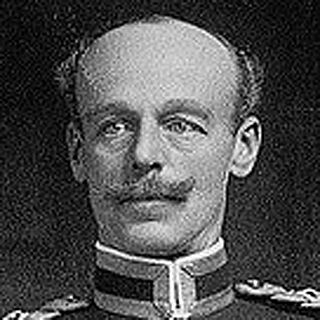
John Reginald Lopes Yarde-Buller, 3rd Baron Churston OBE, MVO, was a British peer and soldier. He is the grandfather of Karim Aga Khan, leader of the Nizari Ismailis, an Islamic sect.

John Yarde-Buller, 1st Baron Churston was a British Conservative politician.
There have been two baronetcies created for people with the surname Heathcote, both in the Baronetage of Great Britain and both created in 1733. The holders of the first creation were later elevated to the peerage as Baron Aveland and Earl of Ancaster, which titles are now extinct. However, both baronetcies are extant as of 2008.
Events from the year 1787 in Ireland.
John Seymour Berry, 2nd Viscount Camrose was a British nobleman, politician, and newspaper proprietor.
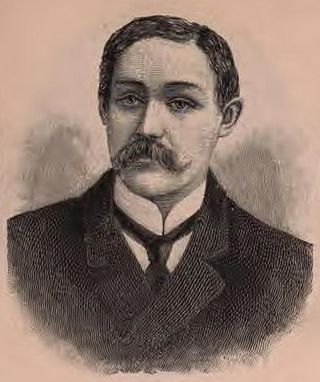
Henry Yarde Buller Lopes, 1st Baron Roborough, known as Sir Henry Lopes, 4th Baronet from 1908 to 1938, of Maristow in the parish of Tamerton Foliot, Devon, was a British Conservative Party politician.

The Gibson, later Gibson-Carmichael, later Gibson-Craig-Carmichael Baronetcy, of Keirhill in the County of Edinburgh, is a title in the Baronetage of Nova Scotia. It was created on 31 December 1702 for Thomas Gibson, with remainder to his heirs male. The sixth Baronet assumed the additional surname of Carmichael. The eleventh Baronet was a Liberal politician. In 1912, he created Baron Carmichael, of Skirling in the County of Peebles, in the Peerage of the United Kingdom. The barony died in 1926, while he was succeeded in the baronetcy by his kinsman Sir Henry Thomas Gibson-Craig-Carmichael, 5th Baronet, of Riccarton, who became the twelfth Baronet of Keirhill and assumed the additional surname of Carmichael.
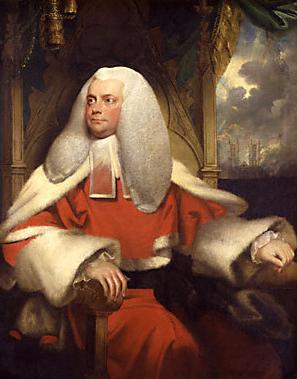
Sir Francis Buller, 1st Baronet was an English judge.

Sir Lopes Massey Lopes, 3rd Baronet, PC, known as Massey Franco until 1831, of Maristow in the parish of Tamerton Foliot, Devon, was a British Conservative politician and agriculturalist.
John Yarde-Buller, 2nd Baron Churston was a British peer and soldier.

Lupton is an historic manor in the parish of Brixham, Devon. The surviving manor house known as Lupton House, is a Palladian Country house built by Charles II Hayne (1747–1821), Sheriff of Devon in 1772 and Colonel of the North Devon Militia. It received a Grade II* listing in 1949. The park and gardens are Grade II* listed in the National Register of Historic Parks and Gardens.

Edward Yarde (1669–1735), of Churston Court in the parish of Churston Ferrers in Devon was a Member of Parliament for Totnes in Devon 1695-1698.
Richard Francis Roger Yarde-Buller, 4th Baron Churston VRD was a British peer and a naval officer.
