A tax credit is a tax incentive which allows certain taxpayers to subtract the amount of the credit they have accrued from the total they owe the state. It may also be a credit granted in recognition of taxes already paid or, as in the United Kingdom, a form of state support.

The Government of India, often abbreviated as GoI, is the union government created by the constitution of India as the legislative, executive and judicial authority of the union of 29 states and seven union territories of a constitutionally democratic republic. It is located in New Delhi, the capital of India.

Her Majesty's Revenue and Customs is a non-ministerial department of the UK Government responsible for the collection of taxes, the payment of some forms of state support and the administration of other regulatory regimes including the national minimum wage.

Laws of India refers to the system of law in modern India. India maintains a hybrid legal system with a mixture of civil, common law and customary or religious law within the legal framework inherited from the colonial era and various legislation first introduced by the British are still in effect in modified forms today. Since the drafting of the Indian Constitution, Indian laws also adhere to the United Nations guidelines on human rights law and the environmental law. Certain international trade laws, such as those on intellectual property, are also enforced in India.
Though the actual definitions vary between jurisdictions, in general, a direct tax is a tax imposed upon a person or property as distinct from a tax imposed upon a transaction, which is described as an indirect tax. The term may be used in economic and political analyses, but does not itself have any legal implications. However, in the United States, the term has special constitutional significance because of a provision in the U.S. Constitution that any direct taxes imposed by the national government be apportioned among the states on the basis of population. In the European Union direct taxation remains the sole responsibility of member states.
A tax refund or tax rebate is a refund on taxes when the tax liability is less than the taxes paid. Taxpayers can often get a tax refund on their income tax if the tax they owe is less than the sum of the total amount of the withholding taxes and estimated taxes that they paid, plus the refundable tax credits that they claim.

An indirect tax is a tax collected by an intermediary from the person who bears the ultimate economic burden of the tax. The intermediary later files a tax return and forwards the tax proceeds to government with the return. In this sense, the term indirect tax is contrasted with a direct tax, which is collected directly by government from the persons on whom it is imposed. Some commentators have argued that "a direct tax is one that cannot be charged by the taxpayer to someone else, whereas an indirect tax can be."
Taxation in France is determined by the yearly budget vote by the French Parliament, which determines which kinds of taxes can be levied and which rates can be applied.

Income taxes in the United States are imposed by the federal, most state, and many local governments. The income taxes are determined by applying a tax rate, which may increase as income increases, to taxable income, which is the total income less allowable deductions. Income is broadly defined. Individuals and corporations are directly taxable, and estates and trusts may be taxable on undistributed income. Partnerships are not taxed, but their partners are taxed on their shares of partnership income. Residents and citizens are taxed on worldwide income, while nonresidents are taxed only on income within the jurisdiction. Several types of credits reduce tax, and some types of credits may exceed tax before credits. An alternative tax applies at the federal and some state levels.
A payment is the trade of value from one party to another for goods, or services, or to fulfill a legal obligation.
Income taxes in Canada constitute the majority of the annual revenues of the Government of Canada, and of the governments of the Provinces of Canada. In the fiscal year ending 31 March 2018, the federal government collected just over three times more revenue from personal income taxes than it did from corporate income taxes.
Taxes in India are levied by the Central Government and the state governments. Some minor taxes are also levied by the local authorities such as the Municipality.
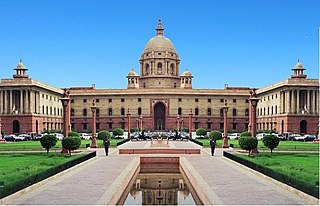
The Ministry of Finance is an important ministry within the Government of India concerned with the economy of India, serving as the Indian Treasury Department. In particular, it concerns itself with taxation, financial legislation, financial institutions, capital markets, centre and state finances, and the Union Budget.
Tax compliance software is software that assists tax compliance, and may cover income tax, corporate tax, VAT, service tax, customs, sales tax, use tax, or other taxes its users may be required to pay. The software automatically calculates a user's tax liabilities to the government, keeps track of all transactions, keeps track of eligible tax credits, etc. The software can also generate forms or filings needed for tax compliance. The software will have pre-defined tax rates and slabs and can allocate income or revenue in the right slab itself. The aim of the software is to provide the user with easy way to calculate tax payment and minimize any human error. Tax compliance software has been present in developed countries for long in the form of tax calculators mainly for direct taxes, such as income tax and corporate tax. Gradually some more complex and customized tax compliance software has been designed and developed by organizations around the globe.
Service tax was a tax levied by Central Government of India on services provided or agreed to be provided excluding services covered under negative list and considering the Place of Provision of Services Rules, 2012 and collected as per Point of Taxation Rules, 2011 from the person liable to pay service tax. Person liable to pay service tax is governed by Service Tax Rules, 1994 he may be service provider or service receiver or any other person made so liable. It is an indirect tax wherein the service provider collects the tax on services from service receiver and pays the same to government of India. Few services are presently exempt in public interest via Mega Exemption Notification 25/2012-ST as amended up to date and few services are charged service tax at abated rate as per Notification No. 26/2012-ST as amended up to date. Presently from 1 June 2016, service tax rate has been increased to consolidated rate at 14% +0.5%+0.5%= 15% of value of services provided or to be provided. The service tax rate now is consolidated rate as education cess and secondary higher education cess are subsumed with 2% of "Swach Bharat Cess(0.50%)" has been notified by the Government.
Taxation in Finland is carried out by the State of Finland, mainly through the Finnish Tax Administration, an agency of the Ministry of Finance. The Finnish Customs and the Finnish Transport Safety Agency, Trafi, also collect taxes. Taxes collected are distributed to the Government, municipalities, church, and the Social Insurance Institution, Kela.
The One Hundred and Twenty Second Amendment Bill of the Constitution of India, officially known as The Constitution Act, 2016, introduced a national Goods and Services Tax in India from 1 July 2017.
Goods and Services Tax (GST) is an indirect tax imposed in India on the supply of goods and services. GST is imposed at every step in the production process, but is meant to be refunded to all parties in the various stages of production other than the final consumer.
A value-added tax (VAT), known in some countries as a goods and services tax (GST), is a type of tax that is assessed incrementally, based on the increase in value of a product or service at each stage of production or distribution. VAT essentially compensates for the shared services and infrastructure provided in a certain locality by a state and funded by its taxpayers that were used in the elaboration of that product or service. Not all localities require VAT to be charged and goods and services for export may be exempted. VAT is usually implemented as a destination-based tax, where the tax rate is based on the location of the consumer and applied to the sales price. Confusingly, the terms VAT, GST, consumption tax and sales tax are sometimes used interchangeably. VAT raises about a fifth of total tax revenues both worldwide and among the members of the Organisation for Economic Co-operation and Development (OECD). As of 2018, 166 of the 193 countries with full UN membership employ a VAT, including all OECD members except the United States, which uses a sales tax system instead.
The rule against foreign revenue enforcement, often abbreviated to the revenue rule, is a general legal principle that the courts of one country will not enforce the tax laws of another country. The rule is part of the conflict of laws rules developed at common law, and forms part of the act of state doctrine.

