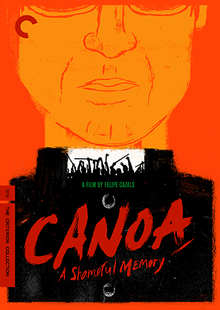
The film is a dramatic re-enactment of real-life events that took place in 1968 in the small village of San Miguel Canoa in Puebla, Mexico. There, a group of five young employees of the Autonomous University of Puebla intended to spend the night en route to a hike up La Malinche. The group was viciously set upon by villagers who had been manipulated by a local right-wing priest to believe them to be Communist revolutionaries and deserved lynching.
The film is shot in a documentary style and examines the pervasive atmosphere of repression in the country following wide-spread protests over the government's spending on the 1968 Summer Olympics, eventually leading to a massacre of hundreds of protestors in Mexico City.
The film was both a critical and a box-office success.[5] Mexican filmmakers Guillermo del Toro and Alfonso Cuarón have praised the film.[6] The film ranked 14th on the list of the 100 best films of Mexican cinema, according to the opinion of 25 film critics and specialists in Mexico, published by Somos magazine in July 1994.[7]
This page is based on this Wikipedia article Text is available under the CC BY-SA 4.0 license; additional terms may apply. Images, videos and audio are available under their respective licenses.