Related Research Articles

Reform Judaism, also known as Liberal Judaism or Progressive Judaism, is a major Jewish denomination that emphasizes the evolving nature of Judaism, the superiority of its ethical aspects to its ceremonial ones, and belief in a continuous search for truth and knowledge, which is closely intertwined with human reason and not limited to the theophany at Mount Sinai. A highly liberal strand of Judaism, it is characterized by lessened stress on ritual and personal observance, regarding halakha as non-binding and the individual Jew as autonomous, and great openness to external influences and progressive values.
Liberal Judaism is one of the two WUPJ-affiliated denominations in the United Kingdom. It is smaller and more radical in comparison with the other one, the Movement for Reform Judaism. It is considered ideologically closer to American Reform Judaism than it is to the British Reform movement. As of 2010 it was the fourth largest Jewish religious group in Britain, with 8.7% of synagogue-member households.

The Union progressiver Juden in Deutschland is a "Körperschaft des öffentlichen Rechts", a publicly chartered association, founded in 1997 as the congregational arm of Liberal Judaism in Germany. It is headed by Rabbi Walter Homolka and has around 5,200 members. It is an affiliate of the World Union for Progressive Judaism. Rabbi Walter Homolka is also the most senior rabbinic figure associated with the UPJ, and the Abraham-Geiger-Kolleg serves as rabbinical seminary since 1999.
The Union for Reform Judaism (URJ), known as the Union of American Hebrew Congregations (UAHC) until 2003, founded in 1873 by Rabbi Isaac Mayer Wise, is the congregational arm of Reform Judaism in North America. The other two arms established by Rabbi Wise are the Hebrew Union College-Jewish Institute of Religion and the Central Conference of American Rabbis. The current president of the URJ is Rabbi Rick Jacobs.

The Hebrew Union College – Jewish Institute of Religion is a Jewish seminary with three locations in the United States and one location in Jerusalem. It is the oldest extant Jewish seminary in the Americas and the main seminary for training rabbis, cantors, educators and communal workers in Reform Judaism. HUC-JIR has campuses in Cincinnati, Ohio, New York City, Los Angeles, California and Jerusalem. The Jerusalem campus is the only seminary in Israel for training Reform Jewish clergy.

Abraham Geiger was a German rabbi and scholar, considered the founding father of Reform Judaism. Emphasizing Judaism's constant development along history and universalist traits, Geiger sought to re-formulate received forms and design what he regarded as a religion compliant with modern times.
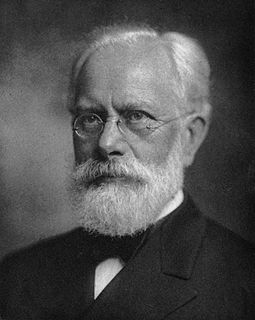
Kaufmann Kohler was a German-born Jewish American biblical scholar and critic, theologian, Reform rabbi, and contributing editor to numerous articles of The Jewish Encyclopedia (1906).

The Israel Movement for Reform and Progressive Judaism is the organizational branch of Progressive Judaism in Israel, and a member organization of the World Union for Progressive Judaism. It currently has 40 communities and congregations around the state of Israel, 13 of which are new congregations, referred to as "U'faratztah" communities, and two kibbutzim, Yahel and Lotan.
The World Union for Progressive Judaism (WUPJ) is the international umbrella organization for the various branches of Reform, Liberal and Progressive Judaism, as well as the separate Reconstructionist Judaism. The WUPJ is based in 40 countries with 1,275 affiliated synagogues, of which 1,170 are Reform, Progressive, or Liberal and 105 Reconstructionist. It claims to represent a total of some 1.8 million people, both registered constituents and non-member identifiers. The WUPJ states that it aims to create common ground between its constituents and to promote Progressive Judaism in places where individuals and groups are seeking authentic, yet modern ways of expressing themselves as Jews. It seeks to preserve Jewish integrity wherever Jews live, to encourage integration without assimilation, to deal with modernity while preserving the Jewish experience, and to strive for equal rights and social justice.
Walter Jacob is an American Reform rabbi who was born in Augsburg, Germany, and immigrated to the United States in 1940.
Abraham Geiger Kolleg is a rabbinic seminary at the University of Potsdam in Potsdam, Germany.
Temple Beth Israel was a Reform synagogue located at 840 Highland Road in Sharon, Pennsylvania. Originally called House of Israel Congregation, it was founded in 1888 as an Orthodox congregation by Jews from Eastern Europe.
The first openly lesbian, gay, bisexual, and transgender clergy in Judaism were ordained as rabbis and/or cantors in the second half of the 20th century.
Wolfe Kelman was an Austrian-born American rabbi and leader in the Conservative Judaism in the United States who never led a congregation, serving for decades as a mentor to hundreds of rabbis in his role as the executive vice president of the Rabbinical Assembly, where he also prepared the initial steps for the rabbinic ordination of women in the Conservative movement.
Women of Reform Judaism (WRJ), formerly known as the National Federation of Temple Sisterhoods, is the women's affiliate of the Union for Reform Judaism. As the primary women's organization in the Reform Jewish movement, WRJ represents over 65,000 women. WRJ advocates for social justice, raises funds for charities and rabbinic scholarships, and educates congregational leaders.

Temple Israel is a Reform Jewish congregation located at 2004 East 22nd Place in Tulsa, Oklahoma. Founded in 1914, the synagogue affiliated with the Union for Reform Judaism in 1915, and constructed its first building on the corner of 14th and Cheyenne Streets in 1919. Early rabbis included Jacob Menkes, Charles Latz, Samuel Kaplan, Jacob Krohngold, and Benjamin Kelsen.

This is a timeline of women rabbis.
Temple Israel is the oldest of eleven Progressive synagogues in South Africa. It is a provincial heritage site, built in the Art Deco style by architect Hermann Kallenbach. It is located in the Johannesburg suburb of Hillbrow. It is an affiliate of the South African Union for Progressive Judaism (SAUPJ), which is part of the World Union for Progressive Judaism (WUPJ).
Beit Emanuel Progressive Synagogue is a progressive synagogue located in Parktown, Johannesburg. The synagogue was established in 1954 and is one of the largest progressive Jewish congregations in South Africa. Israeli-born, Rabbi Sa'ar Shaked has been Beit Emanuel's congregational rabbi since 2013. It is an affiliate of the South African Union for Progressive Judaism (SAUPJ), which is part of the World Union for Progressive Judaism (WUPJ). Congregational rabbi, Shaked is currently involved in efforts to establish a Rabbinic Academy and Higher Education Institution in Gauteng.
The South African Union for Progressive Judaism (SAUPJ) is an affiliate of the World Union for Progressive Judaism and supports 11 progressive congregations. The SAUJP estimates that it represents around 6,000 South African Jews and around 10 per cent of the overall Jewish population residing in South Africa. In 2020 a study by the Institute for Jewish Policy Research showed that 12% identified as Progressive and that in relative terms the progressive strands are increasing.
References
- ↑ Rabbi Greg Alexander Daily Maverick. Accessed on 7 December 2019
- ↑ Temple Israel turns 70 Temple Israel. Accessed on 7 December 2019
- ↑ Congregations South African Union for Progressive Judaism. Accessed on 6 December 2019
- ↑ History Temple Israel. Accessed on 7 December
- ↑ Our Rabbis Temple Israel. Accessed on 7 December 2019