Related Research Articles
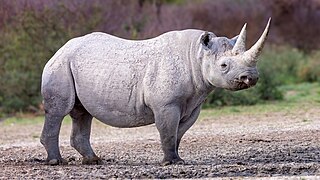
The black rhinoceros, black rhino or hook-lipped rhinoceros is a species of rhinoceros, native to eastern Africa and southern Africa, including Angola, Botswana, Kenya, Malawi, Mozambique, Namibia, South Africa, Eswatini, Tanzania, Zambia, and Zimbabwe. Although the species is referred to as black, its colours vary from brown to grey. It is the only extant species of the genus Diceros.

Hluhluwe–Imfolozi Park, formerly Hluhluwe–Umfolozi Game Reserve, is the oldest proclaimed nature reserve in Africa. It consists of 960 km² of hilly topography 280 kilometres (170 mi) north of Durban in central KwaZulu-Natal, South Africa and is known for its rich wildlife and conservation efforts. Operated by Ezemvelo KZN Wildlife, the park is the only state-run park in KwaZulu-Natal where each of the big five game animals can be found.

Kaziranga National Park is a national park in the Golaghat and Nagaon districts of the state of Assam, India. The park, which hosts two-thirds of the world's Indian rhinoceroses, is a UNESCO World Heritage Site. According to the census held in March 2018 which was jointly conducted by the Forest Department of the Government of Assam and some recognized wildlife NGOs, the rhino population in Kaziranga National Park is 2,613. It comprises 1,641 adult rhinos ; 387 sub-adults ; and 385 calves.

A rhinoceros, commonly abbreviated to rhino, is a member of any of the five extant species of odd-toed ungulates in the family Rhinocerotidae; it can also refer to a member of any of the extinct species of the superfamily Rhinocerotoidea. Two of the extant species are native to Africa, and three to South and Southeast Asia.

The Indian rhinoceros, also known as the greater one-horned rhinoceros, great Indian rhinoceros, or Indian rhino for short, is a rhinoceros species native to the Indian subcontinent. It is the second largest extant species of rhinoceros, with adult males weighing 2.07–2.2 tonnes and adult females 1.6 tonnes. The skin is thick and is grey-brown in colour with pinkish skin folds. They have a single horn on their snout that grows to a maximum of 57.2 cm (22.5 in). Their upper legs and shoulders are covered in wart-like bumps. They are nearly hairless, aside from the eyelashes, ear fringes and tail brush.

The white rhinoceros, white rhino or square-lipped rhinoceros is the largest extant species of rhinoceros. It has a wide mouth used for grazing and is the most social of all rhino species. The white rhinoceros consists of two subspecies: the southern white rhinoceros, with an estimated 16,803 wild-living animals, and the much rarer northern white rhinoceros. The northern subspecies has very few remaining individuals, with only two confirmed left in 2018. Sudan, the world's last known male northern white rhinoceros, died in Kenya on 19 March 2018 at age 45.

Akagera National Park is a protected area in eastern Rwanda covering 1,122 km2 (433 sq mi) along the international border with Tanzania. It was founded in 1934 and includes savannah, montane and swamp habitats. The park is named for the Kagera River which flows along its eastern boundary feeding into Lake Ihema and several smaller lakes. The complex system of lakes and linking papyrus swamps makes up over a third of the park, which is the largest protected wetland in Eastern-Central Africa.

Garamba National Park is a national park in the north-eastern Democratic Republic of the Congo covering nearly 5,200 km2 (2,000 sq mi). It is among Africa's oldest parks and was designated a World Heritage Site by UNESCO in 1980 for its protection of critical habitat for northern white rhinoceroses, African elephants, hippopotamuses, and giraffes. Garamba National Park has been managed by African Parks in partnership with the Institut Congolais pour la Conservation de la Nature since 2005.

Way Kambas National Park is a national park covering 1,300 km2 (500 sq mi) in Lampung province of southern Sumatra, Indonesia. It consists of swamp forest and lowland rain forest, mostly of secondary growth as result of extensive logging in the 1960s and 1970s. Despite decreasing populations, the park still has a few critically endangered Sumatran tigers, Sumatran elephants and Sumatran rhinoceroses. It also hosts over 400 bird species.

The International Rhino Foundation (IRF) is a Texas-based charity focused on the conservation of the five species of rhinoceros which include the White Rhinoceros and Black Rhinoceros of Africa, and the Indian Rhinoceros, Javan Rhinoceros and Sumatran Rhinoceros of Asia.
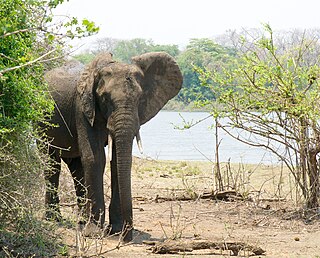
Majete Wildlife Reserve is a nature reserve in southwestern Malawi, established as a protected area in 1955. The reserve's animal populations were decimated during the late 1970s and 1980s due to poaching and other human activities. Majete has been managed by African Parks since 2003, when the nonprofit conservation organization entered into a public–private partnership with the Malawi Department of National Parks and Wildlife (DNPW). Since then, wildlife has been restored, the park has achieved big five game status, and tourism has increased.

The Lewa Wildlife Conservancy is located in northern Kenya. It was formed in 1995 and is a wildlife sanctuary incorporating the Ngare Ndare Forest covering over 62,000 acres (250 km2). The Conservancy is home to a wide variety of wildlife including the rare and endangered black rhinos, Grevy's zebras and sitatungas. It also includes the big five. Lewa holds over 12% of Kenya's eastern black rhinoceros population and the largest single population of Grevy's zebras in the world.

The Sheldrick Wildlife Trust (SWT) operates an orphan elephant rescue and wildlife rehabilitation program in Kenya. It was founded in 1977 by Dame Daphne Sheldrick to honor her late husband, David Sheldrick. Since 2001, it has been run by their daughter, Angela Sheldrick.
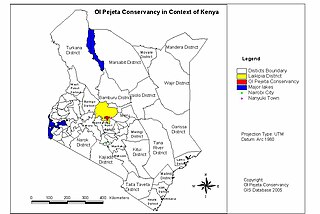
The Ol Pejeta Conservancy is a 360 km2 (140 sq mi) not-for-profit wildlife conservancy in Central Kenya's Laikipia County. It is situated on the equator west of Nanyuki, between the foothills of the Aberdares and Mount Kenya. The Ol Pejeta Conservancy works to conserve wildlife, provide a sanctuary for great apes, and generate income through wildlife tourism and complementary enterprises for re-investment in conservation and community development.

The SanWild Wildlife Sanctuary is a 5,000 ha (50 km2) wildlife rehabilitation center and reserve in South Africa's Limpopo Province, located a few kilometers south of Leydsdorp, and near the western boundary of the Kruger National Park.
Care for the Wild International is an animal charity, a non-governmental organization established in 1984 and based in the United Kingdom. It supports wildlife projects and it campaigns on animal rights issues in Britain and around the world.

The southern white rhinoceros or southern white rhino is one of the two subspecies of the white rhinoceros. It is the most common and widespread subspecies of rhinoceros.

Khama Rhino Sanctuary is a community-based wildlife project in Botswana, located about 25 kilometres (16 mi) outside of Serowe. It covers approximately 8,585 hectares of Kalahari sandveld and is home to white and black rhinos as well as over 30 other mammal species and more than 230 species of birds. The sanctuary was established in 1992 to help save the vanishing rhinoceros and restore historic wildlife populations, as well as to develop the surrounding community. In addition to breeding rhinos, the sanctuary also has an environmental education centre, campsites, property chalets, and a restaurant onsite. Funds are mainly generated from tourism and from selling animals to other farms when capacity is exceeded on the property.
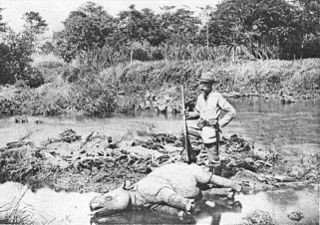
Rhinoceros poaching in southern Africa is the illegal act of slaughtering rhinoceros in the southern African countries of Namibia, Botswana, Zimbabwe and South Africa, where most of Africa's rhinos live. The most common reason for rhino poaching is to meet the high demand for their horns in Asian countries, where the horn is predominantly used in Traditional Chinese Medicine but is increasingly being used as a symbol of wealth and prosperity. In previous generations, the most common rhino poaching activity was hunting for recreational purposes. Because of excessive poaching, rhino populations have decline rapidly since the 1970s, leaving some species critically endangered and facing extinction.
Petronel Nieuwoudt is a South African wildlife conservationist. In 2011, she established the Care For Wild rhinoceros sanctuary in Mpumalanga, South Africa. It is the largest such sanctuary in the world. She is also the chief executive officer of the foundation.
References
- ↑ "The World's Largest Rhino Sanctuary in South Africa". 25 August 2017. Retrieved 23 November 2019.
- ↑ "Care For Wild | Our History". careforwild.co.za. Retrieved 2024-02-08.
- 1 2 Lockwood, Nikki (2022-03-10). I Heart Africa Project. Nikki Lockwood. ISBN 979-8-4258-7265-4.
- ↑ "BBC One - Nature's Miracle Orphans - Petronel Nieuwoudt". BBC. Retrieved 2024-02-08.
- ↑ Hanks, John (2015-05-08). Operation Lock and the War on Rhino Poaching. Penguin Random House South Africa. ISBN 978-1-77022-730-9.