Non-governmental organizations, nongovernmental organizations, or nongovernment organizations, commonly referred to as NGOs, are usually non-profit and sometimes international organizations independent of governments and international governmental organizations that are active in humanitarian, educational, health care, public policy, social, human rights, environmental, and other areas to affect changes according to their objectives. They are thus a subgroup of all organizations founded by citizens, which include clubs and other associations that provide services, benefits, and premises only to members. Sometimes the term is used as a synonym of "civil society organization" to refer to any association founded by citizens, but this is not how the term is normally used in the media or everyday language, as recorded by major dictionaries. The explanation of the term by NGO.org is ambivalent. It first says an NGO is any non-profit, voluntary citizens' group which is organized on a local, national or international level, but then goes on to restrict the meaning in the sense used by most English speakers and the media: Task-oriented and driven by people with a common interest, NGOs perform a variety of service and humanitarian functions, bring citizen concerns to Governments, advocate and monitor policies and encourage political participation through provision of information.
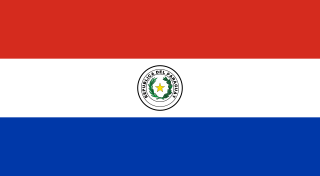
Paraguay, officially the Republic of Paraguay, is a country of South America. It is bordered by Argentina to the south and southwest, Brazil to the east and northeast, and Bolivia to the northwest. Although it is one of the only two landlocked countries in South America, the country has coasts, beaches and ports on the Paraguay and Paraná rivers that give exit to the Atlantic Ocean through the Paraná-Paraguay Waterway. Due to its central location in South America, it is sometimes referred to as Corazón de Sudamérica.
The Society of Jesus is a scholarly religious congregation of the Catholic Church which originated in sixteenth-century Spain. The members are called Jesuits. The society is engaged in evangelization and apostolic ministry in 112 nations. Jesuits work in education, intellectual research, and cultural pursuits. Jesuits also give retreats, minister in hospitals and parishes, sponsor direct social ministries, and promote ecumenical dialogue.
CEPAG began in a period of dictatorship, 1967 to 1976, and was called the Center for Research and Social Action, to promote dialogue on politics, sociology, and religion in a university context. It also made efforts at organizing the peasantry and indigenous peoples. In 1976 under state repression more than half of its members withdrew or were imprisoned or exiled, though its Action magazine continued to publish learned studies. After 1986 some educational and development work in rural areas was undertaken, along with studies in the Guaraní culture and history. Action went from being a quarterly to ten issues a year and the Ediciones Montoya division of CEPAG was born, at first under the name of Editorial Loyola. After 2001 rural education and action continued and there was increased emphasis on research and communication. The Country Partnership project was launched to work toward unifying the country in an equitable way.[2]
Guaraní are a group of culturally related indigenous peoples of South America. They are distinguished from the related Tupí by their use of the Guaraní language. The traditional range of the Guaraní people is in present-day Paraguay between the Uruguay River and lower Paraguay River, the Misiones Province of Argentina, southern Brazil once as far north as Rio de Janeiro, and parts of Uruguay and Bolivia. Although their demographic dominance of the region has been reduced by European colonisation and the commensurate rise of mestizos, there are contemporary Guaraní populations in these areas. Most notably, the Guaraní language, still widely spoken across traditional Guaraní homelands, is one of the two official languages in Paraguay, the other one being Spanish. The language was once looked down upon by the upper and middle classes, but it is now often regarded with pride and serves as a symbol of national distinctiveness. The Paraguayan population learns Guaraní both informally from social interaction and formally in public schools. In modern Spanish, Guaraní is also applied to refer to any Paraguayan national in the same way that the French are sometimes called Gauls.
Paraguay's indigenous people number about 120,000 in 19 groups, constituting about 1.6% of the population and evenly divided between the east and the western Chaco.[3] They need protection from export-oriented business interests that have exploited their lands for soybeans, maize, and trees. This has caused migrations and forced indigenous peoples to live as subsistence farmers, bereft of their community life. This despite the supposed protection of Law No. 904 for the protection of indigenous communities. Also, 30,000 of the indigenous live around Mennonite colonies where they furnish cheap labor.[3] CEPAG is helping peasant farmers to achieve more healthy and sustainable production.[4] It also works to better the situation of women in the home and working environment as well as in the public forum.[2] The indigenous peoples have no national organization but in September 2017 they met to further organize at the local and regional levels, with the coordinating help of CEPAG and OXFAM.[5][6]
The Paraguayan Chaco or Región Occidental is a semi-arid region in Paraguay, with a very low population density. The area is being rapidly deforested. Consisting of more than 60% of Paraguay's land area, but with less than 10% of the population, the Chaco is one of the most sparsely inhabited areas in South America.
Activities
Entreculturas gave CEPAG €426,839 for three projects: improvement of the income capacity for 57 peasant families (2011), and again in 2014 for a much larger group; then in 2015 the grant was for the defense of the rights of the inhabitants of Bañados de Asunción.[7] In 2017 CEPAG facilitated the construction of a sales center for agricultural products in Yasy Cañy.[8] CEPAG also participated in a reforestation program with assistance from the US government,[9] and was part of a coalition that challenged the prime minister's statement on the safety of herbicides used by corporations.[10] In 2015 CEPAG represented Paraguay in a Justice and Peace Seminar sponsored by the religious order of Dominicans in Brazil.[11]
Entreculturas is a non-governmental organization for development cooperation, the international social outreach of the Spanish Province of Jesuits, founded in Madrid in 1985. It focuses mainly on educating the poor in Latin America and Africa, while responding to humanitarian crises and also educating to global awareness in Spain.
The United States of America (USA), commonly known as the United States or America, is a country composed of 50 states, a federal district, five major self-governing territories, and various possessions. At 3.8 million square miles, the United States is the world's third or fourth largest country by total area and is slightly smaller than the entire continent of Europe's 3.9 million square miles. With a population of over 327 million people, the U.S. is the third most populous country. The capital is Washington, D.C., and the largest city by population is New York City. Forty-eight states and the capital's federal district are contiguous in North America between Canada and Mexico. The State of Alaska is in the northwest corner of North America, bordered by Canada to the east and across the Bering Strait from Russia to the west. The State of Hawaii is an archipelago in the mid-Pacific Ocean. The U.S. territories are scattered about the Pacific Ocean and the Caribbean Sea, stretching across nine official time zones. The extremely diverse geography, climate, and wildlife of the United States make it one of the world's 17 megadiverse countries.
The Order of Preachers, also known as the Dominican Order, is a mendicant Catholic religious order founded by the Spanish priest Dominic of Caleruega in France, approved by Pope Honorius III via the Papal bull Religiosam vitam on 22 December 1216. Members of the order, who are referred to as Dominicans, generally carry the letters OP after their names, standing for Ordinis Praedicatorum, meaning of the Order of Preachers. Membership in the order includes friars, nuns, active sisters, and affiliated lay or secular Dominicans.
CEPAG is a member of Decidamos, a citizen advocacy group of NGOs,[12] and in 2014 joined other NGOs in protesting Paraguayan activities of the TNCs Monsanto, Cargill, and Bunge.[13] CEPAG has also been critical of the asymmetry of countries party to the Mercosur free trade agreement.[14] It has distinguished itself in the study of medicinal herbs for the benefit of peasant families[15] and has facilitated a local seeds fair held in the nation's capital.[16]
The Monsanto Company was an American agrochemical and agricultural biotechnology corporation that existed from 1901 until 2018 when it was acquired by Bayer as part of its crop science division. It was headquartered in Creve Coeur, Missouri. Monsanto developed Roundup, a glyphosate-based herbicide, in the 1970s, and became a major producer of genetically engineered crops.
Cargill, Incorporated is an American privately held global corporation based in Minnetonka, Minnesota, and incorporated in Wilmington, Delaware. Founded in 1865, it is the largest privately held corporation in the United States in terms of revenue. If it were a public company, it would rank, as of 2015, number 15 on the Fortune 500, behind McKesson and ahead of AT&T.
Bunge Limited is an American agribusiness and food company, incorporated in Bermuda, and headquartered in White Plains, New York, United States. As well as being an international soybean exporter, it is also involved in food processing, grain trading, and fertilizer. It competes with Cargill and Archer Daniels Midland. The company has approximately 32,000 employees in 40 countries.
The center publishes the monthly Action magazine,[17] the oldest such publication in Paraguay.[18] It promotes dialogue on faith and culture and advocates for greater equity and justice.[19] CEPAG also publishes books[20] as well as audios and audiovisuals.[21][22] In 2010 and 2011 it produced a series of educational radio programs on Guarini agricultural experiences.[23]
On the occasion its 50th jubilee in 2017, CEPAG held a teachers' conference on education and the family, and also Expo Acción with displays of the center's work spanning the areas of education, health, and advocacy for peoples' rights.[24]
This page is based on this Wikipedia article Text is available under the CC BY-SA 4.0 license; additional terms may apply. Images, videos and audio are available under their respective licenses.