Center for the History of Women Philosophers and Scientists

Last updated

The Center for the History of Women Philosophers and Scientists (HWPS) is an interdisciplinary research center at the University of Paderborn, focused on the work of historical women philosophers and scientists. The Center is responsible for the publication of the Journal of the History of Women Philosophers and Scientists. [1] [2] The Center also awards the annual Elizabeth of Bohemia prize, Europe's first prize honoring women philosophers. [3] [4] [5] The Center received a major grant from the Alexander von Humboldt foundation for the study of women philosophers in Ukraine, [6] and also maintains a research network and talk series for researchers working on the history of women philosophers and scientists. [7] [8]

Contents

Encyclopedia of Concise Concepts by Women Philosophers

The Encyclopedia of Concise Concepts by Women Philosophers (ECC) is an online encyclopedia that exclusively contains entries on concepts from the work of female philosophers.

The ECC is an open access database developed by the Center for the History of Women Philosophers and Scientists that went online on June 15, 2018. [9]

Each entry is written by an internationally recognized researcher and peer-reviewed before publication. [10] It will contain a brief explanation of a philosophical concept both either developed or significantly advanced by a woman philosopher as well as a list of primary and secondary sources for further research. Early articles focused on thinkers such as Diotima of Mantinea, Mercy Otis Warren and Jane Addams. [11]

The encyclopedia is part of the digital collection of Paderborn University and articles are available as official academic sources. [12] It was created by the German philosopher Ruth Hagengruber and Mary Ellen Waithe of Cleveland State University. [13]

The ECC received the DARIAH-DE DH-Award 2018, (“Tools and Projects” section), for exceptional work in digital humanities. [14]

Émilie Du Châtelet: Research and Manuscript Editions

The Center has a long-standing focus on the work of the eighteenth-century philosopher and physicist, Émilie du Châtelet. For example, a major international conference in Potsdam in 2006 [15] resulted in an edited volume linking Du Châtelet to Leibniz and Newton. [16] [17] Since 2020, the Center has published a freely available historical-critical online edition of previously unedited manuscripts by Du Châtelet, stored at the National Library in St. Petersburg, Russia. This is the first critical edition, as well as the first online edition, of manuscripts by Du Châtelet. [18] The edition is funded by the German Research Foundation (Deutsche Forschungsgemeinschaft) and is a collaboration with the National Library of Russia. [19]

Since 2021, the Center has also published a freely available online historical-critical edition of a different set of manuscripts by Du Châtelet, stored at the Bibliothèque Nationale de France, Paris. These manuscripts include the early drafts of her main philosophical work, the Institutions de physique. [19]

Elisabeth of Bohemia Prize

The Elisabeth of Bohemia Prize was named in honor of Elisabeth of Bohemia (1618–1680). The award was established to acknowledge research on women in the history of philosophy. The prize is endowed with 3500 Euros and is donated by Ulrike Detmers. [20] [21] Awardees include Laura Aurora Benítez Grobet (2023), Sarah Hutton (2022), Mitieli Seixas da Silva (2021), Mary Ellen Waithe (2019) and Lisa Shapiro (2018). [22]

Public Teaching

From 2017 to 2019, the Center for the History of Women Philosophers and Scientists hosted the Libori Summer School in Paderborn, Germany. [23] The conferences were open to the public and featured scholars from all over the world giving talks and master classes. [24] The Center HWPS also hosts online teaching seminars. For their offering of Massive Open Online Courses (MOOC), the Center was awarded the Fellowship für Innovations in Digital University Teaching. [25]

Related Research Articles

<span class="mw-page-title-main">Westphalia</span> State part and historic region of North Rhine-Westphalia, Germany

Westphalia is a region of northwestern Germany and one of the three historic parts of the state of North Rhine-Westphalia. It has an area of 20,210 square kilometres (7,800 sq mi) and 7.9 million inhabitants.

<span class="mw-page-title-main">Haute-Marne</span> Department of France in Grand Est

Haute-Marne is a department in the Grand Est region of Northeastern France. Named after the river Marne, its prefecture is Chaumont. In 2019, it had a population of 172,512.

<span class="mw-page-title-main">Paderborn</span> City in North Rhine-Westphalia, Germany

Paderborn is a city in eastern North Rhine-Westphalia, Germany, capital of the Paderborn district. The name of the city derives from the river Pader and Born, an old German term for the source of a river. The river Pader originates in more than 200 springs near Paderborn Cathedral, where St. Liborius is buried.

The year 1706 in science and technology involved some significant events.

<span class="mw-page-title-main">Émilie du Châtelet</span> French mathematician, physicist, and author (1706–1749)

Gabrielle Émilie Le Tonnelier de Breteuil, Marquise du Châtelet was a French natural philosopher and mathematician from the early 1730s until her death due to complications during childbirth in 1749.

Vis viva is a historical term used to describe a quantity similar to kinetic energy in an early formulation of the principle of conservation of energy.

<span class="mw-page-title-main">Salzkotten</span> Town in North Rhine-Westphalia, Germany

Salzkotten is a town in the district of Paderborn, in North Rhine-Westphalia, Germany. The name Salzkotten is based in the former salt production, which gave Salzkotten its raison d'être. Salt was found in the salty springs around the town.

<span class="mw-page-title-main">Red Dot</span> German international design prize

The Red Dot Design Award is an international, annual design competition for product and industrial design, brand and communication design as well as design concepts, in which the Red Dot quality label is awarded to winners. The Red Dot Design Award, which is organized by Red Dot GmbH & Co. KG, dates back to 1954 when the "Verein Industrieform e. V." was founded.

Émilie is an opera – specifically a 9-scene, 75-minute monodrama for soprano – by Finnish composer Kaija Saariaho to a libretto by Amin Maalouf. It was written in 2008. Based on the life and writings of Marquise Émilie du Châtelet (1706–1749), the work premiered at the Opéra de Lyon, France, on 1 March 2010, with Finnish soprano Karita Mattila, its dedicatee, in the title role. It recounts the achievements of this mathematician, physicist, and mistress of Voltaire: the first woman to establish an international scientific reputation, with pioneering work in the study of fire.
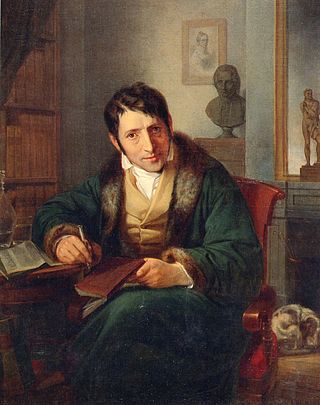
<span class="mw-page-title-main">Ludwig Börne Prize</span> German annuary literary award

The Ludwig Börne Prize is a literary award that is awarded annually by the Frankfurt-based Ludwig-Börne-Stiftung. It is one of the most important of its kind in German-speaking countries.
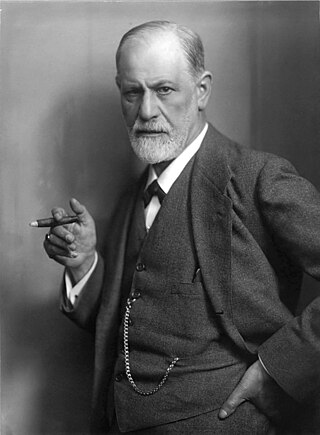
<span class="mw-page-title-main">Sigmund Freud Prize</span> Award

The Sigmund Freud Prize or Sigmund Freud Prize for Academic Prose is a German literary award named after Sigmund Freud and awarded by the Deutsche Akademie für Sprache und Dichtung. It was first awarded in 1964.

<span class="mw-page-title-main">Ruth Hagengruber</span> German philosopher

Ruth Hagengruber is a German philosopher, currently professor and head of philosophy at the University of Paderborn. She specialises in the history of women philosophers as well as philosophy of economics and computer science and is a specialist on Émilie Du Châtelet. Hagengruber is the director of the Center for the History of Women Philosophers and Scientists and founder of the research area EcoTechGender. She invented the Libori Summer School and is the creator of the Encyclopedia of Concise Concepts by Women Philosophers, for which she holds the position of editor in chief together with Mary Ellen Waithe.

The Lycée Émilie du Châtelet is a state senior high school in Serris, Seine-et-Marne, France, in the Paris metropolitan area.

<span class="mw-page-title-main">Hermine Huntgeburth</span> German film director (born 1957)

Hermine Huntgeburth is a German film director producer and university lecturer. She is best known for her 2005 film The White Masai.

Robyn Arianrhod is an Australian science writer historian of science known for her works on the predecessors to Albert Einstein, on Émilie du Châtelet and Mary Somerville, and on Thomas Harriot.

<span class="mw-page-title-main">Eric Bodden</span> German computer scientist

Eric Bodden is a German computer scientist. He holds the Chair of Secure Software Engineering at the Heinz Nixdorf Institute of the Paderborn University and is Director of Software Engineering and IT Security at the Fraunhofer Institute for Mechatronic Design (IEM). He is also head of the engineering department in the Collaborative Research Centre 1119 CROSSING at the Technical University of Darmstadt.
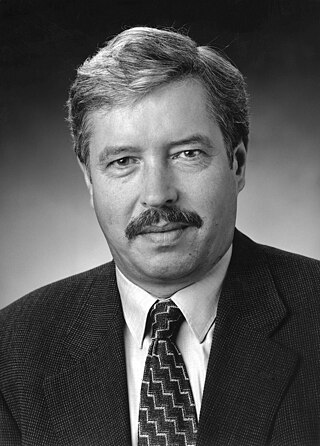
<span class="mw-page-title-main">Norbert Ryska</span> German mathematician and museum director

Norbert Ryska is a German mathematician and museum director. Ryska worked from 1976 to 1992 as an employee of Nixdorf Computer AG in the R&D department. Until 1996 as managing director and project manager on behalf of the Nixdorf Foundations mainly responsible for the construction of the Heinz Nixdorf MuseumsForum (HNF). From 1996 to 2013, Ryska was the managing director for the museum and technology departments of the HNF.

Kirsten John-Stucke is a German historian, non-fiction author, and museum director of the Wewelsburg Museum. She is the editor of numerous documentations on the history of Wewelsburg during the National Socialist era and on the history of the Niederhagen concentration camp. The focus of her work lies in commemorative culture, educational memorial work, and in the re-conception of the Wewelsburg Memorial and Museum from 1933 to 1945.

<span class="mw-page-title-main">Jenny Aloni</span>

Jenny Aloni was a German-Israeli author, who is considered one of the most important authors of German-language literature in Israel.

References

  1. Weinberg, Justin (2023-01-20). "New: Journal of the History of Women Philosophers and Scientists - Daily Nous". dailynous.com. Retrieved 2023-12-11.
  2. "Journal of the History of Women Philosophers and Scientists". Brill. Retrieved 2023-12-11.
  3. "Uni Paderborn verleiht Elisabeth-von-Böhmen-Preis". www.westfalen-blatt.de (in German). Retrieved 2023-12-11.
  4. "Other Awards and Honors". Proceedings and Addresses of the American Philosophical Association. 93: 233–239. 2019. ISSN   0065-972X. JSTOR   45222999.
  5. OWL Journal. "Key Facts zum "Center for the History of Women Philosophers and Scientists"". OWL Journal.
  6. "Uni Paderborn: Ukrainische Philosophin erforscht Umweltfolgen durch den Krieg in der Ukraine". www.westfalen-blatt.de (in German). Retrieved 2023-12-11.
  7. "Neue Stimmen der Frauen in der Philosophie". MyScience. Retrieved 11 December 2023.
  8. Weinberg, Justin (2021-10-25). "A Network for Scholars Researching Women Philosophers in the History of Philosophy - Daily Nous". dailynous.com. Retrieved 2023-12-11.
  9. "Encyclopedia of Concise Concepts by Women Philosophers - History Of Women Philosophers". historyofwomenphilosophers.org. Retrieved 2019-08-21.
  10. "Call for Articles on Women Phenomenologists – BSP Online". September 14, 2022.
  11. "The Encyclopedia of Women Philosophers: A New Web Site Presents the Contributions of Women Philosophers, from Ancient to Modern | Open Culture".
  12. "Digitale Sammlungen / The Encyclopedia of Concise Concepts by Women Philosophers". digital.ub.uni-paderborn.de. Retrieved 2019-08-21.
  13. "Encyclopedia of Concise Concepts by Women Philosophers". History Of Women Philosophers And Scientists.
  14. "PreisträgerInnen der DARIAH-DE DH-Award 2018 - DARIAH-DE". de.dariah.eu. Retrieved 2023-12-11.
  15. "Homepage: Die Aufklärerin". Der Tagesspiegel Online (in German). ISSN   1865-2263 . Retrieved 2024-06-04.
  16. Gaukroger, Stephen (2012). "Ruth Hagengruber, ed., "Emilie du Châtelet between Newton and Leibniz."". Philosophy in Review. 32 (4): 273–274. ISSN   1920-8936.
  17. Arianrhod, Robyn (2016-12-01). "Émilie du Châtelet Between Leibniz and Newton edited by Ruth Hagengruber". The Mathematical Intelligencer. 38 (4): 78–83. doi:10.1007/s00283-016-9641-6. ISSN   1866-7414.
  18. "First critical and digital edition of one of the most important female philosophers published". nachrichten.idw-online.de (in German). Retrieved 2023-12-11.
  19. 1 2 "DFG - GEPRIS - Historisch-kritische digitale Edition der handschriftlichen Fassung von Émilie Du Châtelets Institutions de physique, Bibliothèque Nationale de France (BNF), Signatur: Français 12265". gepris.dfg.de. Retrieved 2023-12-11.
  20. Redaktion (JB) (2019-01-25). "Paderborn: Erster Preis zu Ehren einer Philosophin • Westfalen erleben". Westfalen erleben (in German). Retrieved 2024-04-12.
  21. "Preis zu Ehren einer Philosophin". marktowl.de. 2019-11-08. Retrieved 2024-04-12.
  22. "Erster Preis zu Ehren einer Philosophin: Prof. Dr. Ulrike Detmers stiftet Philosophinnen-Preis zum 400. Geburtstag von Elisabeth von Böhmen Herford an das Center for the History of Women Philosophers and Scientists der Universität Paderborn". www.dab-ev.org. Retrieved 2024-04-12.
  23. "Female philosophers in focus". marktowl.de (in German). Retrieved 2024-05-21.
  24. "Libori Summer School commences second iteration". marktowl.de (in German). Retrieved 2024-05-21.
  25. "Philosophy goes MOOC". stifterverband.org (in German). Retrieved 2024-05-21.