Related Research Articles

Himyar was a polity in the southern highlands of Yemen, as well as the name of the region which it claimed. Until 110 BCE, it was integrated into the Qatabanian kingdom, afterwards being recognized as an independent kingdom. According to classical sources, their capital was the ancient city of Zafar, relatively near the modern-day city of Sana'a. Himyarite power eventually shifted to Sana'a as the population increased in the fifth century. After the establishment of their kingdom, it was ruled by kings from dhū-Raydān tribe. The kingdom was named Raydān.

Soheib Bencheikh is an Islamic religious leader and author and would-be French politician.

Abraha was an Aksumite military leader who controlled the Kingdom of Himyar and a large part of Arabia for over 30 years in the 6th century. Originally a general in the Aksumite army that invaded Yemen around 525 CE, Abraha seized power by deposing the Christian Himyarite king installed by Kaleb. He is famous for the tradition of his attempt to destroy the Kaaba, a revered religious site in Mecca, using an army that included war elephants, an event known as Year of the Elephant.

Charles Saint-Prot is a French geopolitician and writer. He is a historian specializing in international relations and geopolitics, in particular, questions of the Middle East and the Islamic world. Saint-Prot is the director of the Observatoire d'études géopolitiques in Paris, a research center on the international relations, and is the director, with Zeina el Tibi, of the publication Études géopolitiques
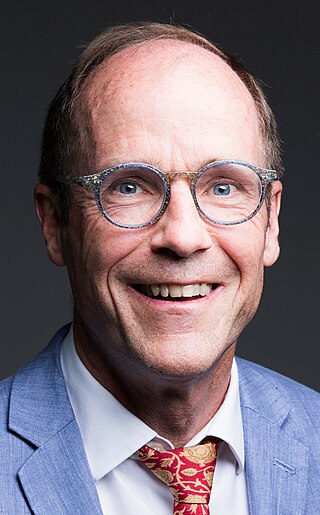
John Victor Tolan is a historian of religious and cultural relations between the Arab and Latin-speaking civilizations of the Middle Ages.

Moiz Cohen was a Turkish writer, philosopher, and journalist of Jewish heritage. He became an ideologue of different movements at different times: Ottomanism, Pan-Turkism, and Kemalism. Born to a Jewish family, he later changed his name to Munis Tekinalp.
Fulgence Fresnel ( FRAYN-, FREN-el, -əl or fray-NEL; French:[fylʒɑ̃sfʁɛnɛl]; was a French Orientalist. He was brother to the noted physicist Augustin Fresnel. Fresnel was an Orientalist scholar who led one of the first archaeological teams to excavate in Mesopotamia.

Joseph Halévy was an Ottoman born Jewish-French Orientalist and traveller.

Bouqras is a large, oval shaped, prehistoric, Neolithic Tell, about 5 hectares (540,000 sq ft) in size, located around 35 kilometres (22 mi) from Deir ez-Zor in Syria.
Édouard Constant Biot was a French engineer and Sinologist. As an engineer, he participated in the construction of the second line of French railway between Lyon and St Etienne, and as a Sinologist, published a large body of work, the result of a "knowledge rarely combined."
Louis Gardet was a French Roman Catholic priest and historian. As an author he was an expert in Islamic culture and sociology who had a sympathetic view of Islam as a religion. He considered himself "a Christian philosopher of cultures".
Jacqueline Chabbi is a historian and a professor of Arab Studies at the University of Paris-VIII. Her research concerns the history of the medieval Muslim world.
Cairn.info is a French-language web portal, founded in 2005, containing scholarly materials in the humanities and social sciences and recently scientific, technical, and medical sciences. Much of the collection is in French, but it also includes an English-language international interface to facilitate use by non-francophones. Primary research areas include communications, economics, education, geography, history, literature, linguistics, philosophy, political science, law, psychology, sociology, and cultural studies. The site provides gratis open access to some publications.
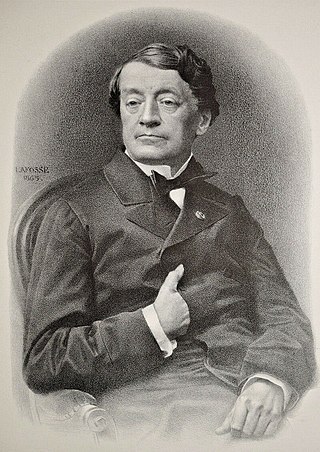
Léon, Marquis de Laborde was a French archaeologist and traveler.
Gaston Wiet was a 20th-century French orientalist.

André Miquel was a French Arabist and historian, specialist of Arabic literature and Arabic language.
Judaism has been practiced as a religion in the Arabian Peninsula since at least the first century BCE. It is also the first monotheistic religion of Arabia. Arabian Jews were linguistically diverse and would have varied in their practice of the religion. The presence of Jews is best attested in Northwestern and Southern Arabia. Judaism would briefly become politically relevant in the fourth century, when the rulers of the Kingdom of Himyar converted to Judaism.

Lucette Valensi is a French historian néeLucette Chemla in Tunis.
DJE 23 is a Hebrew inscription found in the village of Bayt Hadir, 15 km southeast of Sanaa, Yemen. It dates to the period of the Himyarite Kingdom in which the ruling class had converted to Judaism, or sometime between 380 and 530. It is a mishmarot which lists the priestly divisions based on the list given in 1 Chronicles 24. The priestly divisions refer to the way in which the priests were divided in order to organize their service to the Temple in Jerusalem.

Antonin Jaussen was a French ethnologist, archaeologist, and Catholic priest.
References
- 1 2 3 4 "Christian Julien Robin". Babelio (in French). Retrieved 2024-09-22.
- 1 2 3 4 5 "Robin Christian, Julien". Académie des Inscriptions et Belles Lettres (in French). Retrieved 2024-09-22.
- ↑ Robin, Christian J. (1982). Les Hautes-Terres du Nord-Yémen avant l'Islam : Recherches sur la géographie tribale et religieuse de Hawlān Quḍāʿa et du pays de Hamdān. Nederlands Historisch-Archaeologisch Instituut te Istanbul.
- ↑ "Dr. Christian Julien Robin. "New Milestones in the History of Ancient Arabia" - Darmuseum-Archive". 2014-12-15. Retrieved 2024-09-22.
- ↑ Johnson, Scott Fitzgerald (22 September 2024). The Oxford Handbook of Late Antiquity. Oxford University Press. ISBN 978-0-19-027753-6.
 | This article needs additional or more specific categories .(September 2024) |