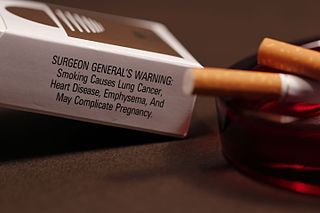
Cigarette excise in Indonesia

Last updated
Excise tape on cigarette Pita-cukai.jpg
Excise tape on cigarette

Cigarette excise tax in Indonesia is a kind of tax that is functioned to control the retail prices of cigarettes done the Indonesian government on cigarettes and other tobacco products such as cigarettes, cigars, and leaf cigarettes. This provision applies with the existence of Act Number 11 of 1995 (Undang-Undang Nomor 11 Tahun 1995) concerning Excise, with some revisions referring to Act Number 39 of 2007 (Undang-Undang Nomor 39 Tahun 2007). This rule was then complemented by Act Number 28 of 2009 (Undang-Undang Nomor 28 Tahun 2009) concerning Regional Taxes and Regional Levies. Taxation of tobacco with cigarette excise is well distinguished. [1]

Contents

History and legend

In Indonesia oral tradition, the imposition of taxes and excise on cigarettes was first attributed to the legend Rara Mendut. Rara Mendut rejected Tumenggung Wiraguna's proposal after becoming a tribute to the success of Mataram in quelling the Pati Rebellion in 1627. Angered by her rejection, Tumenggung Wiraguna levied 3 Real a day as a levy. This request was fulfilled by Rara Mendut by selling cigarettes. His cigarettes were a sellout because Rara Mendut's beauty was admired by the man in the kingdom, and according to gossip, he taped the rolled cigarette with his own saliva. [2]

Establishment of customs and excise practice

Officially and in written history, customs and excise have been established in Indonesia since the Dutch colonial era, based on Dutch Indies Law Tabsacccijns Ordonnantie, Stbl. 1932 Number 517, which was then followed up as the founding of De Dienst der Invoer en Uitvoerrechten en Accijnzen (I. U & A). This organization continued during the Japanese occupation, but only levied excise, and was restructured during the Indonesian administration. Cigarettes and tobacco remain the target of excise duties today. [3]

Purpose of imposing excise

The danger of cigarette consumption for health has been proven by many studies in the world. Tobacco consumption control has become a holistic approach that requires the contribution of various parties. One of the cigarette control mechanisms that can be enforced by the government is to push the selling price of cigarettes through excise. The imposition of excise to increase the price of cigarettes at an extremely low price has succeeded in reducing cigarette consumption and reducing the prevalence of cigarette related diseases in various countries, such as South Korea, France and the Philippines. [1]

Protection of juveniles and teenagers

Of all the various cigarette consumers, the most critical influence about the low price of cigarettes is juveniles and adolescents. With pennies in hand, they can obtain cigarettes easily, which is only Rp. 1,000 (around $0.07) at most case. Thi has been a reason why cigarette excise needs to be increased, so that it becomes unaffordable for them. At present, Indonesia ranks the top of the country with the largest proportion of early smokers in the Asia Pacific. Based on data released by Global Youth Tobacco Survey in 2014, one of five children aged 13–15 years in Indonesia has smoked. If this condition develops consistently, Indonesia will bear the burden of high healthcare expense when they grow up and start suffering from degenerative diseases earlier due to smoking habits at an early age. [4]

Battling the low priced cigarette

The smoking prevalence in Indonesia is the highest in the world for adult male smokers, teen smokers, and juvenile smokers. One of the main causes is the outrageously low price of cigarettes in Indonesia. The average price of cigarettes in Indonesia is very low compared to prices in Asian countries such as Singapore, Malaysia, Thailand and even India is the main factor why the number is still high. This is exacerbated by the habit of street vendors selling single cigarette, making it easier for poor people or children to buy them at very cheap prices. Therefore, a policy is needed to make the price of cigarettes soar. [5]

Determination of excise

Progression of cigarette excise

From year to year, state revenues from Cigarette Excise continue to increase. In 2007, for example, it was recorded Rp 43.53 trillion. In 2014, this increased to Rp. 112.54 trillion. In 2016, the country received 137.94 trillion. Indonesia initially adopted the 'ad valorem' excise system, or a percentage of the sale value, but since 2009 it has been changed to a specific tariff based on the Keputusan Menteri Keuangan. The amount of the excise tariff is determined based on the type of cigarette and the size of the cigarette factory. Even though the value is increased every year, [6] the increment of cigarette excise rates is limited to the limit of 57% based on Act No. 39 of 2007. This determination strongly considers matters such as consumption control, prevention of fake or illegal excise, impacts on worker employment and farmers, and state revenues.

Per 2018, the cigarette excise tariff averages up 10.04 percent from the previous year. [7]

Cigarette excise year on year
Tahun2015201620172018
SKM Golongan I415480530590
SKM Golongan IIA305340365385
SKM Golongan IIB265300335370
SPM Golongan I425495555625
SPM Golongan IIA270305330370
SPM Golongan IIB220255290355
SKT/SPT Golongan IA290320345365
SKT/SPT Golongan IB220245265290
SKT/SPT Golongan IIA140155165180
SKT/SPT Golongan IIB145140155
SKT/SPT Golongan IIIA8590100100
SKT/SPT Golongan IIIB808080

Simplification of excise categorisation

Based on Peraturan Menteri Keuangan No. 146 Year 2017, the government is willing to simplify the imposition of excise. Based on the specified roadmap, the number of cigarette excise layers will be cut step by step from 12 in 2017, to ten layers in 2018, eight layers by 2019, six layers by 2020, and five layers by 2021. This policy is a part of government's strategy in reducing cigarette consumption. [8]

Criticism

The Simplification of the imposition of cigarette excise invites criticism and input that the policy must be carried out consistently, any opposition that occurs, because if changed again can invite wonder and questions from the public. [9] On the other hand, this simplification provokes disagreement from small and medium scale cigarette companies as it is considered to make the excise to be paid even greater. [10]

State revenue from cigarette excise and taxes

The excise, and also taxes, contributes high revenue to the country. The proportion to total state revenues was 6.31 percent in 2007. This portion increased to 7.10 percent in 2012 with total excise revenues of Rp. 95.03 trillion. In 2015, the proportion was 9.59 percent of the total state revenue of Rp144.64 trillion. However, it should be understood that in addition to providing income, the government's burden in healthcare from cigarettes and tobacco consumption is higher than the amount of tobacco excise contributions to state revenues. Economic losses due to tobacco, assessed by the Ministry of Health, showing an increasing trend. In 2010, this economic loss amounted to Rp245.41 trillion or 4 times state revenue from tobacco excise. He increased to IDR 378.75 trillion in 2013 or 3 times from state revenue. [11]

Revenue sharing

State revenue from excise on tobacco products made in Indonesia is distributed to tobacco-producing excise provinces, by 2% (two percent), which are used to fund the improvement of quality of raw materials processing, industrial development, social environment development, socialization of provisions, and / or eradication goods subject to illegal excise, in accordance with Article 66A of the Act No. 39 of 2007. Every year the Ministry of Finance issues details on Tobacco Excise Profit Sharing Funds through the Peraturan Menteri Keuangan.

Local cigarette tax

Regional cigarette tax is totally different from cigarette excise. In addition to excise tax, cigarettes are also subject to additional regional cigarette tax of 10% of the excise tariff, in accordance with Article 29 of the Act No. 28 of 2009 concerning Regional Taxes and Regional Retribution. Cigarette tax is carried out together with the excise. Regional cigarette tax receipts are distributed to all regional governments proportional to the population in each region. Cigarette tax revenue, both provincial and district / city, must be allocated at least 50 percent to fund public health services and law enforcement by authorized officials, in accordance with Article 31 of the act.

Benefits to healthcare financing

Based on Peraturan Presiden No. 82 Tahun 2018, all regions may and must use cigarette tax revenues to cover the budget deficit of the social security agency (BPJS), [12] particularly BPJS Kesehatan. The contribution of cigarette tax and excise as intended, according to this Perpres, is 75% of the 50% realization of cigarette tax receipts. The contribution is immediately deducted to be transferred into the BPJS Healthcare account. [13]

This policy brings praise from Director of the Center for Indonesia Taxation Analysis (CITA) Yustinus Prastowo. According to him, the Peraturan President signed by President Joko Widodo is a perfect solution in addition to the low level of regional budget discipline, especially in planning and measuring the outcome. [14] General Chair of the Association of Indonesian Cigarette Manufacturers (GAPPRI) Ismanu Soemiran also appreciates this step. He stated that the tobacco industry has a concern for the fate of the Indonesian people, because cigarettes in Indonesia cannot be equated with the cigarette industry abroad, it is a collaboration between agriculture smallholders, so this policy is a solution to healthcare while on the other hand maintaining the sustainability of the tobacco industry. [15]

This decision is also appreciated as being able to help BPJS by Planning and Policy Specialist, Center for Indonesia's Strategic Development Initiatives (CISDI) Yurdhina Meilissa. In addition to patching BPJS funds, it is also recommended to be allocated specifically for smoking cessation services especially for consumers from poor families and children. The BPJS Health report does show the total disease burden borne by national healthcare insurance, 21 percent of which are diseases caused by consumption of cigarettes such as ischemic, cerebrovascular heart disease, tuberculosis, diabetes and chronic respiratory diseases. [16]

The increase of excise tariff every year always invites debate. In terms of control, the increase in excise is considered important for making cigarettes unreachable, although so far the increase that has occurred has not been successful in making cigarettes more expensive and unaffordable for vulnerable groups such as children and adolescents. On the other hand, the increase in cigarette excise worries the industry and the people who depend on the cigarette production chain, such as farmers, laborers, and traders. In addition, the government is deemed necessary to develop non-price policies such as enforcement of Non-Smoking Zone (KTR) regulations. (KTR). [17]

However, there is no empirical evidence to prove that there is a connection between the increase in excise tax and a decrease in the welfare of farmers.

Related Research Articles

<span class="mw-page-title-main">Tobacco smoking</span> Practice of burning tobacco and breathing the resulting smoke

Tobacco smoking is the practice of burning tobacco and ingesting the resulting smoke. The smoke may be inhaled, as is done with cigarettes, or simply released from the mouth, as is generally done with pipes and cigars. The practice is believed to have begun as early as 5000–3000 BC in Mesoamerica and South America. Tobacco was introduced to Eurasia in the late 17th century by European colonists, where it followed common trade routes. The practice encountered criticism from its first import into the Western world onwards but embedded itself in certain strata of a number of societies before becoming widespread upon the introduction of automated cigarette-rolling apparatus.

<span class="mw-page-title-main">Rolling paper</span> Paper used for making cigarettes

Rolling paper is a specialty paper used for making cigarettes. Rolling papers are packs of several cigarette-size sheets, often folded inside a cardboard wrapper. They are also known as 'blanks', which are used to encase tobacco or cannabis. It may be flavoured.

Excise tax in the United States is an indirect tax on listed items. Excise taxes can be and are made by federal, state, and local governments and are not uniform throughout the United States. Certain goods, such as gasoline, diesel fuel, alcohol, and tobacco products, are taxed by multiple governments simultaneously. Some excise taxes are collected from the producer or retailer and not paid directly by the consumer, and as such, often remain "hidden" in the price of a product or service rather than being listed separately.

A sin tax is an excise tax specifically levied on certain goods deemed harmful to society and individuals, such as alcohol, tobacco, drugs, candy, soft drinks, fast foods, coffee, sugar, gambling, and pornography. In contrast to Pigovian taxes, which are to pay for the damage to society caused by these goods, sin taxes increase the price in an effort to decrease the use of these goods. Increasing a sin tax is often more popular than increasing other taxes. However, these taxes have often been criticized for burdening the poor and disproportionately taxing the physically and mentally dependent.

<span class="mw-page-title-main">Kretek</span> Type of Indonesian cigarette including cloves

Kretek are cigarettes of Indonesian origin, made with a blend of tobacco, cloves, and other flavors. They are available filtered or unfiltered. The word "kretek" itself is an onomatopoetic term for the crackling sound of burning cloves.

<span class="mw-page-title-main">Indirect tax</span> Type of tax

An indirect tax is a tax that is levied upon goods and services before they reach the customer who ultimately pays the indirect tax as a part of market price of the good or service purchased. Alternatively, if the entity who pays taxes to the tax collecting authority does not suffer a corresponding reduction in income, i.e., the effect and tax incidence are not on the same entity meaning that tax can be shifted or passed on, then the tax is indirect.

Taxation in Indonesia includes income tax, value added tax and carbon tax.

<span class="mw-page-title-main">Booze cruise</span> British slang for travelling abroad to buy cheap alcohol or tobacco

In British slang, a booze cruise is a brief trip from Britain to France or Belgium with the intent of taking advantage of lower prices, and buying personal supplies of (especially) alcohol or tobacco in bulk quantities. This is a legally allowed process not to be confused with smuggling.

<span class="mw-page-title-main">Excise</span> Goods tax levied at the moment of manufacture rather than sale

An excise, or excise tax, is any duty on manufactured goods that is normally levied at the moment of manufacture for internal consumption rather than at sale. It is therefore a fee that must be paid in order to consume certain products. Excises are often associated with customs duties, which are levied on pre-existing goods when they cross a designated border in a specific direction; customs are levied on goods that become taxable items at the border, while excise is levied on goods that came into existence inland.

<span class="mw-page-title-main">Cigarette taxes in the United States</span> Taxes imposed on sale of cigarettes in the U.S.

In the United States, cigarettes are taxed at both the federal and state levels, in addition to any state and local sales taxes and local cigarette-specific taxes. Cigarette taxation has appeared throughout American history and is still a contested issue today.

About a quarter of adults in Turkey smoke. Smoking in Turkey is banned in government offices, workplaces, bars, restaurants, cafés, shopping malls, schools, hospitals, and all forms of public transport, including trains, taxis and ferries. Turkey's smoking ban includes provisions for violators, where anyone caught smoking in a designated smoke-free area faces a fine of 188 Turkish lira (~€9.29/$9.90/£8.22) and bar owners who fail to enforce the ban could be fined from 560 liras for a first offence up to 5,600 liras. The laws are enforced by the Ministry of Agriculture and Forestry of Turkey.

<span class="mw-page-title-main">Smoking in Indonesia</span>

There are approximately 61.4 million smokers in Indonesia, among a population of 273 million people. Around 63% of men and 5% of women report smoking, equating to 34% of the population. The majority, 88% of Indonesian smokers, use clove-flavoured kreteks. Kretek manufacturers directly employ over 180,000 people in Indonesia and an additional 10 million indirectly. Indonesia is the fifth largest tobacco market in the world, and in 2008 over 165 billion cigarettes were sold in the country.

<span class="mw-page-title-main">Smoking in Albania</span> Albanian act Reform

Smoking in Albania is prevalent as about 40% of Albanians smoke regularly. In Europe, only Turkey has a higher smoking rate than Albania. Albanians annually spend more than €300 million on tobacco products. Zog I of Albania was reported to smoke 200 cigarettes a day. Albania adopted tough anti-smoking laws in 2007, but they are not strictly enforced. Smoking prevalence is increasing, especially among females ages 13 to 15. The smoking rate for teens between the ages of 13 and 15 is currently 15%.

<span class="mw-page-title-main">Taxation in Oklahoma</span> Oklahoma Taxes

Taxation in Oklahoma takes many forms. Individuals and corporations in Oklahoma are required to pay taxes or fee charges to both levels of government: state and local. Taxes are collected by the government to support the provisions of public services. The Oklahoma Constitution vested the authority to levy taxes with the Oklahoma Legislature while the Oklahoma Tax Commission is the primary Executive agency responsible for collecting taxes.

<span class="mw-page-title-main">Illicit cigarette trade</span> Trade in tobacco goods which fail to comply with legislation

The illicit cigarette trade is defined as "the production, import, export, purchase, sale, or possession of tobacco goods which fail to comply with legislation" by the intergovernmental Financial Action Task Force (FTFA). Illicit cigarette trade activities fall under 3 categories:

  1. Contraband: cigarettes smuggled from abroad without domestic duty paid;
  2. Counterfeit: cigarettes manufactured without authorization of the trademark holders, with intent to deceive consumers and to avoid paying duty;
  3. Illicit whites: brands manufactured legitimately in one country, but smuggled and sold in another without duties being paid.

Tobacco Industry is a road map of the regulations relating to all tobacco products in Indonesia. Tobacco Industry (TI) contains guidelines and industry classification and the products produced by the tobacco industry in Indonesia, including regulations, policies ribbon and excise, tobacco industry strategies, so on and so forth. Tobacco Industry was first coined by the Directorate General of Agro and Chemical Industry Department in 2009. Tobacco Industry has a significant role for state revenue through taxes and excise, employments, and protection against multiple impacts of tobacco farmers and others. The development of the TI also consider public health in addition to concern on, so that the industry can grow well. TP is a labor-intensive industry, so to the present of TI and its association with upstream form the procurement of raw materials, particularly tobacco, cloves, and other industries are potential labor-absorbing industrial.
<span class="mw-page-title-main">Tax Reform for Acceleration and Inclusion Law</span> Philippine law

The Tax Reform for Acceleration and Inclusion Law, officially designated as Republic Act No. 10963, is the initial package of the Comprehensive Tax Reform Program (CTRP) signed into law by President Rodrigo Duterte on December 19, 2017.

<span class="mw-page-title-main">Excise in Indonesia</span>

Excise in Indonesia is a policy in Indonesia which mandates levies on certain goods that have certain characteristics, such as cigarettes, e-cigarettes, alcohol, and other tobacco and alcohol derivative products. In Indonesia, Directorate General of Customs and Excise, Ministry of Finance of the Republic of Indonesia is responsible for collecting excise.

<span class="mw-page-title-main">Low Cost Green Car</span> Automobile regulation

Low Cost Green Car (LCGC) (Indonesian: Kendaraan Bermotor Roda Empat Hemat Energi dan Harga Terjangkau (KBH2), lit. 'Energy Efficient and Affordable Four-Wheeler Motor Vehicles') is an Indonesian automobile regulation which exempts low-cost and energy-efficient cars from luxury sales tax to ensure affordability, provided that they are assembled locally with a minimum amount of local components. The introduction of LCGC in Indonesia was meant to encourage the motorcycle owners/public transportation users to be able to afford their first cars, to reduce fuel subsidy and to compete with Thailand-imported cars, thus creating more jobs locally. In some aspects, the regulation is similar to the Japanese kei car category and the Thai Eco Car program which also reduce taxes for small and efficient cars.

<span class="mw-page-title-main">Cigarette advertising in Indonesia</span> History and legality of cigarette advertising in Indonesia

Cigarette advertising in Indonesia is presently allowed, and as of 2021, Indonesia is the only country in the world to allow cigarette advertising. However, it is prohibited to show cigarettes and advertising must include smoking warning messages. In Indonesia itself, such advertisements are known under the name iklan rokok in Indonesian. In 2003, cigarette advertising and promotions in Indonesia was valued at $250 million. In addition to television and outdoor advertisements, sporting events sponsored by cigarette brands or companies also occur.

References

  1. 1 2 Inilah pajak dan cukai rokok, serta cara menghitungnya. rujukan: Cermati
  2. Hikayat Kretek, dari Roro Mendut hingga Djamhari. referensi: CNN Indonesia
  3. Sejarah Bea dan Cukai di Indonesia (History of Customs and Excise in Indonesia). Reference: beadancukai.go.id
  4. PBHI: Cukai Rokok Perlu Terus Dinaikkan (PBHI: Cigarette Excise Rates Needs to be Raised to Protect Children. Reference: Coverage 6
  5. Jelas sudah kenapa jumlah perokok di Indonesia sangat banyak (It is clear why the number of smokers in Indonesia is very large.) Reference: Liputan 6
  6. Seberapa Banyak Rokok Sumbang Pemasukan Kas Negara? reference: Tirto
  7. Mulai 1 Januari 2018, Cukai Rokok Naik 10,04 Persen. reference: Kompas
  8. Simplifikasi Cukai Rokok Bertujuan Kurangi Konsumsi Rokok (Simplification of Cigarette Excise Aims to Reduce Cigarette Consumption) . reference: antaranews
  9. Bea cukai: Simplifikasi Cukai untuk Kurangi Konsumsi Rokok. referensi: Merdeka
  10. Aturan tarif cukai dinilai buat persaingan industri rokok tak sehat. referensi: katadata
  11. Seberapa banyak rokok sumbang pemasukan kas negara?. referensi: Tirto
  12. Lembaran kebijakan : Optimalisasi Cukai Rokok untuk Pembiayaan Jaminan Kesehatan. Archived 2018-10-24 at the Wayback Machine reference:CISDI
  13. Perpres 82 Tahun 2018: Ini aturan rokok untuk tambal defisit BPJS Kesehatan. referensi: Okezone
  14. Memahami Kebijakan Cukai Rokok untuk Tambal Defisit BPJS Kesehatan. reference: Detik
  15. Cukai Rokok untuk Tambal Defisit BPJS, Ini Kata Asosiasi. reference: Kompas
  16. Utak-Atik Cukai Rokok, Bisakah Menambal Defisit BPJS?. referensi: liputan6
  17. Pengendalian tembakau lewat cukai perlu kajian lebih lanjut. Reference: Liputan6