Punitive damages, or exemplary damages, are damages assessed in order to punish the defendant for outrageous conduct and/or to reform or deter the defendant and others from engaging in conduct similar to that which formed the basis of the lawsuit. Although the purpose of punitive damages is not to compensate the plaintiff, the plaintiff will receive all or some of the punitive damages in award.
In law, conveyancing is the transfer of legal title of real property from one person to another, or the granting of an encumbrance such as a mortgage or a lien. A typical conveyancing transaction has two major phases: the exchange of contracts and completion.
Richard John Baker v. Gerald R. Nelson, 291 Minn. 310, 191 N.W.2d 185 (1971), was a case in which the Minnesota Supreme Court decided that construing a marriage statute to restrict marriage licenses to persons of the opposite sex "does not offend" the U.S. Constitution. Baker appealed the decision, and on October 10, 1972, the U.S. Supreme Court dismissed the appeal "for want of a substantial federal question".
Sir Peter Winston Smith, styled The Hon Mr Justice Peter Smith, is a former judge of the High Court of Justice in England and Wales, having been appointed to that office on 15 April 2002 and assigned to the Chancery Division. His name is correctly abbreviated in English legal writing as "Peter Smith J," and not as "Smith J," because there were other senior judges also named Smith. He was the subject of comment and investigation in relation to his judicial behaviour in various circumstances. He retired on 28 October 2017.
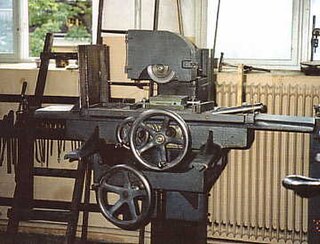
Butler Machine Tool Co Ltd v Ex-Cell-O Corp (England) Ltd [1977] EWCA Civ 9 is a leading English contract law case. It concerns the problem found among some large businesses, with each side attempting to get their preferred standard form agreements to be the basis for a contract.
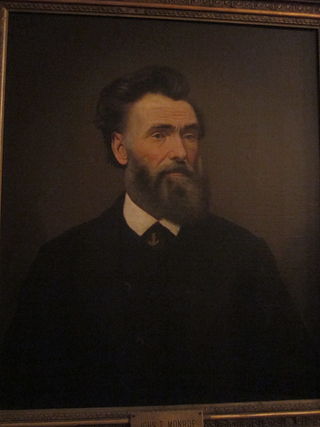
John Thompkins Monroe was an American politician who served as the 19th and 32nd Mayor of New Orleans in 1860–1862 and 1866–1867.

Gibson v Manchester City Council[1979] UKHL 6 is an English contract law case in which the House of Lords strongly reasserted that agreement only exists when there is a clear offer mirrored by a clear acceptance.

Sumpter v Hedges [1898] 1 QB 673 is an English contract law case, concerning substantial performance of a contract and restitution for unjust enrichment.

Hoenig v Isaacs [1952] EWCA Civ 6 is an English contract law case, concerning substantial performance of an entire obligation.
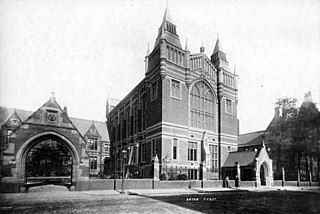
Bray v Ford [1896] AC 44 is an English defamation law case, which also concerns some principles of conflict of interest relevant for trusts and company law.

Attorney-General v De Keyser's Royal Hotel Limited is a leading case in UK constitutional law decided by the House of Lords in 1920 which exhaustively considered the principles on which the courts decide whether statute has fettered prerogative power. It decided that the royal prerogative does not entitle the Crown to take possession of a subject's land or buildings for administrative purposes connected with the defence of the realm without paying compensation. It is the authority for the statement that the royal prerogative is placed in abeyance when statute law can provide a legal basis for an action.

Dutton v Bognor Regis Urban District Council [1972] 1 QB 373 is an English contract law and English tort law case concerning defective premises and the limits of contract damages. It was disapproved by the House of Lords in Murphy v Brentwood DC and is now bad law except in Canada and New Zealand.

Frazer v Walker, is a landmark New Zealand court case that went to the Privy Council on appeal. The case upheld the concept that an owner of interest in land which was originally obtained from the rightful owner through fraud, still obtains an indefeasible interest in that title if they were unaware of the fraud.
The Magnum Photo Supplies Ltd v. Viko New Zealand Ltd [1999] case was the last of numerous New Zealand cases cited regarding whether or not banking (depositing) a cheque received for part payment was legally accord and satisfaction. In this case, it was the only NZ case not subject to a dispute, that the creditor was successful in being able to claim for the balance from the debtor.
Hart v O'Connor [1985] UKPC 1 is an important case in New Zealand, also relevant for English contract law, regarding mental capacity to enter into contract as well as regarding unconscionable bargains, which made it as far as the Privy Council.

The Scottish Solicitors' Discipline Tribunal (SSDT) is a specialist tribunal in Scotland with jurisdiction over serious disciplinary issues within the solicitor profession in Scotland.

Huzar v Jet2.com[2014] EWCA Civ 791 was a landmark case, taken to the Court of Appeal in May 2014, which created binding case law for all future flight delay compensation claims in England and Wales.
Gallagher v Young [1981] 1 NZLR 734 is a cited case in New Zealand regarding relief under the Contractual Remedies Act 1979 where a contract is repudiated by one of the parties.
Boulder Consolidated Ltd v Tangaere [1980] 1 NZLR 560 is a cited case in New Zealand regarding the objective approach to contract formation.
The Contractual Remedies Act 1979 was a statute of the New Zealand Parliament. It provided remedies in respect of misrepresentation, repudiation or breach of contract in New Zealand. It was repealed by the Contract and Commercial Law Act 2017.