Michael D. Maltz is an American electrical engineer, criminologist and Emeritus Professor at University of Illinois at Chicago in criminal justice, and adjunct professor and researcher at Ohio State University.

The feminist school of criminology is a school of criminology developed in the late 1960s and into the 1970s as a reaction to the general disregard and discrimination of women in the traditional study of crime. It is the view of the feminist school of criminology that a majority of criminological theories were developed through studies on male subjects and focused on male criminality, and that criminologists often would "add women and stir" rather than develop separate theories on female criminality.
Matthew Barnett Robinson is a Criminologist at Appalachian State University (ASU) in Boone, North Carolina.
David Wilson is a Scottish emeritus professor of criminology at Birmingham City University. A former prison governor, he is well known as a criminologist specialising in serial killers through his work with various British police forces, academic publications, books and media appearances.
Sir Leon Radzinowicz, was a criminologist and academic. He was the founding director of the Institute of Criminology at the Faculty of Law at the University of Cambridge.
The Australian Institute of Criminology (AIC) is Australia's national research and knowledge centre on crime and criminal justice. The Institute seeks to promote justice and reduce crime by undertaking and communicating evidence-based research to inform policy and practice.
The Florida State University College of Criminology and Criminal Justice is one of sixteen colleges comprising the Florida State University (FSU). The College is the oldest program of its kind. It offers bachelor's, master's, and doctoral degrees.
Radical criminology states that society "functions" in terms of the general interests of the ruling class rather than "society as a whole" and that while the potential for conflict is always present, it is continually neutralised by the power of a ruling class. Radical criminology is related to critical and conflict criminology in its focus on class struggle and its basis in Marxism. Radical criminologists consider crime to be a tool used by the ruling class. Laws are put into place by the elite and are then used to serve their interests at the peril of the lower classes. These laws regulate opposition to the elite and keep them in power.
Susanne Karstedt is a German criminologist. She is a professor in the School of Criminology and Criminal Justice at Griffith University in Queensland, Australia.

Criminology is the interdisciplinary study of crime and deviant behaviour. Criminology is a multidisciplinary field in both the behavioural and social sciences, which draws primarily upon the research of sociologists, political scientists, economists, legal sociologists, psychologists, philosophers, psychiatrists, social workers, biologists, social anthropologists, scholars of law and jurisprudence, as well as the processes that define administration of justice and the criminal justice system.

Jeffrey Ian Ross is a scholar, professor, and criminologist specializing in the fields of policing, corrections, political crime, violence, street culture, graffiti and street art, and crime and justice in American Indian communities. Since 1998 Ross has been a professor at the University of Baltimore. He is a former co-chair and chair of the Division of Critical Criminology and Social Justice of the American Society of Criminology. Ross is an author, co-author, editor, and co-editor of numerous books.
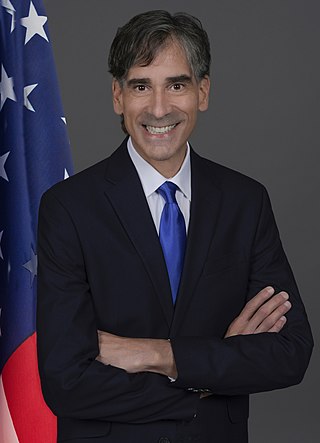
Alexis Russell Piquero is a Cuban-American criminologist who is professor and chair of the Department of Sociology at the University of Miami, where he is also Arts & Sciences Distinguished Scholar. He previously served as the Ashbel Smith Professor of Criminology at the University of Texas at Dallas, where he was also the Associate Dean for Graduate Programs in the School of Economic, Political, and Policy Sciences. He has been ranked as the #1 criminologist in the world since 1996 by the number of peer-reviewed papers in criminology journals. In 2015, then-United States Attorney General Eric Holder appointed him to the Office of Justice Programs Science Advisory Board.
Janet Lynn Lauritsen is an American criminologist and the Curators’ Distinguished Professor of Criminology and Criminal Justice at the University of Missouri–St. Louis.
Penny Green is an Australian criminologist. She has been a Professor of Law and Globalisation and Head of the Department of Law at Queen Mary University of London since September 2014.
David Philip Farrington is a British criminologist, forensic psychologist, and emeritus professor of psychological criminology at the University of Cambridge, where he is also a Leverhulme Trust Emeritus Fellow. In 2014, Paul Hawkins and Bitna Kim wrote that Farrington "is considered one of the leading psychologists and main contributors to the field of criminology in recent years."
Thomas G. Blomberg is an American criminologist. He is an expert in criminology research and public policy; delinquency, education and crime desistance; penology and social control; and victim services. He is currently the Dean, Sheldon L. Messinger Professor of Criminology, and the executive director of the Center for Criminology and Public Policy Research at the Florida State University College of Criminology and Criminal Justice.
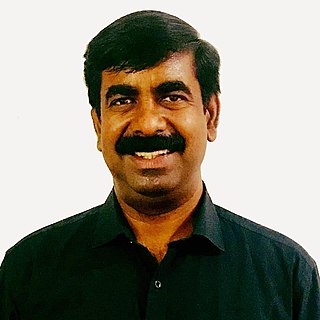
Karuppannan Jaishankar is the Founder and Principal Director and Professor of Criminology & Justice Sciences at the International Institute of Justice & Police Sciences Bengaluru, Karnataka, India.
Marvin Donald "Marv" Krohn is an American criminologist who has been a professor at the University of Florida since 2008.
Public criminology is an approach to criminology that disseminates criminological research beyond academia to broader audiences, such as criminal justice practitioners and the general public. Public criminology is closely tied with “public sociology”, and draws on a long line of intellectuals engaging in public interventions related to crime and justice. Some forms of public criminology are conducted through methods such as classroom education, academic conferences, public lectures, “news-making criminology”, government hearings, newspapers, radio and television broadcasting and press releases. Advocates of public criminology argue that the energies of criminologists should be directed towards "conducting and disseminating research on crime, law, and deviance in dialogue with affected communities." Public criminologists focus on reshaping the image of the criminal and work with communities to find answers to pressing questions. Proponents of public criminology see it as potentially narrowing "the yawning gap between public perceptions and the best available scientific evidence on issues of public concern", a problem they see as especially pertinent to matters of crime and punishment.

Gregg Barak is an American criminologist, academic, and author. He is an emeritus professor of criminology and criminal justice at Eastern Michigan University, a former visiting distinguished professor in the College of Justice & Safety at Eastern Kentucky University, and a 2017 Fulbright Scholar in residence at the School of Law, Pontificia Universidade Catholica, Porto Alegre, Brazil. He is most known for his research in the fields of criminology and criminal justice.


