Related Research Articles

Demographic features of the population of Bosnia and Herzegovina include population density, ethnicity, education level, health of the populace, economic status, religious affiliations and other aspects of the population.

Vogošća is a town and a municipality located in Sarajevo Canton of the Federation of Bosnia and Herzegovina, an entity of Bosnia and Herzegovina. The municipality is located about 6 kilometers north of the city of Sarajevo and is its secondary suburb, after Ilidža. According to the 2013 census, the town has a population of 10,568 inhabitants, with 26,343 inhabitants in the municipality.

Centar is a municipality of the city of Sarajevo, Bosnia and Herzegovina. It is located between the older parts of the city under Stari Grad, and the newer more modern parts of the city under the municipalities Novi Grad and Novo Sarajevo.

The Sarajevo Canton, officially the Canton of Sarajevo, is one of the ten cantons of the Federation of Bosnia and Herzegovina in Bosnia and Herzegovina. Its cantonal seat is the city of Sarajevo, also the capital city of Bosnia and Herzegovina.
The population of the city of Sarajevo's four municipalities is 275,524, whereas the Sarajevo Canton population is estimated at 413,593.

Šamac, formerly Bosanski Šamac is a town and municipality in Republika Srpska, Bosnia and Herzegovina. There are also small, uninhabited, parts located in the municipalities of Odžak and Domaljevac-Šamac, Federation of Bosnia and Herzegovina.

Živinice is a city located in Tuzla Canton in the Federation of Bosnia and Herzegovina, an entity of Bosnia and Herzegovina. It is located in northeastern Bosnia and Herzegovina, south of Tuzla. As of 2013, it has a population of 57,765 inhabitants.
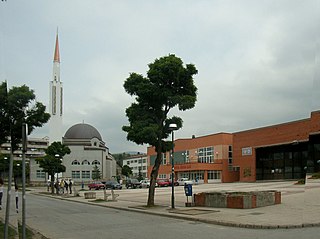
Ilijaš is a town and municipality located in Sarajevo Canton of the Federation of Bosnia and Herzegovina, an entity of Bosnia and Herzegovina. It is located northwest of the inner city of Sarajevo, making it de facto a town and suburb of Sarajevo. The Ilijaš Municipality was established in May 1952 with the organization of people's committees. Those local people's committees founded the local municipalities, which led to the self-management of the municipalities, including the municipality of Ilijaš.

Čitluk is a town and municipality in the Herzegovina-Neretva Canton of the Federation of Bosnia and Herzegovina, an entity of Bosnia and Herzegovina.

Vareš is a town and municipality located in Zenica-Doboj Canton of the Federation of Bosnia and Herzegovina, an entity of Bosnia and Herzegovina. It is situated in central Bosnia and Herzegovina, and is famous for the local mining activities and production of iron. As of 2013, it has a population of 8,892 inhabitants, with 2,917 in the town itself.

This article is about the Demographic history of Bosnia and Herzegovina, and deals with the country's documented demographics over time. For an overview of the various ethnic groups and their historical development, see Ethnic groups in Bosnia and Herzegovina.
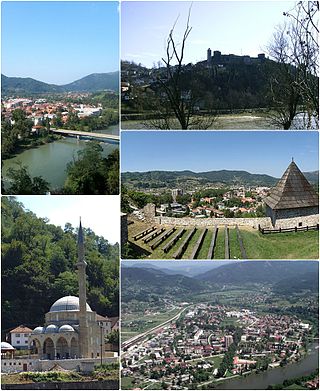
Maglaj is a town and municipality located in the Zenica-Doboj Canton of the Federation of Bosnia and Herzegovina, an entity of Bosnia and Herzegovina. It is located in northern Bosnia and Herzegovina, 25 km (16 mi) south of Doboj. It has a population of 6,438, with 34,980 inhabitants in the municipality.
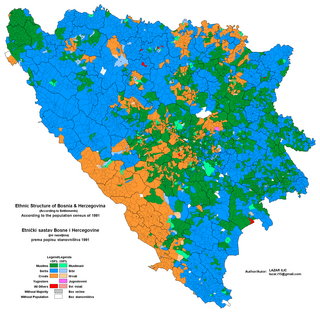
The 1991 population census in Bosnia and Herzegovina was the last census of the population undertaken in the Socialist Republic of Bosnia and Herzegovina before the Bosnian War. It was conducted during the final week of March 1991. For the 1991 census there were 109 municipalities of which ten were part of Sarajevo.

The Croats of Bosnia and Herzegovina, often referred to as Bosnian Croats or Herzegovinian Croats, are native and the third most populous ethnic group in Bosnia and Herzegovina, after Bosniaks and Serbs, and are one of the constitutive nations of Bosnia and Herzegovina. Croats of Bosnia and Herzegovina have made significant contributions to the culture of Bosnia and Herzegovina. Most Croats declare themselves Catholics and speakers of the Croatian language.

Gornji Čajdraš is a village in Central Bosnia and Herzegovina. It is located about 5 km west of City of Zenica on the regional road Zenica-Travnik.
Blagovac is a settlement in Vogošća municipality, near Sarajevo, Federation of Bosnia and Herzegovina, Bosnia and Herzegovina.

The Bijeljina massacre involved the killing of civilians by Serb paramilitary groups in Bijeljina on 1–2 April 1992 in the run-up to the Bosnian War. The majority of those killed were Bosniaks. Members of other ethnicities were also killed, such as Serbs deemed disloyal by the local authorities. The killings were committed by a local paramilitary group known as Mirko's Chetniks and by the Serb Volunteer Guard, a Serbia-based paramilitary group led by Željko "Arkan" Ražnatović. The SDG were under the command of the Yugoslav People's Army (JNA), which was controlled by Serbian President Slobodan Milošević.
Baljci is a village in the Municipality of Tomislavgrad in Canton 10 of the Federation of Bosnia and Herzegovina, an entity of Bosnia and Herzegovina. The village belongs to the local community of Šujica. Until 1945, the village was administratively part of the Srez of Livno.
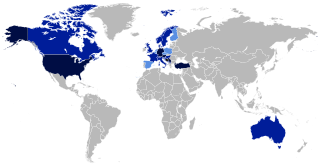
Bosnians are people native to the country of Bosnia and Herzegovina, especially the region of Bosnia. As a common demonym, the term Bosnians refers to all inhabitants/citizens of the country, regardless of any ethnic, cultural or religious affiliation. It can also be used as a designation for anyone who is descended from the region of Bosnia. Also, a Bosnian can be anyone who holds citizenship of the state of Bosnia and Herzegovina and thus is largely synonymous with the all-encompassing national demonym Bosnians and Herzegovinians.

Ethnic cleansing occurred during the Bosnian War (1992–95) as large numbers of Bosnian Muslims (Bosniaks) and Bosnian Croats were forced to flee their homes or were expelled by the Army of Republika Srpska and Serb paramilitaries. Bosniaks and Bosnian Serbs had also been forced to flee or were expelled by Bosnian Croat forces, though on a restricted scale and in lesser numbers. The UN Security Council Final Report (1994) states while Bosniaks also engaged in "grave breaches of the Geneva Conventions and other violations of international humanitarian law", they "have not engaged in "systematic ethnic cleansing"". According to the report, "there is no factual basis for arguing that there is a 'moral equivalence' between the warring factions".
References
- Official results from the book: Ethnic composition of Bosnia-Herzegovina population, by municipalities and settlements, 1991. census, Zavod za statistiku Bosne i Hercegovine - Bilten no.234, Sarajevo 1991.