
Look up diamondback in Wiktionary, the free dictionary.
Diamondback may refer to:
Diamondback may refer to:

Sidewinder may refer to:

Crotalus is a genus of venomous pit vipers in the family Viperidae, known as rattlesnakes or rattlers. The genus is found only in the Americas from southern Canada to northern Argentina, and member species are colloquially known as rattlesnakes. The generic name Crotalus is derived from the Greek word κρόταλονkrótalοn, which means "rattle" or "castanet", and refers to the rattle on the end of the tail, which makes this group so distinctive. Currently, 32 to 62 species are recognized as being valid.

Crotalus scutulatus is a highly venomous pit viper species found in the deserts of the southwestern United States and central Mexico. It is perhaps best known for its potent neurotoxic-hemotoxic venom, which is considered the world's most potent rattlesnake venom.

The eastern diamondback rattlesnake is a species of pit viper in the family Viperidae. The species is endemic to the Southeastern United States. It is one of the heaviest venomous snakes in the Americas and the largest rattlesnake. No subspecies are recognized.
Crotalidae polyvalent immune fab, sold under the brandname CroFab, is a snake antivenin, indicated for minimal or moderate North American Crotalid snake envenomation.

Crotalus helleri or Crotalus oreganus helleri, known as the Southern Pacific rattlesnake, black diamond rattlesnake, and by other names, is a pit viper species or subspecies found in southwestern California and south into Baja California, Mexico, that is known for its regional variety of dangerous venom types. It is sometimes considered a subspecies of Crotalus oreganus.

Crotalus willardi is a venomous pit viper species found in the southwestern United States and Mexico. This snake is found mainly in the "sky island" region. The IUCN reports this snake's conservation status as being of Least Concern. It is the official state reptile of Arizona.

Crotalus ruber is a venomous pit viper species found in southwestern California in the United States and Baja California in Mexico. Three subspecies are currently recognized, including the nominate subspecies described here.

The western diamondback rattlesnake or Texas diamond-back is a rattlesnake species and member of the viper family, found in the southwestern United States and Mexico. Like all other rattlesnakes and all other vipers, it is venomous. It is likely responsible for the majority of snakebite fatalities in northern Mexico and the greatest number of snakebites in the U.S. No subspecies are currently recognized.

Crotalus viridis is a venomous pit viper species native to the western United States, southwestern Canada, and northern Mexico. Currently, two subspecies are recognized, including the prairie rattlesnake, the nominate subspecies, and the Hopi rattlesnake.

Crotalus unicolor, or the Aruba Island Rattlesnake, is a venomous pit viper species endemic to the Caribbean island of Aruba, off the coast of Venezuela. It is sometimes still classified as a subspecies of Crotalus durissus.
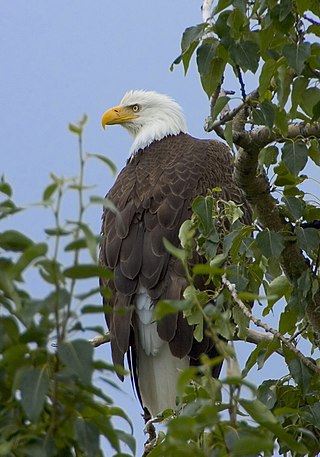
The fauna of the United States of America is all the animals living in the Continental United States and its surrounding seas and islands, the Hawaiian Archipelago, Alaska in the Arctic, and several island-territories in the Pacific and in the Caribbean. The U.S. has many endemic species found nowhere else on Earth. With most of the North American continent, the U.S. lies in the Nearctic, Neotropic, and Oceanic faunistic realms, and shares a great deal of its flora and fauna with the rest of the American supercontinent.

Rattlesnake round-ups , also known as rattlesnake rodeos, are annual events common in the rural Midwest and Southern United States, where the primary attractions are captured wild rattlesnakes which are sold, displayed, killed for food or animal products or released back into the wild. Rattlesnake round-ups originated in the first half of the 20th century for adventure and excitement, as well as to achieve local extirpation of perceived pest species. Typically a round-up will also include trade stalls, food, rides, and other features associated with fairs, as well as snake shows that provide information on rattlesnake biology, identification, and safety. To date, round-ups where snakes are killed take place in Alabama, Georgia, Oklahoma, and Texas, with largest events in Texas and Oklahoma. Many round-ups are no longer slaughtering snakes, but have transitioned to educational festivals celebrating rattlesnakes and other wildlife. All round-ups in Pennsylvania return snakes to the wild and two former round-ups in Georgia and Florida use captive animals for their festivals. The largest rattlesnake round-up in the United States is held in Sweetwater, Texas. Held annually in mid-March since 1958, the event currently attracts approximately 30,000 visitors per year and in 2006 each annual round-up was said to result in the capture of 1% of the state's rattlesnake population, but there are no data or studies to support this claim.

Diamondback is a steel roller coaster located at Kings Island in Mason, Ohio, United States. Manufactured by Bolliger & Mabillard (B&M), the ride opened in 2009 as the first hypercoaster to feature a splashdown effect and the first B&M roller coaster at Kings Island. It is located in Rivertown just behind International Street and the Eiffel Tower. Diamondback was the biggest investment in Kings Island’s history at the time, costing $22 million to build, but that figure was surpassed in 2014 by Banshee. The coaster features a 230-foot (70 m) lift hill with a 215-foot (66 m) drop and a maximum speed of 80 mph (130 km/h). It is similar to Behemoth at Canada's Wonderland in statistics, layout, and seating.
Rattlesnakes are a group of venomous snakes, genera Crotalus and Sistrurus.

A Launched Loop is a type of steel launched shuttle roller coaster manufactured by Arrow Dynamics. With 8 different installations, 7 of them being relocated at least once, the ride was introduced in 1977, with the last one opening in 1993.