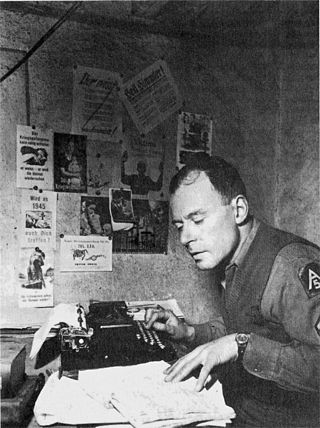
Klaus Heinrich Thomas Mann was a German writer and dissident. He was the son of Thomas Mann, a nephew of Heinrich Mann and brother of Erika Mann and Golo Mann.

Gustaf Gründgens, born Gustav Heinrich Arnold Gründgens, was one of Germany's most famous and influential actors of the 20th century, and artistic director of theatres in Berlin, Düsseldorf, and Hamburg. His career continued unimpeded through the years of the Nazi regime; the extent to which this can be considered as deliberate collaboration with the Nazis is hotly disputed.

Sybille Bedford, OBE was a German-born English writer of non-fiction and semi-autobiographical fiction books. She was a recipient of the Golden PEN Award.

Mephisto – Novel of a Career is the sixth novel by anti-Nazi German-born writer and political refugee Klaus Mann and which was published in 1936 by an Exilliteratur publishing firm based in Amsterdam. It was published for the first time in Germany in the East Berlin Aufbau-Verlag in 1956. The novel, a thinly disguised portrait of German actor Gustaf Gründgens, adapts the Faustian theme by having the main character, Hendrik Höfgen, abandon his conscience and continue to act and ingratiate himself with the Nazi Party to keep and improve his job and social position.

Annemarie Minna Renée Schwarzenbach was a Swiss writer, journalist and photographer. Her bisexual mother brought her up in a masculine style, and her androgynous image suited the bohemian Berlin society of the time, in which she indulged enthusiastically. Her anti-fascist campaigning forced her into exile, where she became close to the family of novelist Thomas Mann. She would live much of her life abroad as a photo-journalist, embarking on many lesbian relationships, and experiencing a growing morphine addiction. In America, the young Carson McCullers was infatuated with Schwarzenbach, to whom she dedicated Reflections in a Golden Eye. Schwarzenbach reported on the early events of World War II, but died of a head injury, following a fall.

Emanuel Querido was a successful Dutch publisher as the founder and owner of N.V. Em. Querido Uitgeversmaatschappij, which published Dutch titles, and of Querido Verlag, which published titles of German writers in exile from Nazi Germany. Although he and his wife were murdered by the Nazis in 1943, his company has gone on to publish several important authors.

The Nazi book burnings were a campaign conducted by the German Student Union to ceremonially burn books in Nazi Germany and Austria in the 1930s. The books targeted for burning were those viewed as being subversive or as representing ideologies opposed to Nazism. These included books written by Jewish, half-Jewish, communist, socialist, anarchist, liberal, pacifist, and sexologist authors among others. The initial books burned were those of Karl Marx and Karl Kautsky, but came to include very many authors, including Albert Einstein, Helen Keller, writers in French and English, and effectively any book incompatible with Nazi ideology. In a campaign of cultural genocide, books were also burned en masse by the Nazis in occupied territories, such as in Poland.
Barthold "Bart" Fles was a Dutch-American literary agent, author, translator, editor and publisher. Among his many clients were Elias Canetti, Raymond Loewy, Heinrich Mann, Joseph Roth, Felix Salten, Ignazio Silone, Bruno Walter and Arnold Zweig.
German Exilliteratur is the name for works of German literature written in the German diaspora by refugee authors who fled from Nazi Germany, Nazi Austria, and the occupied territories between 1933 and 1945. These dissident writers, poets and artists, many of whom were of Jewish ancestry or held anti-Nazi beliefs, fled into exile in 1933 after the Nazi Party came to power in Germany and after Nazi Germany annexed Austria by the Anschluss in 1938, abolished the freedom of press, and started to prosecute authors and ban works.

Rudolf Olden was a German lawyer and journalist. In the Weimar period he was a well-known voice in the political debate, a vocal opponent of the Nazis, a fierce advocate of human rights and one of the first to alert the world to the treatment of Jews by the Nazis in 1934. He is the author of Hitler der Eroberer. Entlarvung einer Legende which is considered part of the German exile literature. The book was promptly banned by the Nazis. Shortly after its publication by Querido in Amsterdam, Olden's citizenship was revoked and he emigrated, together with his wife, first to the United Kingdom and then, in 1940, to the United States. On September 18 both died in the U-boat attack on the SS City of Benares in the Atlantic.
He was a German Liberal of the best sort, rather more pugnacious than the average British Liberal, because he had more to fight against.
Ruth Landshoff-Yorck was a German-American actress and writer.

PEN Centre Germany is part of the worldwide association of writers founded in London in 1921, now known as PEN International. One of over 140 autonomous PEN centres around the world, PEN Centre Germany is based in Darmstadt, Hesse.

Escape to Life is a book of essays jointly written by the German writers Erika and Klaus Mann. The book is about the world and culture of exiled German artists, scholars, and political figures during the initial part of the Nazi era, before the outbreak of World War II. It was originally published by Houghton Mifflin in the United States in English translation April 14, 1939; an expanded edition was published in German as Escape to Life. Deutsche Kultur im Exil in 1991. The German edition consisted largely of the original German-language texts, although a small portion of it had to be re-translated from English because the original texts were lost.
Antaios was a German cultural magazine published from 1959 to 1971 by Ernst Klett Verlag and edited by Mircea Eliade and Ernst Jünger. It had a conservative orientation and promoted perennial philosophy and the study of archetypes. The magazine drew inspiration from the Eranos circle and the German cultural magazine Merkur. It had a circulation of around 3000 copies in its early existence and around 1200 by the time it was discontinued.

Eberhard Rebling was a German pianist, musicologist and dance scholar as well as an anti fascist.
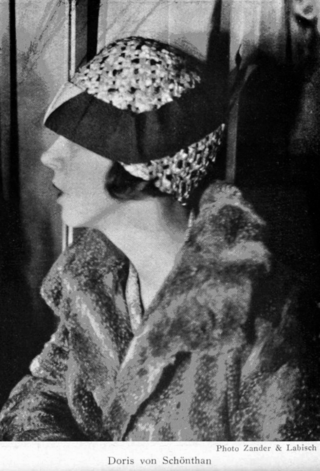
Doris von Schönthan (1905–1961), born Maria-Dorothea Ehemann, called 'Dorinde', was a German model, a copywriter, journalist and photographer. She is characterised as a dazzling figure of the Weimar Republic or bohemian of the Roaring Twenties.

Alice Emilie van Nahuys, later also known as Alice van Eugen-van Nahuys was a Dutch translator and director of the publishing house Querido. She translated the work of Arthur Schnitzler and Franz Kafka into Dutch, and was the "leading force" behind an initiative to publish German writers in exile in the 1930s.
Eva Herrmann was a German-American painter, illustrator, draftsperson, and caricaturist.
The L. B. Fischer Publishing Corporation was an American publisher founded in 1942 by Gottfried B. Fischer and Fritz Landshoff. The full name of the firm was Landshoff Bermann Fischer Publishing.

